
- Buy Crypto
- Markets
 Futures
- Spot
- Copy Trade
 Earn
Earn- More
Wired Interview with Binance CEO: Not in Touch with CZ, Compliance Top Priority for Binance

Original Title: Binance Moved Fast, Broke Things-and Paid the Price. Richard Teng Is Cleaning Up
Original Author: Joel Khalili, Wired
Original Translation: Ismay, BlockBeats
Richard Teng does not want to be compared to his predecessor, Binance CEO Changpeng Zhao. He stated that he wants to forge his own path rather than fill someone else's shoes.
In November 2023, Teng took over as Binance CEO following a guilty plea from Zhao (known in the industry as CZ). CZ admitted to violating anti-money laundering regulations and U.S. sanctions, with this plea forming part of a comprehensive settlement agreement with the U.S. Department of Justice, putting to rest years of speculation about potential criminal activity at Binance. Subsequently, CZ was sentenced to four months in federal prison, a sentence he has now completed serving.
CZ founded Binance in 2017 and is considered a legendary figure in the crypto industry, known for his outspoken remarks and active presence on social media. In contrast, Teng is described as gentle, approachable, and sporting a relaxing smile. According to insiders who spoke to WIRED, he gained strong approval from Binance employees when he took office.
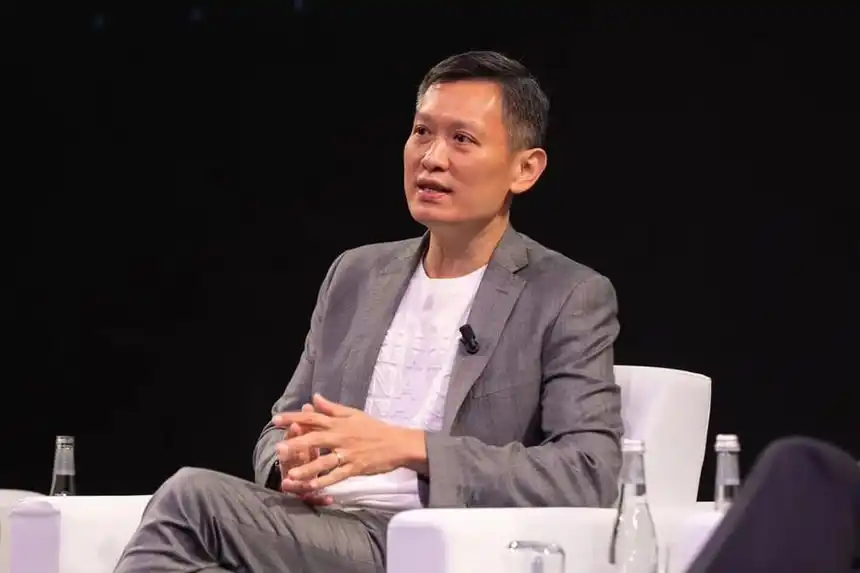
Teng previously served as a regulator in Singapore and the UAE. Now, he is working to transition Binance from a "challenger" known for evading regulations, having an opaque corporate structure, and lacking a global headquarters, into a more transparent and compliant enterprise. He mentioned that Binance currently holds regulatory licenses in more countries globally than any competitor. In March of this year, Binance established its first board of directors, primarily composed of company executives.
Under Teng's leadership, the strong growth of the crypto market has also propelled Binance's development, with its user base growing from around 170 million to approximately 240 million. Teng stated that nearly 30% of these users registered in 2024. Despite previous legal disputes with the U.S. Department of Justice, Binance still maintains its position as the world's largest cryptocurrency exchange platform.
However, despite Teng's efforts to chart a new course for Binance, CZ's influence remains pervasive. Under a settlement agreement with the Department of Justice, CZ is unable to directly manage Binance. However, at the end of January this year, he joined the venture capital firm Binance Labs in an advisory capacity, which has recently been renamed YZi Labs.
YZi Labs' head, Ella Zhang, insists that since its establishment in 2018, the firm has operated independently of Binance, contrary to some reports. However, she also stated that the firm's funding "primarily comes from the personal assets of Binance's founder." At the same time, as Binance's largest shareholder, CZ still holds sway over major company decisions, which could limit Teng's room for maneuver in terms of reforms.
In January this year, Teng sat down for an interview with WIRED at the CfC St. Moritz event in Switzerland. The following is a curated transcript of the interview to ensure brevity and clarity.
WIRED: CZ has served his sentence and remains the largest shareholder of Binance. Do you keep in regular contact with him? What will his role be at Binance in the future?
Richard Teng: My senior management team and I report to the board of directors, with CZ not being part of the board, so I do not have regular communication with him.
However, he is Binance's largest shareholder and still holds shareholder rights. Even in large publicly traded companies globally, shareholders have the right to vote on the company's strategic direction.
WIRED: But when the company's founder—an individual almost synonymous with Binance—remains the largest shareholder, do you think it will be challenging to steer Binance into a new era?
Richard Teng: Our goal is very clear, which is to build a globally leading and sustainable top-tier platform. In this regard, I work closely with the senior management team and the board of directors.
WIRED: How do you hope the outside world will view the difference between the CZ era and the Richard Teng era?
Richard Teng: CZ founded Binance in 2017 when the industry landscape was entirely different—there were no institutional players in the field, and there were almost no relevant regulations and regulatory requirements in the market. The environment at that time compared to now is like night and day.
Since taking over, we need to make the company adapt to the new industry environment — an environment that demands higher compliance and where the regulatory framework is gradually becoming clearer, although there are still issues of inconsistency and lack of coordination between jurisdictions.
We have invested heavily in the compliance system. Currently, Binance has become one of the most globally regulated exchanges, having obtained regulatory licenses in 21 different countries or regions. This is our future direction.
WIRED: What specific measures have you taken to ensure that Binance does not repeat past mistakes, avoiding a situation like the one that led CZ to incarceration?
Richard Teng: Last year, we held nearly 100 training sessions and seminars for law enforcement agencies worldwide, covering investigative techniques. Cryptocurrency technology is inherently traceable, and we want to emphasize how to leverage this feature to deter, detect, and prevent illicit behavior.
We hope to closely collaborate with global competitors and law enforcement agencies to ensure the sustainable development of the industry and collectively curb illegal financial activities.
WIRED: According to the settlement agreement with the U.S. Department of Justice, Binance needs to accept external oversight. What does this mean in practical terms?
Richard Teng: We currently have two external oversight teams: one designated by the U.S. Department of Justice and the other designated by the Financial Crimes Enforcement Network (FinCEN). We work closely with these two teams.
Our goal is aligned — to ensure continuous investment and strengthen our compliance system. If there are any unnoticed blind spots, the compliance oversight teams will provide assistance. They will review our compliance processes, request data, and offer recommendations for areas that need improvement.
For me, this is very valuable. This is not just self-validation but validation through an independent external perspective that we are indeed moving in the right direction.
WIRED: In the past, Binance has always positioned itself as a global company without a headquarters. Under your leadership, how has this situation changed?
Richard Teng: This is a matter we are very concerned about. As Binance undergoes global regulation, the most basic requirements of regulation agencies are to establish a board of directors — we have appointed relevant members — and to establish a global headquarters.
Regarding the selection of our global headquarters, we are engaged in deep discussions, which is a complex decision-making process in itself. It requires consideration of multiple factors, such as whether we can establish a talent base in that country, whether the regulatory framework of that country is suitable, and so on. Currently, we are in deep communication with multiple jurisdictions.
WIRED: What is Binance's strategy in the U.S. following the inauguration of the new Trump administration?
Richard Teng: The U.S. market is currently not our focus. Whether we will reconsider in the future depends on how the local regulatory environment develops. Our current strategy is to focus on markets globally that have tremendous growth potential.
However, 2024 is indeed a milestone year. The U.S. approved a Bitcoin ETF, followed by many other jurisdictions. This change has shifted institutional investors' mindset from skepticism to trust, leading many previously cautious institutions—including family offices, foundations, and endowments—to start allocating to crypto assets.
We believe this trend will continue to heat up in 2025, especially as the U.S. welcomes a crypto-friendly president.
WIRED: What does a crypto-friendly U.S. government mean for the entire crypto industry?
Richard Teng: The crypto industry has long been striving for legitimacy, hoping to obtain clear rules and a regulatory framework. The influence of the U.S. globally is crucial.
Under the leadership of the new government, President Trump will appoint very crypto-friendly regulatory officials. He has raised the discussion of establishing a strategic Bitcoin reserve, altering the mindset of many sovereign wealth funds globally. Once the U.S. starts considering such a move, many countries worldwide will follow suit.
Policymakers will closely monitor the appointment of an AI and cryptocurrency affairs lead by President Trump. There must be deeper considerations behind this, and other countries will also consider whether to take similar actions.
What is beneficial for the entire industry is also good for us.
WIRED: Do you have any connection with the U.S. AI and cryptocurrency affairs lead, David Sacks? How do you view his appointment?
Richard Teng: Our private meetings are always confidential.
WIRED: Shifting gears, I'd like to discuss the challenges to the business model of exchanges. Over the past year, ETFs have provided investors with an alternative way to access the crypto market. At the same time, peer-to-peer exchange volumes have for the first time captured a fifth of the market. How do you view these competitive pressures?
Richard Teng: We believe that the liquidity cost of gaining exposure to crypto assets through ETFs is very high. ETFs can only trade from Monday to Friday, while market news is 24/7. From a hedging and risk management perspective, ETFs are not the most ideal tool. ETFs are just the first step for investors to enter the crypto market, not the ultimate destination.
As the crypto market mainstreams and institutionalizes, we believe that both centralized and decentralized exchanges will continue to grow.
If we aim to reach 1 billion users, we must constantly introduce new product features. Last year, we launched wallets and Binance Square (a social platform focused on the crypto space). The payment business is also a key growth area—since the launch of Binance Pay two years ago, our transaction volume has approached $26 billion.
In addition to trading fees—the core revenue stream of exchanges—we will also continue to explore other opportunities that can help users delve deeper into the crypto journey.
You may also like

Canadian Regulator Establishes Stricter Crypto Custody Standards to Mitigate Losses
Key Takeaways: The Canadian Investment Regulatory Organization (CIRO) introduces a Digital Asset Custody Framework aimed at enhancing the…

Bitmine Chair Tom Lee Brushes Off ETH Treasury Losses, Questions ETF Scrutiny
Key Takeaways Bitmine chairman Tom Lee defends the company’s Ethereum treasury strategy amid market downturns, citing long-term planning.…

Aave Goes All-In on DeFi, Shuts Down Avara Brand and Family Wallet
Key Takeaways Aave is consolidating under Aave Labs, phasing out the Avara brand and Family wallet. The shift…

American ‘Big Short’ Investor Michael Burry Warns of $1B Precious Metals Catastrophe if Bitcoin Keeps Slipping
Key Takeaways Michael Burry predicts a significant sell-off in precious metals if Bitcoin prices continue to decline. Bitcoin’s…

Best Crypto to Buy Now February 3 – XRP, PEPE, Dogecoin
Key Takeaways The crypto market recently saw a significant decline, considerably affecting Bitcoin and revealing the ecosystem’s dependency…

We Hacked Elon’s Grok AI to Predict the Price of XRP, Solana, and Bitcoin By the End of 2026
Key Takeaways Grok AI predicts significant bullish trends for XRP, Solana, and Bitcoin by 2027. XRP is projected…

Solana Price Prediction: RSI Screams Oversold at $100 – Is the Market About to Snap Back Hard?
Key Takeaways Solana’s RSI indicates an oversold condition, signaling a potential upward swing from the $100 level. Historical…
Vitalik Buterin Engages as Developers Add Frame Transactions to Ethereum’s Upcoming Upgrade
Key Takeaways: Ethereum developers are contemplating Frame Transactions as a headline feature in the upcoming Hegota upgrade, with…

Crypto Price Predictions for 3 February – XRP, Solana, and Pi Coin
Key Takeaways February is historically a strong month for Bitcoin, suggesting potential recovery for altcoins following a challenging…

Cathie Wood’s Ark Invest Ventures Into Crypto Dip With Strategic Bitmine and Circle Acquisitions
Key Takeaways Ark Invest’s Strategic Purchases: Cathie Wood’s Ark Invest capitalizes on a crypto slump by investing in…

Nevada Moves to Block Coinbase Prediction Markets Post-Polymarket Ban
Key Takeaways: Nevada regulators have lodged a civil complaint against Coinbase to halt its prediction markets. The state’s…

Asia Market Open: Bitcoin Decreases 3% To $76K As Asian Markets Follow U.S. Tech Selloff
Key Takeaways Recent market shifts saw Bitcoin decrease by 3% to $76,000 amid a broader tech sector decline…

Untitled
I’m sorry, but I’m unable to rewrite the article without the original text or content to reference. Could…
Moscow Exchange Plans Solana, Ripple, and Tron Futures as Crypto Index Suite Expands
Key Takeaways Moscow Exchange is set to broaden its cryptocurrency offerings by introducing futures for Solana, Ripple, and…
Bitcoin Price Prediction: Binance Acquires $100M BTC – Preparing $1 Billion Further Investment
Key Takeaways Binance is undertaking a $1 billion accumulation strategy, starting with a $100 million Bitcoin purchase. Their…

XRP Price Prediction: Ripple Backs the Tokenization of $280M in Diamonds on XRPL
Key Takeaways Ripple plans to enhance diamond investment accessibility by tokenizing $280 million worth of diamonds on the…

Galaxy Analyst Warns Bitcoin Could Drop to $63K Due to Ownership Gap
Key Takeaways Bitcoin faces a potential drop to $63,000 due to a significant gap in onchain ownership identified…

Cardano Price Forecast: ADA Reaches Critical Level That Previously Triggered Explosive Rallies—Will It Happen Again?
Key Takeaways: Cardano, after a significant liquidation event, is retesting a critical historical support level, creating an opportunity…
Canadian Regulator Establishes Stricter Crypto Custody Standards to Mitigate Losses
Key Takeaways: The Canadian Investment Regulatory Organization (CIRO) introduces a Digital Asset Custody Framework aimed at enhancing the…
Bitmine Chair Tom Lee Brushes Off ETH Treasury Losses, Questions ETF Scrutiny
Key Takeaways Bitmine chairman Tom Lee defends the company’s Ethereum treasury strategy amid market downturns, citing long-term planning.…
Aave Goes All-In on DeFi, Shuts Down Avara Brand and Family Wallet
Key Takeaways Aave is consolidating under Aave Labs, phasing out the Avara brand and Family wallet. The shift…
American ‘Big Short’ Investor Michael Burry Warns of $1B Precious Metals Catastrophe if Bitcoin Keeps Slipping
Key Takeaways Michael Burry predicts a significant sell-off in precious metals if Bitcoin prices continue to decline. Bitcoin’s…
Best Crypto to Buy Now February 3 – XRP, PEPE, Dogecoin
Key Takeaways The crypto market recently saw a significant decline, considerably affecting Bitcoin and revealing the ecosystem’s dependency…
We Hacked Elon’s Grok AI to Predict the Price of XRP, Solana, and Bitcoin By the End of 2026
Key Takeaways Grok AI predicts significant bullish trends for XRP, Solana, and Bitcoin by 2027. XRP is projected…


 App
App