
- Buy Crypto
- Markets
 Futures
- Spot
- Copy Trade
 Earn
Earn- More
U.S. Treasury Secretary Yellen's Speech and Q&A Transcript: U.S.-China Trade Agreement to Take 2-3 Years

Original Article Title: "Full Text of U.S. Treasury Secretary Bessent's Speech and Q&A Last Night: U.S.-China Trade Agreement Will Take 2-3 Years to Reach"
Original Source: Tencent News
Since April, Trump's so-called tariff reciprocity policy has caused a huge stir. Global stock markets, especially the U.S. stock market, have experienced significant fluctuations this month due to Trump's volatile behavior. Wall Street titans may have never experienced such enormous losses in such a short period of time. On April 23, U.S. Treasury Secretary Bessent delivered a keynote speech at the Institute of International Finance. As possibly the only professional economic expert in the Trump team, his stance is crucial.
In his speech, he mentioned that the U.S. and China have the opportunity to reach a major agreement: the U.S. side will reshape trade balance by strengthening manufacturing, while the Chinese side will reduce reliance on exports and focus more on the "domestic circulation." If China is serious about moving in this direction, the U.S. and China can cooperate.
Below is the full text of the speech and Q&A:
Host:
Today's venue is indeed full, and the atmosphere is enthusiastic. Now, I am honored to invite U.S. Treasury Secretary Scott Bessent to deliver a keynote speech.
On January 28, 2025, Mr. Bessent was sworn in as the 79th Secretary of the U.S. Treasury, taking on a series of responsibilities—not only to safeguard the nation's economic strength, promote growth, and create jobs, but also to enhance national security through combating various economic threats and safeguarding the financial system. With over forty years of experience in global investment management, Mr. Bessent has worked and interacted in over sixty countries, maintaining close dialogues with leaders and central bank governors worldwide. He is widely regarded as an expert in currency and fixed income, as well as a contributor to several economic and business journals.
Next, the Secretary will deliver the keynote speech, followed by a conversation with Tim Adams. Let us warmly welcome the Treasury Secretary!
Bessent:
Thank you for your kind introduction. I am honored to be here. As World War II drew to a close, Western leaders summoned the era's most eminent economists for a critical task: to establish a new financial system. In a tranquil retreat in the New Hampshire mountains, they laid the foundation for the "American Century."
The architects of the Bretton Woods system understood that global economic development must rely on global coordinated cooperation. It was to foster this cooperation that they created the International Monetary Fund (IMF) and the World Bank. These "sister institutions" were born out of a profound geopolitical and economic turmoil, with the fundamental goal of aligning national interests with the international order to bring stability to an unstable world.
In essence, their mission is to restore and maintain balance. This mission remains the essence of the Bretton Woods system. However, as we look around the current international economic system, imbalance seems to be prevalent.
The good news is: the situation does not have to evolve this way. This morning, I hope to outline a blueprint for reshaping the equilibrium of the global financial system and revitalizing the international institutions that were originally tasked with safeguarding this system's mission. For most of my career, I observed the operation of financial policy circles from outside the system. Now, I stand within the system, looking outwards. I am very much looking forward to working with all of you to restore order to the international system.
To achieve this goal, we must first bring the IMF and World Bank back to their founding principles. The IMF and World Bank have enduring value, but "mission drift" has caused them to deviate from their course. We must advance key reforms to ensure that the Bretton Woods system serves the true stakeholders — and not the other way around.
To restore global financial balance, the IMF and World Bank need to demonstrate clear and firm leadership. This morning, I will expound on how they can exercise such leadership to create a safer, stronger, and more prosperous economic system for the world. I also hope to take this opportunity to invite our international colleagues to work together towards this goal.
At this point, I want to make it clear: "America First" does not mean "America alone." On the contrary, it signifies our desire to engage in deeper, more respectful cooperation with our trading partners. "America First" is not about retreat; it is about our willingness to take on more responsibility and show stronger leadership within international institutions like the IMF and World Bank. Through strengthened leadership, we hope to restore fairness to the international economic system.
Global Imbalances and Trade
The imbalance I mentioned earlier is particularly evident in global trade. This is why the United States has decided to take action now to reshape the global trade landscape. For decades, successive U.S. administrations have been based on a flawed assumption: that our trading partners would proactively pursue policies that contribute to global economic balance. However, the reality is that the United States has long endured a significant and sustained trade deficit in an unfair trading system.
Deliberate policy choices by other countries have hollowed out the U.S. manufacturing base, disrupted our critical supply chains, and even threatened our national and economic security. President Trump has taken decisive measures to address these imbalances and their adverse effects on the American people. This long-standing severe imbalance is fundamentally unsustainable for the United States and, in the long run, for other economies as well.
I understand that "sustainability" is a very popular term today. But I am not referring to climate change or carbon footprint. I am talking about the sustainability of the economy and finance — the kind that can genuinely raise people's living standards and ensure the stability of market operations. If international financial institutions want to fulfill their mission, they must make this kind of sustainability their sole focus.
After President Trump announced the tariff policy, more than one hundred countries have proactively reached out to us, expressing their willingness to participate in the process of reshaping global trade balance. These countries have responded positively and openly to the President's proposal to establish a fairer international system. We are engaging in constructive dialogues with them and look forward to further exchanges with more countries.
Among them, China especially needs to undergo rebalancing. The latest data shows that the Chinese economy is moving further away from being consumption-driven and increasingly relying on manufacturing. If the current trend continues, China's growth model, which is primarily export-led by manufacturing, will only exacerbate imbalances with its trading partners.
China's current economic model essentially shifts its own economic challenges through exports. This is an unsustainable model that not only harms China itself but also poses risks to the entire world. China must change. China knows it must change. The whole world knows it. And we are willing to provide assistance because we also need rebalancing. China can start by cutting export capacity and instead supporting domestic consumers and the domestic market's development. This transition will help achieve the urgently needed global rebalancing.
Of course, trade is just one part of global economic imbalances. The long-standing reliance of the global economy on U.S. demand has made the whole system increasingly imbalanced. Some countries' policies encourage excessive savings, suppressing growth led by the private sector; and some countries artificially depress wages, similarly limiting growth. These practices exacerbate the global reliance on U.S. demand, making the world economy more fragile than it should be.
In Europe, former ECB President Mario Draghi has clearly pointed out various roots of economic stagnation and proposed a series of response suggestions. European countries should take these suggestions seriously. Currently, Europe has taken a belated but necessary first step, which I affirm. These actions will provide new sources of demand for the global economy, while also implying that Europe is taking on greater responsibility in security affairs.
I have always believed that global economic relations should complement security partnerships. Among security partners, it is more likely to build a structurally compatible, mutually beneficial economic system. If the United States continues to provide security and open markets, our allies must make stronger commitments to collective defense. Europe's recent actions on fiscal and defense spending are evidence of the effectiveness of the Trump administration's policies starting to show.
U.S. Leadership in the IMF and World Bank
The Trump administration and the U.S. Treasury are committed to maintaining and expanding U.S. leadership in the global economic system. This is particularly evident in the field of international financial institutions. The IMF and World Bank play a crucial role in the international system. As long as they can faithfully fulfill their mission, the Trump administration will fully cooperate with them.
However, in their current state, these two institutions have failed to meet the mark. The two key institutions of the Bretton Woods system must extricate themselves from their current state of a crowded agenda and scattered goals, and return to their core mission. Mission creep has weakened their ability to fulfill their fundamental responsibilities.
Next, the Trump administration will further leverage the United States' influence and leadership within these institutions to drive them to focus on their missions and deliver results. We will also demand accountability from the management and staff of these institutions for achieving real impact. I invite all of you to join us in pushing the IMF and World Bank to refocus on their core missions. This is in all of our common interests.
International Monetary Fund (IMF)
First and foremost, we must make the IMF a true IMF again. The IMF's core mission is to: promote international monetary cooperation, facilitate balanced growth of international trade, encourage economic development, and prevent the occurrence of harmful policies such as competitive currency devaluations. These functions are crucial for the United States and the global economy.
However, the IMF is currently deeply mired in a "mission drift" crisis. This institution, which was once steadfastly committed to global monetary cooperation and financial stability, is now investing too much time and resources in climate change, gender, and social issues.
These issues are not within the IMF's mandate, and this deviation has actually weakened its ability to address core macroeconomic issues. The IMF must become an institution that "speaks truth to power mercilessly," not just to certain member countries. Unfortunately, the current IMF has chosen to "see no evil." Its 2024 "External Sector Report" is titled "Imbalances Are Diminishing," a "blindly optimistic" assessment that reflects an institution more focused on maintaining the status quo than on raising critical questions.
In the United States, we are acutely aware that we must put our own fiscal house in order. The previous administration created the largest peacetime deficit in U.S. history, and the current administration is working tirelessly to reverse this trend.
We welcome criticism, but we cannot accept the IMF's silence on those countries that are most deserving of criticism—especially countries with long-standing trade surpluses. In line with its core responsibilities, the IMF must call out countries that have long pursued distorting global economic policies, manipulated currencies, and lack transparency, such as China.
I also expect the IMF to issue warnings about the irresponsible lending practices of certain creditor countries. The IMF should take a more proactive approach to urge official bilateral creditor countries to intervene early and coordinate with borrowing countries to shorten the duration of debt distress. The IMF must refocus its lending function, concentrate on resolving balance of payments issues, and ensure that loans are of a temporary nature.
When responsibilities are clear and operations are conducted properly, IMF lending is at the core of its contribution to the global economy: when markets fail, the IMF can step in to provide support; in exchange, the borrowing country must implement economic reforms to address imbalances and promote growth. The changes brought about by these reforms constitute one of the IMF's most significant contributions to building a strong, sustainable, and balanced global economy.
Argentina is a typical example. Earlier this month, I visited Argentina to demonstrate U.S. support for the IMF's assistance in the country's fiscal restructuring efforts. Argentina deserves IMF support because it has made substantial progress in meeting fiscal targets. However, not all countries should be treated equally. The IMF must hold countries accountable for failing to fulfill reform commitments and firmly say "no" when necessary. The IMF is not obligated to lend to countries that resist reform.
The measure of IMF success should be the supported country's ability to achieve economic stability and growth, not the total amount of its lending.
World Bank
Like the IMF, the World Bank must also redefine its role and return to its core mission. The World Bank Group is committed to helping developing countries develop their economies, reduce poverty, attract private investment, create jobs in the private sector, and reduce reliance on foreign aid. It provides transparent, affordable, long-term financial support for countries' own development priorities.
Similar to the IMF, the World Bank also offers broad technical support to low-income countries to help them achieve debt sustainability, enabling these countries to better navigate coercive and opaque loan terms from other creditors. These core functions complement the efforts of the Trump administration to build a safer, stronger, and more prosperous economy in the U.S. and globally.
However, the reality is that the World Bank has deviated from its original mission in some aspects. It should no longer expect to receive a "blank check" through hollow and trendy language in its communications, nor can it evade accountability with vague reform promises. In the process of reaffirming its mission, the World Bank must use its resources more efficiently and effectively, creating tangible value for all member countries.
Currently, a key focus of the World Bank's efforts to enhance resource utilization is on improving energy access. Global business leaders widely recognize that unstable power supply is a major obstacle to investment. The "Mission 300 Initiative" launched by the World Bank in collaboration with the African Development Bank aims to provide reliable electricity to an additional 300 million people in Africa, which is a commendable effort.
However, the World Bank must further respond to countries' energy priorities and actual needs, focusing on reliable technologies that can truly support economic growth rather than blindly pursuing distorting climate finance metrics. We appreciate the World Bank's recent announcement to lift the ban on nuclear energy support. This shift is expected to fundamentally transform the energy structure of several emerging markets. We encourage the World Bank to continue moving forward, providing equal access to all technologies that can offer affordable, stable base power to countries.
The World Bank should adhere to technological neutrality and prioritize "affordability" in energy investments. In most cases, this means investing in natural gas or other fossil fuel-based energy projects; in other cases, it also includes renewable energy projects equipped with energy storage or dispatch systems. Human history tells us a simple truth: Economic prosperity comes from abundant energy.
Therefore, the World Bank should advocate for a "comprehensive approach" to energy development. Such an approach will not only enhance its financing efficiency but also truly enable the World Bank to return to its core mission of promoting economic growth and poverty reduction.
In addition to improving energy accessibility, the World Bank can also more effectively utilize resources by implementing its "graduation policy." The goal of this policy is for the World Bank to allocate more loan resources to the poorest and lowest credit-rated developing countries. These countries are also where the World Bank's support has the greatest impact on poverty reduction and growth.
However, in reality, the World Bank continues to lend to countries that have already met the "graduation" criteria each year. This continued lending without justification squeezes resources for high-priority projects, stifles the development space for private capital, and weakens the motivation for these countries to break away from World Bank dependency and transition to a job-led growth path driven by the private sector.
Looking ahead, the World Bank must set a clear timetable for countries that have already met the graduation criteria to exit. Continuing to treat the world's second-largest economy—China—as a "developing country" is absurd.
Indeed, China's rapid rise is impressive, although part of this process has come at the expense of Western markets. But if China wishes to play a role in the global economy commensurate with its strength, it should also graduate. We welcome this.
Furthermore, the World Bank should promote a transparent procurement policy based on "best value" to help countries move away from a procurement model focused solely on "lowest price" bidding. "Lowest price" procurement often encourages industry policies that rely on subsidies and distort the market; it may suppress the development of private enterprises, foster corruption and collusion, and ultimately raise overall costs. In contrast, a "best value" oriented procurement policy is a better choice from both efficiency and development perspectives; its vigorous implementation will truly benefit the World Bank and its shareholder countries.
On this issue, I must also issue the strongest statement regarding the procurement policy for Ukrainian reconstruction assistance: Any entity that has provided funding or supplies to the Russian war machine, regardless of who they are, is automatically disqualified from applying for funds from the Ukrainian Reconstruction Fund. No exceptions.
Conclusion
Finally, I would like to once again extend a sincere invitation to our allies—please join us in reshaping the international financial system and returning the IMF and World Bank to their founding missions.
“America First” does not mean we will withdraw, but rather, it signifies that we will engage more firmly in the international economic system, including playing a more active role in the IMF and World Bank.
A more sustainable international economic system will better serve the common interests of the United States and all participating countries. We look forward to working together with everyone towards this shared goal. Thank you!
Q&A Session:
Tim Adams: Secretary, thank you for your wonderful speech, and thanks to everyone for being here today. The statement you just made, that “America First does not mean America alone,” was particularly powerful and likely put many people here at ease. So, can we understand that as long as these international institutions return to their original intentions and focus on the right things, the U.S. will continue to participate?
Bennett:
Exactly right. I made it clear during my nomination hearing: the U.S. should actively engage with these international multilateral institutions—not just participate but contribute and achieve results. This is not just for ourselves but genuinely for the world.
Tim Adams: You mentioned rebuilding the global financial order. In fact, a former Treasury official said 20 years ago that the IMF “lacks the ability to address global imbalances,” but then every Treasury Secretary had different priorities. How would you do things differently? What specific ideological and practical differences do you have?
Bennett:
The first thing is to be clear about the focus. We need to reset the direction and metrics of these institutions to bring them back to their original mission. Coming from the private sector, I am more accustomed to focusing on results and timelines. You know, these issues have actually been discussed for decades, and some countries may still think they can wait another 100 years, but we don't have that kind of time.
Tim Adams: In this regard, China is an inevitable focus. You are also about to meet with your Chinese counterparts. Is there a way to make them realize that taking action and doing something concrete is more effective than endless discussions?
Bennett:
Actually, there's no need to say much more about the reasoning. They understand it themselves but lack external driving force and implementation momentum. I went to Japan for the first time in 1990, just after they experienced the burst of the economic bubble; in 2012, I met Shinzo Abe, who was preparing to run for office, and he quickly introduced “Abenomics,” and ten years later, the Japanese economy had significantly recovered. I believe my Chinese counterparts will also realize this.
I've mentioned before that we have the opportunity to reach a major agreement between the US and China: the US can reshape trade balance by strengthening manufacturing, while China can reduce its export dependency and focus more on the domestic cycle. If China is serious about moving in this direction, we can cooperate hand in hand. Of course, as you mentioned, the core of all this is that we need to manage our finances well. The current US deficit is 6% of GDP, which is not sustainable in the long run.
Tim Adams: How important is it to integrate fiscal adjustment into the global rebalancing framework, and can you elaborate on this?
Bernstein:
This is a critically important component. Most of you here have received systematic training in economics and understand that trade deficits stem from three key factors: first, trade policy itself, including tariffs, non-tariff barriers, currency manipulation, and subsidies for labor and production factors; second, the budget deficit, the higher the deficit, the greater the "attraction" of external goods through imports, while also driving up interest rates; and third, the US dollar exchange rate. The US has always adhered to a "strong dollar" policy, allowing its value to be determined by the market. A "strong dollar" does not refer to the price level but rather to gaining capital favor and market confidence through sound policies.
Our issue is not insufficient revenue but rather excessive spending. I suggest that President Trump should keep the long-term deficit at around 3% of GDP, matching it with 2% inflation or nominal growth, and achieve higher growth through good policies.
Tim Adams: You mentioned Bob Rubin and Valéry Giscard d'Estaing's concept of the "dollar privilege" from the 1960s again. Some view it as a burden rather than a privilege. How do you view the US dollar's status as the global reserve currency? Will this status fade over time?
Bernstein:
I believe that in my lifetime, the dollar will remain the world's primary reserve currency. And frankly, I don't think any country truly wants to replace it. The euro was once highly anticipated, but recently, its rapid appreciation has become a burden to export-oriented economies. To maintain the dollar's status, a key aspect is rebuilding trust in international institutions.
Tim Adams: You recently visited Europe, and many feel that Europe is brewing a "renaissance." What's your take on this? Is this a good opportunity for Europe to take on more global demand?
Bennett:
Indeed, it is a great opportunity, but of course, it also comes with many challenges. I must say— we should thank President Trump for accomplishing what many European leaders failed to do in the past twenty-six years: convincing Germany to increase its fiscal spending, boosting the European economy. This is both a fiscal stimulus and a way to share the burden of European defense. As I often say, economic security is national security, and national security is economic security. If Europe's new plan can prove effective, I will give it my full support. I recently had a private conversation with the Spanish Minister of Finance, and he is very confident about the EU's future investment in defense spending, a sentiment I wholeheartedly share.
Tim Adams: Minister, you are currently advancing several key initiatives simultaneously: the U.S.-China rebalancing, European opportunities, and U.S. domestic rebalancing (including the fiscal deficit). So, what are your specific expectations for the IMF going forward? What do you hope Ms. Georgieva and her board should do?
Bennett:
In one sentence: back to basics. The IMF has indeed drifted off course in recent years, with too many diverse issues on its agenda. It needs to "weed out" and refocus on its core tasks of international balance of payments and balanced growth, while setting clear goals and outcome metrics.
Tim Adams: Let's talk about energy. You specifically mentioned nuclear power in your speech. The U.S. is now the world's largest oil producer, pumping out around 13 million barrels per day. In which areas should we further exert ourselves in the future? How can the World Bank better support fossil fuels, nuclear energy, and other forms of energy?
Bennett:
Adequate energy supply is the soul of economic growth. We need to help each country design a development pace that suits its own needs: first "crawl," then "walk," and finally "run." True sustainable development must start with a focus on basic power supply. Some are still indulging in the fantasy that relying solely on renewable energy can solve everything, but the reality is that water needs to be pumped, buildings need to be heated, and hospitals need uninterrupted power. Even a middle-income country like South Africa still faces frequent power outages. Therefore, we must first stabilize the base-load electricity supply, then consider how to gradually integrate renewable energy and other forms of energy, rather than starting with renewable energy first and causing industrial disruptions.
Tim Adams: Lastly, let's discuss financial intermediation. Capitalism without capital is just an empty "ism," and the U.S.'s capital markets and financial intermediaries are crucial both domestically and internationally. What is your vision for future regulation? How should this industry develop in the future?
Bernett:
Lately, private credit has been a hot topic. I believe it represents the diversification of the American financial system, but its current operation is partly unregulated, somewhat due to overregulation post-2008 crisis, which squeezed the space of traditional financial institutions. We plan to leverage the Financial Stability Oversight Council (FSOC), in conjunction with the Federal Reserve, the Office of the Comptroller of the Currency, and the Federal Deposit Insurance Corporation (FDIC), to create a more flexible, more resilient regulatory framework to energize compliant finance. One of the unique aspects of the U.S. financial system is the presence of numerous community banks and small to mid-sized banks, which provide 70% of the nation's agricultural loans, 40% of small business loans, and mortgage loans. In contrast, most other G7 countries are dominated by a few large banks. It used to be Wall Street leading the way for everyone; now it's time for Main Street to share in the rewards. Many small banks have had to pull back in the past decade due to regulatory pressures, causing the real economy to stagnate. We are determined to fix this.
Tim Adams: Once again, thank you all. The Treasury Department has always been the "voice of sober reason," and today you have heard just that. Best of luck to everyone! Let's give another warm round of applause to the Treasury Secretary!
You may also like

Token Cannot Compound, Where Is the Real Investment Opportunity?

February 6th Market Key Intelligence, How Much Did You Miss?

China's Central Bank and Eight Other Departments' Latest Regulatory Focus: Key Attention to RWA Tokenized Asset Risk
Foreword: Today, the People's Bank of China's website published the "Notice of the People's Bank of China, National Development and Reform Commission, Ministry of Industry and Information Technology, Ministry of Public Security, State Administration for Market Regulation, China Banking and Insurance Regulatory Commission, China Securities Regulatory Commission, State Administration of Foreign Exchange on Further Preventing and Dealing with Risks Related to Virtual Currency and Others (Yinfa [2026] No. 42)", the latest regulatory requirements from the eight departments including the central bank, which are basically consistent with the regulatory requirements of recent years. The main focus of the regulation is on speculative activities such as virtual currency trading, exchanges, ICOs, overseas platform services, and this time, regulatory oversight of RWA has been added, explicitly prohibiting RWA tokenization, stablecoins (especially those pegged to the RMB). The following is the full text:
To the people's governments of all provinces, autonomous regions, and municipalities directly under the Central Government, the Xinjiang Production and Construction Corps:
Recently, there have been speculative activities related to virtual currency and Real-World Assets (RWA) tokenization, disrupting the economic and financial order and jeopardizing the property security of the people. In order to further prevent and address the risks related to virtual currency and Real-World Assets tokenization, effectively safeguard national security and social stability, in accordance with the "Law of the People's Republic of China on the People's Bank of China," "Law of the People's Republic of China on Commercial Banks," "Securities Law of the People's Republic of China," "Law of the People's Republic of China on Securities Investment Funds," "Law of the People's Republic of China on Futures and Derivatives," "Cybersecurity Law of the People's Republic of China," "Regulations of the People's Republic of China on the Administration of Renminbi," "Regulations on Prevention and Disposal of Illegal Fundraising," "Regulations of the People's Republic of China on Foreign Exchange Administration," "Telecommunications Regulations of the People's Republic of China," and other provisions, after reaching consensus with the Cyberspace Administration of China, the Supreme People's Court, and the Supreme People's Procuratorate, and with the approval of the State Council, the relevant matters are notified as follows:
(I) Virtual currency does not possess the legal status equivalent to fiat currency. Virtual currencies such as Bitcoin, Ether, Tether, etc., have the main characteristics of being issued by non-monetary authorities, using encryption technology and distributed ledger or similar technology, existing in digital form, etc. They do not have legal tender status, should not and cannot be circulated and used as currency in the market.
The business activities related to virtual currency are classified as illegal financial activities. The exchange of fiat currency and virtual currency within the territory, exchange of virtual currencies, acting as a central counterparty in buying and selling virtual currencies, providing information intermediary and pricing services for virtual currency transactions, token issuance financing, and trading of virtual currency-related financial products, etc., fall under illegal financial activities, such as suspected illegal issuance of token vouchers, unauthorized public issuance of securities, illegal operation of securities and futures business, illegal fundraising, etc., are strictly prohibited across the board and resolutely banned in accordance with the law. Overseas entities and individuals are not allowed to provide virtual currency-related services to domestic entities in any form.
A stablecoin pegged to a fiat currency indirectly fulfills some functions of the fiat currency in circulation. Without the consent of relevant authorities in accordance with the law and regulations, any domestic or foreign entity or individual is not allowed to issue a RMB-pegged stablecoin overseas.
(II)Tokenization of Real-World Assets refers to the use of encryption technology and distributed ledger or similar technologies to transform ownership rights, income rights, etc., of assets into tokens (tokens) or other interests or bond certificates with token (token) characteristics, and carry out issuance and trading activities.
Engaging in the tokenization of real-world assets domestically, as well as providing related intermediary, information technology services, etc., which are suspected of illegal issuance of token vouchers, unauthorized public offering of securities, illegal operation of securities and futures business, illegal fundraising, and other illegal financial activities, shall be prohibited; except for relevant business activities carried out with the approval of the competent authorities in accordance with the law and regulations and relying on specific financial infrastructures. Overseas entities and individuals are not allowed to illegally provide services related to the tokenization of real-world assets to domestic entities in any form.
(III) Inter-agency Coordination. The People's Bank of China, together with the National Development and Reform Commission, the Ministry of Industry and Information Technology, the Ministry of Public Security, the State Administration for Market Regulation, the China Banking and Insurance Regulatory Commission, the China Securities Regulatory Commission, the State Administration of Foreign Exchange, and other departments, will improve the work mechanism, strengthen coordination with the Cyberspace Administration of China, the Supreme People's Court, and the Supreme People's Procuratorate, coordinate efforts, and overall guide regions to carry out risk prevention and disposal of virtual currency-related illegal financial activities.
The China Securities Regulatory Commission, together with the National Development and Reform Commission, the Ministry of Industry and Information Technology, the Ministry of Public Security, the People's Bank of China, the State Administration for Market Regulation, the China Banking and Insurance Regulatory Commission, the State Administration of Foreign Exchange, and other departments, will improve the work mechanism, strengthen coordination with the Cyberspace Administration of China, the Supreme People's Court, and the Supreme People's Procuratorate, coordinate efforts, and overall guide regions to carry out risk prevention and disposal of illegal financial activities related to the tokenization of real-world assets.
(IV) Strengthening Local Implementation. The people's governments at the provincial level are overall responsible for the prevention and disposal of risks related to virtual currencies and the tokenization of real-world assets in their respective administrative regions. The specific leading department is the local financial regulatory department, with participation from branches and dispatched institutions of the State Council's financial regulatory department, telecommunications regulators, public security, market supervision, and other departments, in coordination with cyberspace departments, courts, and procuratorates, to improve the normalization of the work mechanism, effectively connect with the relevant work mechanisms of central departments, form a cooperative and coordinated working pattern between central and local governments, effectively prevent and properly handle risks related to virtual currencies and the tokenization of real-world assets, and maintain economic and financial order and social stability.
(5) Enhanced Risk Monitoring. The People's Bank of China, China Securities Regulatory Commission, National Development and Reform Commission, Ministry of Industry and Information Technology, Ministry of Public Security, State Administration of Foreign Exchange, Cyberspace Administration of China, and other departments continue to improve monitoring techniques and system support, enhance cross-departmental data analysis and sharing, establish sound information sharing and cross-validation mechanisms, promptly grasp the risk situation of activities related to virtual currency and real-world asset tokenization. Local governments at all levels give full play to the role of local monitoring and early warning mechanisms. Local financial regulatory authorities, together with branches and agencies of the State Council's financial regulatory authorities, as well as departments of cyberspace and public security, ensure effective connection between online monitoring, offline investigation, and fund tracking, efficiently and accurately identify activities related to virtual currency and real-world asset tokenization, promptly share risk information, improve early warning information dissemination, verification, and rapid response mechanisms.
(6) Strengthened Oversight of Financial Institutions, Intermediaries, and Technology Service Providers. Financial institutions (including non-bank payment institutions) are prohibited from providing account opening, fund transfer, and clearing services for virtual currency-related business activities, issuing and selling financial products related to virtual currency, including virtual currency and related financial products in the scope of collateral, conducting insurance business related to virtual currency, or including virtual currency in the scope of insurance liability. Financial institutions (including non-bank payment institutions) are prohibited from providing custody, clearing, and settlement services for unauthorized real-world asset tokenization-related business and related financial products. Relevant intermediary institutions and information technology service providers are prohibited from providing intermediary, technical, or other services for unauthorized real-world asset tokenization-related businesses and related financial products.
(7) Enhanced Management of Internet Information Content and Access. Internet enterprises are prohibited from providing online business venues, commercial displays, marketing, advertising, or paid traffic diversion services for virtual currency and real-world asset tokenization-related business activities. Upon discovering clues of illegal activities, they should promptly report to relevant departments and provide technical support and assistance for related investigations and inquiries. Based on the clues transferred by the financial regulatory authorities, the cyberspace administration, telecommunications authorities, and public security departments should promptly close and deal with websites, mobile applications (including mini-programs), and public accounts engaged in virtual currency and real-world asset tokenization-related business activities in accordance with the law.
(8) Strengthened Entity Registration and Advertisement Management. Market supervision departments strengthen entity registration and management, and enterprise and individual business registrations must not contain terms such as "virtual currency," "virtual asset," "cryptocurrency," "crypto asset," "stablecoin," "real-world asset tokenization," or "RWA" in their names or business scopes. Market supervision departments, together with financial regulatory authorities, legally enhance the supervision of advertisements related to virtual currency and real-world asset tokenization, promptly investigating and handling relevant illegal advertisements.
(IX) Continued Rectification of Virtual Currency Mining Activities. The National Development and Reform Commission, together with relevant departments, strictly controls virtual currency mining activities, continuously promotes the rectification of virtual currency mining activities. The people's governments of various provinces take overall responsibility for the rectification of "mining" within their respective administrative regions. In accordance with the requirements of the National Development and Reform Commission and other departments in the "Notice on the Rectification of Virtual Currency Mining Activities" (NDRC Energy-saving Building [2021] No. 1283) and the provisions of the "Guidance Catalog for Industrial Structure Adjustment (2024 Edition)," a comprehensive review, investigation, and closure of existing virtual currency mining projects are conducted, new mining projects are strictly prohibited, and mining machine production enterprises are strictly prohibited from providing mining machine sales and other services within the country.
(X) Severe Crackdown on Related Illegal Financial Activities. Upon discovering clues to illegal financial activities related to virtual currency and the tokenization of real-world assets, local financial regulatory authorities, branches of the State Council's financial regulatory authorities, and other relevant departments promptly investigate, determine, and properly handle the issues in accordance with the law, and seriously hold the relevant entities and individuals legally responsible. Those suspected of crimes are transferred to the judicial authorities for processing according to the law.
(XI) Severe Crackdown on Related Illegal and Criminal Activities. The Ministry of Public Security, the People's Bank of China, the State Administration for Market Regulation, the China Banking and Insurance Regulatory Commission, the China Securities Regulatory Commission, as well as judicial and procuratorial organs, in accordance with their respective responsibilities, rigorously crack down on illegal and criminal activities related to virtual currency, the tokenization of real-world assets, such as fraud, money laundering, illegal business operations, pyramid schemes, illegal fundraising, and other illegal and criminal activities carried out under the guise of virtual currency, the tokenization of real-world assets, etc.
(XII) Strengthen Industry Self-discipline. Relevant industry associations should enhance membership management and policy advocacy, based on their own responsibilities, advocate and urge member units to resist illegal financial activities related to virtual currency and the tokenization of real-world assets. Member units that violate regulatory policies and industry self-discipline rules are to be disciplined in accordance with relevant self-regulatory management regulations. By leveraging various industry infrastructure, conduct risk monitoring related to virtual currency, the tokenization of real-world assets, and promptly transfer issue clues to relevant departments.
(XIII) Without the approval of relevant departments in accordance with the law and regulations, domestic entities and foreign entities controlled by them may not issue virtual currency overseas.
(XIV) Domestic entities engaging directly or indirectly in overseas external debt-based tokenization of real-world assets, or conducting asset securitization activities abroad based on domestic ownership rights, income rights, etc. (hereinafter referred to as domestic equity), should be strictly regulated in accordance with the principles of "same business, same risk, same rules." The National Development and Reform Commission, the China Securities Regulatory Commission, the State Administration of Foreign Exchange, and other relevant departments regulate it according to their respective responsibilities. For other forms of overseas real-world asset tokenization activities based on domestic equity by domestic entities, the China Securities Regulatory Commission, together with relevant departments, supervise according to their division of responsibilities. Without the consent and filing of relevant departments, no unit or individual may engage in the above-mentioned business.
(15) Overseas subsidiaries and branches of domestic financial institutions providing Real World Asset Tokenization-related services overseas shall do so legally and prudently. They shall have professional personnel and systems in place to effectively mitigate business risks, strictly implement customer onboarding, suitability management, anti-money laundering requirements, and incorporate them into the domestic financial institutions' compliance and risk management system. Intermediaries and information technology service providers offering Real World Asset Tokenization services abroad based on domestic equity or conducting Real World Asset Tokenization business in the form of overseas debt for domestic entities directly or indirectly venturing abroad must strictly comply with relevant laws and regulations. They should establish and improve relevant compliance and internal control systems in accordance with relevant normative requirements, strengthen business and risk control, and report the business developments to the relevant regulatory authorities for approval or filing.
(16) Strengthen organizational leadership and overall coordination. All departments and regions should attach great importance to the prevention of risks related to virtual currencies and Real World Asset Tokenization, strengthen organizational leadership, clarify work responsibilities, form a long-term effective working mechanism with centralized coordination, local implementation, and shared responsibilities, maintain high pressure, dynamically monitor risks, effectively prevent and mitigate risks in an orderly and efficient manner, legally protect the property security of the people, and make every effort to maintain economic and financial order and social stability.
(17) Widely carry out publicity and education. All departments, regions, and industry associations should make full use of various media and other communication channels to disseminate information through legal and policy interpretation, analysis of typical cases, and education on investment risks, etc. They should promote the illegality and harm of virtual currencies and Real World Asset Tokenization-related businesses and their manifestations, fully alert to potential risks and hidden dangers, and enhance public awareness and identification capabilities for risk prevention.
(18) Engaging in illegal financial activities related to virtual currencies and Real World Asset Tokenization in violation of this notice, as well as providing services for virtual currencies and Real World Asset Tokenization-related businesses, shall be punished in accordance with relevant regulations. If it constitutes a crime, criminal liability shall be pursued according to the law. For domestic entities and individuals who knowingly or should have known that overseas entities illegally provided virtual currency or Real World Asset Tokenization-related services to domestic entities and still assisted them, relevant responsibilities shall be pursued according to the law. If it constitutes a crime, criminal liability shall be pursued according to the law.
(19) If any unit or individual invests in virtual currencies, Real World Asset Tokens, and related financial products against public order and good customs, the relevant civil legal actions shall be invalid, and any resulting losses shall be borne by them. If there are suspicions of disrupting financial order and jeopardizing financial security, the relevant departments shall deal with them according to the law.
This notice shall enter into force upon the date of its issuance. The People's Bank of China and ten other departments' "Notice on Further Preventing and Dealing with the Risks of Virtual Currency Trading Speculation" (Yinfa [2021] No. 237) is hereby repealed.

Former Partner's Perspective on Multicoin: Kyle's Exit, But the Game He Left Behind Just Getting Started
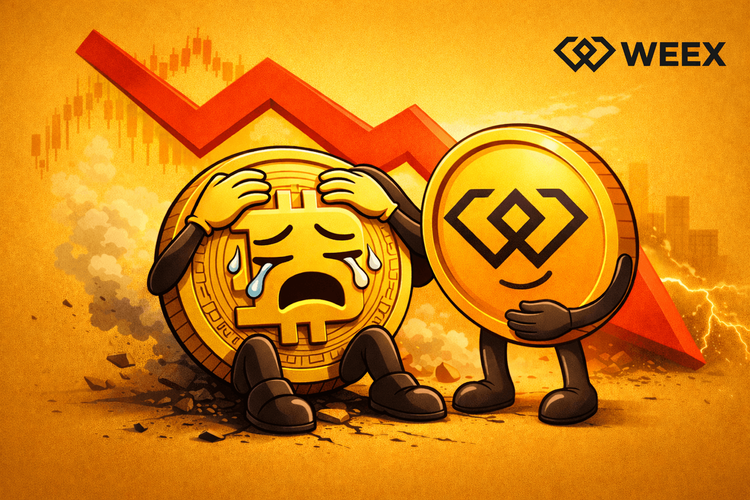
Why Bitcoin Is Falling Now: The Real Reasons Behind BTC's Crash & WEEX's Smart Profit Playbook
Bitcoin's ongoing crash explained: Discover the 5 hidden triggers behind BTC's plunge & how WEEX's Auto Earn and Trade to Earn strategies help traders profit from crypto market volatility.

Wall Street's Hottest Trades See Exodus

Vitalik Discusses Ethereum Scaling Path, Circle Announces Partnership with Polymarket, What's the Overseas Crypto Community Talking About Today?

Believing in the Capital Markets - The Essence and Core Value of Cryptocurrency

Polymarket's 'Weatherman': Predict Temperature, Win Million-Dollar Payout

$15K+ Profits: The 4 AI Trading Secrets WEEX Hackathon Prelim Winners Used to Dominate Volatile Crypto Markets
How WEEX Hackathon's top AI trading strategies made $15K+ in crypto markets: 4 proven rules for ETH/BTC trading, market structure analysis, and risk management in volatile conditions.

A nearly 20% one-day plunge, how long has it been since you last saw a $60,000 Bitcoin?

Raoul Pal: I've seen every single panic, and they are never the end.

Key Market Information Discrepancy on February 6th - A Must-Read! | Alpha Morning Report

2026 Crypto Industry's First Snowfall
The Harsh Reality Behind the $26 Billion Crypto Liquidation: Liquidity Is Killing the Market
Why Is Gold, US Stocks, Bitcoin All Falling?

Key Market Intelligence for February 5th, how much did you miss out on?

Wintermute: By 2026, crypto had gradually become the settlement layer of the Internet economy
Token Cannot Compound, Where Is the Real Investment Opportunity?
February 6th Market Key Intelligence, How Much Did You Miss?
China's Central Bank and Eight Other Departments' Latest Regulatory Focus: Key Attention to RWA Tokenized Asset Risk
Foreword: Today, the People's Bank of China's website published the "Notice of the People's Bank of China, National Development and Reform Commission, Ministry of Industry and Information Technology, Ministry of Public Security, State Administration for Market Regulation, China Banking and Insurance Regulatory Commission, China Securities Regulatory Commission, State Administration of Foreign Exchange on Further Preventing and Dealing with Risks Related to Virtual Currency and Others (Yinfa [2026] No. 42)", the latest regulatory requirements from the eight departments including the central bank, which are basically consistent with the regulatory requirements of recent years. The main focus of the regulation is on speculative activities such as virtual currency trading, exchanges, ICOs, overseas platform services, and this time, regulatory oversight of RWA has been added, explicitly prohibiting RWA tokenization, stablecoins (especially those pegged to the RMB). The following is the full text:
To the people's governments of all provinces, autonomous regions, and municipalities directly under the Central Government, the Xinjiang Production and Construction Corps:
Recently, there have been speculative activities related to virtual currency and Real-World Assets (RWA) tokenization, disrupting the economic and financial order and jeopardizing the property security of the people. In order to further prevent and address the risks related to virtual currency and Real-World Assets tokenization, effectively safeguard national security and social stability, in accordance with the "Law of the People's Republic of China on the People's Bank of China," "Law of the People's Republic of China on Commercial Banks," "Securities Law of the People's Republic of China," "Law of the People's Republic of China on Securities Investment Funds," "Law of the People's Republic of China on Futures and Derivatives," "Cybersecurity Law of the People's Republic of China," "Regulations of the People's Republic of China on the Administration of Renminbi," "Regulations on Prevention and Disposal of Illegal Fundraising," "Regulations of the People's Republic of China on Foreign Exchange Administration," "Telecommunications Regulations of the People's Republic of China," and other provisions, after reaching consensus with the Cyberspace Administration of China, the Supreme People's Court, and the Supreme People's Procuratorate, and with the approval of the State Council, the relevant matters are notified as follows:
(I) Virtual currency does not possess the legal status equivalent to fiat currency. Virtual currencies such as Bitcoin, Ether, Tether, etc., have the main characteristics of being issued by non-monetary authorities, using encryption technology and distributed ledger or similar technology, existing in digital form, etc. They do not have legal tender status, should not and cannot be circulated and used as currency in the market.
The business activities related to virtual currency are classified as illegal financial activities. The exchange of fiat currency and virtual currency within the territory, exchange of virtual currencies, acting as a central counterparty in buying and selling virtual currencies, providing information intermediary and pricing services for virtual currency transactions, token issuance financing, and trading of virtual currency-related financial products, etc., fall under illegal financial activities, such as suspected illegal issuance of token vouchers, unauthorized public issuance of securities, illegal operation of securities and futures business, illegal fundraising, etc., are strictly prohibited across the board and resolutely banned in accordance with the law. Overseas entities and individuals are not allowed to provide virtual currency-related services to domestic entities in any form.
A stablecoin pegged to a fiat currency indirectly fulfills some functions of the fiat currency in circulation. Without the consent of relevant authorities in accordance with the law and regulations, any domestic or foreign entity or individual is not allowed to issue a RMB-pegged stablecoin overseas.
(II)Tokenization of Real-World Assets refers to the use of encryption technology and distributed ledger or similar technologies to transform ownership rights, income rights, etc., of assets into tokens (tokens) or other interests or bond certificates with token (token) characteristics, and carry out issuance and trading activities.
Engaging in the tokenization of real-world assets domestically, as well as providing related intermediary, information technology services, etc., which are suspected of illegal issuance of token vouchers, unauthorized public offering of securities, illegal operation of securities and futures business, illegal fundraising, and other illegal financial activities, shall be prohibited; except for relevant business activities carried out with the approval of the competent authorities in accordance with the law and regulations and relying on specific financial infrastructures. Overseas entities and individuals are not allowed to illegally provide services related to the tokenization of real-world assets to domestic entities in any form.
(III) Inter-agency Coordination. The People's Bank of China, together with the National Development and Reform Commission, the Ministry of Industry and Information Technology, the Ministry of Public Security, the State Administration for Market Regulation, the China Banking and Insurance Regulatory Commission, the China Securities Regulatory Commission, the State Administration of Foreign Exchange, and other departments, will improve the work mechanism, strengthen coordination with the Cyberspace Administration of China, the Supreme People's Court, and the Supreme People's Procuratorate, coordinate efforts, and overall guide regions to carry out risk prevention and disposal of virtual currency-related illegal financial activities.
The China Securities Regulatory Commission, together with the National Development and Reform Commission, the Ministry of Industry and Information Technology, the Ministry of Public Security, the People's Bank of China, the State Administration for Market Regulation, the China Banking and Insurance Regulatory Commission, the State Administration of Foreign Exchange, and other departments, will improve the work mechanism, strengthen coordination with the Cyberspace Administration of China, the Supreme People's Court, and the Supreme People's Procuratorate, coordinate efforts, and overall guide regions to carry out risk prevention and disposal of illegal financial activities related to the tokenization of real-world assets.
(IV) Strengthening Local Implementation. The people's governments at the provincial level are overall responsible for the prevention and disposal of risks related to virtual currencies and the tokenization of real-world assets in their respective administrative regions. The specific leading department is the local financial regulatory department, with participation from branches and dispatched institutions of the State Council's financial regulatory department, telecommunications regulators, public security, market supervision, and other departments, in coordination with cyberspace departments, courts, and procuratorates, to improve the normalization of the work mechanism, effectively connect with the relevant work mechanisms of central departments, form a cooperative and coordinated working pattern between central and local governments, effectively prevent and properly handle risks related to virtual currencies and the tokenization of real-world assets, and maintain economic and financial order and social stability.
(5) Enhanced Risk Monitoring. The People's Bank of China, China Securities Regulatory Commission, National Development and Reform Commission, Ministry of Industry and Information Technology, Ministry of Public Security, State Administration of Foreign Exchange, Cyberspace Administration of China, and other departments continue to improve monitoring techniques and system support, enhance cross-departmental data analysis and sharing, establish sound information sharing and cross-validation mechanisms, promptly grasp the risk situation of activities related to virtual currency and real-world asset tokenization. Local governments at all levels give full play to the role of local monitoring and early warning mechanisms. Local financial regulatory authorities, together with branches and agencies of the State Council's financial regulatory authorities, as well as departments of cyberspace and public security, ensure effective connection between online monitoring, offline investigation, and fund tracking, efficiently and accurately identify activities related to virtual currency and real-world asset tokenization, promptly share risk information, improve early warning information dissemination, verification, and rapid response mechanisms.
(6) Strengthened Oversight of Financial Institutions, Intermediaries, and Technology Service Providers. Financial institutions (including non-bank payment institutions) are prohibited from providing account opening, fund transfer, and clearing services for virtual currency-related business activities, issuing and selling financial products related to virtual currency, including virtual currency and related financial products in the scope of collateral, conducting insurance business related to virtual currency, or including virtual currency in the scope of insurance liability. Financial institutions (including non-bank payment institutions) are prohibited from providing custody, clearing, and settlement services for unauthorized real-world asset tokenization-related business and related financial products. Relevant intermediary institutions and information technology service providers are prohibited from providing intermediary, technical, or other services for unauthorized real-world asset tokenization-related businesses and related financial products.
(7) Enhanced Management of Internet Information Content and Access. Internet enterprises are prohibited from providing online business venues, commercial displays, marketing, advertising, or paid traffic diversion services for virtual currency and real-world asset tokenization-related business activities. Upon discovering clues of illegal activities, they should promptly report to relevant departments and provide technical support and assistance for related investigations and inquiries. Based on the clues transferred by the financial regulatory authorities, the cyberspace administration, telecommunications authorities, and public security departments should promptly close and deal with websites, mobile applications (including mini-programs), and public accounts engaged in virtual currency and real-world asset tokenization-related business activities in accordance with the law.
(8) Strengthened Entity Registration and Advertisement Management. Market supervision departments strengthen entity registration and management, and enterprise and individual business registrations must not contain terms such as "virtual currency," "virtual asset," "cryptocurrency," "crypto asset," "stablecoin," "real-world asset tokenization," or "RWA" in their names or business scopes. Market supervision departments, together with financial regulatory authorities, legally enhance the supervision of advertisements related to virtual currency and real-world asset tokenization, promptly investigating and handling relevant illegal advertisements.
(IX) Continued Rectification of Virtual Currency Mining Activities. The National Development and Reform Commission, together with relevant departments, strictly controls virtual currency mining activities, continuously promotes the rectification of virtual currency mining activities. The people's governments of various provinces take overall responsibility for the rectification of "mining" within their respective administrative regions. In accordance with the requirements of the National Development and Reform Commission and other departments in the "Notice on the Rectification of Virtual Currency Mining Activities" (NDRC Energy-saving Building [2021] No. 1283) and the provisions of the "Guidance Catalog for Industrial Structure Adjustment (2024 Edition)," a comprehensive review, investigation, and closure of existing virtual currency mining projects are conducted, new mining projects are strictly prohibited, and mining machine production enterprises are strictly prohibited from providing mining machine sales and other services within the country.
(X) Severe Crackdown on Related Illegal Financial Activities. Upon discovering clues to illegal financial activities related to virtual currency and the tokenization of real-world assets, local financial regulatory authorities, branches of the State Council's financial regulatory authorities, and other relevant departments promptly investigate, determine, and properly handle the issues in accordance with the law, and seriously hold the relevant entities and individuals legally responsible. Those suspected of crimes are transferred to the judicial authorities for processing according to the law.
(XI) Severe Crackdown on Related Illegal and Criminal Activities. The Ministry of Public Security, the People's Bank of China, the State Administration for Market Regulation, the China Banking and Insurance Regulatory Commission, the China Securities Regulatory Commission, as well as judicial and procuratorial organs, in accordance with their respective responsibilities, rigorously crack down on illegal and criminal activities related to virtual currency, the tokenization of real-world assets, such as fraud, money laundering, illegal business operations, pyramid schemes, illegal fundraising, and other illegal and criminal activities carried out under the guise of virtual currency, the tokenization of real-world assets, etc.
(XII) Strengthen Industry Self-discipline. Relevant industry associations should enhance membership management and policy advocacy, based on their own responsibilities, advocate and urge member units to resist illegal financial activities related to virtual currency and the tokenization of real-world assets. Member units that violate regulatory policies and industry self-discipline rules are to be disciplined in accordance with relevant self-regulatory management regulations. By leveraging various industry infrastructure, conduct risk monitoring related to virtual currency, the tokenization of real-world assets, and promptly transfer issue clues to relevant departments.
(XIII) Without the approval of relevant departments in accordance with the law and regulations, domestic entities and foreign entities controlled by them may not issue virtual currency overseas.
(XIV) Domestic entities engaging directly or indirectly in overseas external debt-based tokenization of real-world assets, or conducting asset securitization activities abroad based on domestic ownership rights, income rights, etc. (hereinafter referred to as domestic equity), should be strictly regulated in accordance with the principles of "same business, same risk, same rules." The National Development and Reform Commission, the China Securities Regulatory Commission, the State Administration of Foreign Exchange, and other relevant departments regulate it according to their respective responsibilities. For other forms of overseas real-world asset tokenization activities based on domestic equity by domestic entities, the China Securities Regulatory Commission, together with relevant departments, supervise according to their division of responsibilities. Without the consent and filing of relevant departments, no unit or individual may engage in the above-mentioned business.
(15) Overseas subsidiaries and branches of domestic financial institutions providing Real World Asset Tokenization-related services overseas shall do so legally and prudently. They shall have professional personnel and systems in place to effectively mitigate business risks, strictly implement customer onboarding, suitability management, anti-money laundering requirements, and incorporate them into the domestic financial institutions' compliance and risk management system. Intermediaries and information technology service providers offering Real World Asset Tokenization services abroad based on domestic equity or conducting Real World Asset Tokenization business in the form of overseas debt for domestic entities directly or indirectly venturing abroad must strictly comply with relevant laws and regulations. They should establish and improve relevant compliance and internal control systems in accordance with relevant normative requirements, strengthen business and risk control, and report the business developments to the relevant regulatory authorities for approval or filing.
(16) Strengthen organizational leadership and overall coordination. All departments and regions should attach great importance to the prevention of risks related to virtual currencies and Real World Asset Tokenization, strengthen organizational leadership, clarify work responsibilities, form a long-term effective working mechanism with centralized coordination, local implementation, and shared responsibilities, maintain high pressure, dynamically monitor risks, effectively prevent and mitigate risks in an orderly and efficient manner, legally protect the property security of the people, and make every effort to maintain economic and financial order and social stability.
(17) Widely carry out publicity and education. All departments, regions, and industry associations should make full use of various media and other communication channels to disseminate information through legal and policy interpretation, analysis of typical cases, and education on investment risks, etc. They should promote the illegality and harm of virtual currencies and Real World Asset Tokenization-related businesses and their manifestations, fully alert to potential risks and hidden dangers, and enhance public awareness and identification capabilities for risk prevention.
(18) Engaging in illegal financial activities related to virtual currencies and Real World Asset Tokenization in violation of this notice, as well as providing services for virtual currencies and Real World Asset Tokenization-related businesses, shall be punished in accordance with relevant regulations. If it constitutes a crime, criminal liability shall be pursued according to the law. For domestic entities and individuals who knowingly or should have known that overseas entities illegally provided virtual currency or Real World Asset Tokenization-related services to domestic entities and still assisted them, relevant responsibilities shall be pursued according to the law. If it constitutes a crime, criminal liability shall be pursued according to the law.
(19) If any unit or individual invests in virtual currencies, Real World Asset Tokens, and related financial products against public order and good customs, the relevant civil legal actions shall be invalid, and any resulting losses shall be borne by them. If there are suspicions of disrupting financial order and jeopardizing financial security, the relevant departments shall deal with them according to the law.
This notice shall enter into force upon the date of its issuance. The People's Bank of China and ten other departments' "Notice on Further Preventing and Dealing with the Risks of Virtual Currency Trading Speculation" (Yinfa [2021] No. 237) is hereby repealed.
Former Partner's Perspective on Multicoin: Kyle's Exit, But the Game He Left Behind Just Getting Started
Why Bitcoin Is Falling Now: The Real Reasons Behind BTC's Crash & WEEX's Smart Profit Playbook
Bitcoin's ongoing crash explained: Discover the 5 hidden triggers behind BTC's plunge & how WEEX's Auto Earn and Trade to Earn strategies help traders profit from crypto market volatility.


 App
App