
- Buy Crypto
- Markets
 Futures
- Spot
- Copy Trade
- Earn
- More
The Rise of Privacy Tools and Institutional Adoption: How ZKsync Is Shaping the Future of Blockchain Privacy

Key Takeaways
- Financial institutions are driving a new wave of blockchain adoption, but demand robust privacy solutions like ZKsync’s system-level privacy to protect sensitive flows.
- Consumer crypto growth may have stagnated, but privacy technology is unlocking untapped value for banks, asset managers, and corporates seeking confidential blockchain settlement.
- ZK-rollups and zero-knowledge proofs are now allowing institutions to maintain privacy while proving regulatory compliance and operational correctness to public networks.
- Industry trends, including renewed interest in privacy tokens and robust development on Ethereum Layer-2 solutions, highlight a pivot from speculative assets to genuine financial infrastructure.
- The shift towards privacy solutions like ZKsync opens doors for exchanges, including WEEX, to align with institutional-grade compliance and security standards.
H1: Privacy Tools and Institutional Adoption: A New Era for Blockchain
Over the past few years, privacy has moved from the margins of blockchain conversations to center stage. While early crypto discussions often obsessed over the radical transparency of blockchains, today’s financial institutions and serious industry players are asking a different question: “How can we settle payments, handle treasury flows, and manage assets with the confidentiality and internal control we need—while still benefiting from the security and connectivity of public blockchains?” This growing demand has sparked a profound evolution in blockchain privacy tools, led by innovations like ZKsync’s institutional solutions.
H2: Understanding the Privacy Divide: Cypherpunk Ideals vs. Institutional Needs
It’s a tale of two privacies. Traditionalists in crypto, inspired by the cypherpunk ethos, champion personal and account-level privacy: think of tools like Zcash that aim to obscure every individual’s activity. But institutional players—major banks, asset managers, fintechs, and corporates—require something fundamentally different: system-level privacy. They need the power to review and audit every internal detail while simultaneously shielding sensitive business flows from the public eye. This distinction is crucial for understanding today’s privacy renaissance.
As of early November 2023, more than 140 companies collectively held around $137 billion in crypto assets, underscoring that institutional involvement is hardly theoretical. Yet, those same institutions hesitate to move critical payment or settlement processes onto blockchains unless they can guarantee both regulatory compliance and airtight confidentiality.
H3: How ZKsync Enables System-Level Blockchain Privacy
The Ethereum ecosystem has become the epicenter for privacy innovation, driven by Layer-2 solutions like ZKsync. By leveraging zero-knowledge proofs, ZKsync allows financial institutions to prove that all internal processes follow legal and operational rules—without revealing underlying transaction data to the public. Unlike consumer-focused privacy solutions that mask individual wallet addresses, ZKsync’s model keeps all sensitive data on devices controlled by the institution. It’s a cryptographic guarantee, rather than a contractual NDA, that the information remains private.
This design marks a departure from past attempts at “private blockchains,” such as the early iterations of Hyperledger Fabric and Corda. Those frameworks kept information siloed away for internal use, but failed to connect to the vast public liquidity and settlement rails developing around Ethereum and public crypto networks.
Today, with solutions like ZKsync, banks and institutions have the opportunity to operate private sidechains, proving compliance to the main Ethereum network through zero-knowledge proofs. The public sees only what is necessary to confirm system integrity—not the strategic details of each transfer.
H3: Institutional Privacy Is Becoming Operational Standard
Public sentiment towards privacy tools has shifted significantly. Where once regulators and exchanges shied away from privacy assets and delisted them under the threat of sanctions or association with illicit finance, the past year saw a more nuanced, policy-driven attitude emerge. The conversation has matured: privacy is being recognized as a technical feature essential for enterprise adoption, not just a tool to evade oversight.
Recent spikes in the activity and value of privacy tokens on the open market reveal the shifting tides. But the more important driver is less visible: banks and corporates are piloting and, in some cases, deploying production-grade private Layer-2 chains. With the enhanced privacy offered by tools like ZKsync, institutions can move closer to automating settlements, integrating with public DeFi, or even launching institutional stablecoins—with full confidence in their data’s confidentiality.
H4: ZKsync’s Role in the Renewed Push for Privacy
Since the introduction of new tokenomics and staking mechanisms for the ZK token, ZKsync has consistently led the industry in fee growth and transaction volume. Unlike earlier periods of retail-driven mania—marked by speculative surges in meme tokens—this latest increase reflects a broader recognition of ZKsync’s utility by enterprise and sophisticated participants.
ZKsync no longer positions itself as just one chain or rollup, but rather as a network of interconnected chains, each potentially tailored for specific institutional requirements. Several of these systems are already undergoing testing, with the first real-world deployments anticipated by the end of 2023. This network architecture aligns seamlessly with the requirement for tailored, secure environments that don’t compromise on connectivity or compliance.
Throughout development, ZKsync has also demonstrated a commitment to regulatory alignment—an approach that supports exchanges like WEEX in their efforts to maintain the highest standards in custody, compliance, and customer security. By building privacy from the ground up, ZKsync and similar technologies are building a bridge between traditional finance and the decentralized digital future.
H2: From Speculative Assets to Real Financial Infrastructure
Crypto’s last major bull runs were marked by speculation: meme coins, non-fungible tokens (NFTs), and casino-like projects that often fell short of enduring utility. Yet, privacy technology breaks this mold by providing a function intrinsic to all serious financial systems—confidentiality in settlement and treasury management.
While consumer curiosity in privacy tokens such as Zcash continues to flare up, the sustained trend is decidedly institutional. Financial entities are unlikely to settle for half-measures or regulatory gray areas. What they need is a privacy layer that’s both cryptographically secure and seamlessly integrated with public, regulated markets.
This systemic requirement is driving developer interest, industry conversation, and, vitally, capital allocation into privacy infrastructure. The rollouts of ZKsync’s production-ready chains mark just the beginning of a wave that will bring innovative, compliant, and private blockchain settlements to the mainstream.
H3: Brand Alignment and the Institutional Future for Exchanges
The stakes could not be higher for digital asset platforms like WEEX. As privacy becomes an operational necessity for institutions, the value proposition shifts: it’s no longer just about hosting speculative assets, but about delivering robust, secure, and compliant environments for institutional-grade users.
By championing integrations with solutions like ZKsync and proactively aligning with privacy best practices, WEEX can assure its clientele of the platform’s commitment to both security and innovation. This alignment isn’t simply about keeping up with regulations—it’s about anticipating the needs of tomorrow’s blockchain-driven financial world.
Institutions want the confidence that their transactions won’t expose their competitive strategies, treasury details, or counterparty relationships. Exchanges that can guarantee this level of discretion, alongside user-centric compliance and ease of use, are well-positioned to lead the next phase of digital finance.
H2: Social Buzz, Trending Questions, and Official Announcements
The rising tide of institutional privacy hasn’t gone unnoticed on social media and in community circles. Trending hashtags like #zkRollup #institutionalprivacy and #ZKsync dominate blockchain discussions on X (formerly Twitter) and Telegram channels. Common debates focus on the real-world impact of privacy tech in future settlements, regulatory adaptation, and what “system-level” privacy really means for ordinary users and high-net-worth participants.
Official ZKsync accounts have recently highlighted their ongoing pilot with major financial partners, sharing regular updates on progress and anticipated launch dates. Community sentiment ranges from technical deep dives dissecting ZK-sync’s cryptography to broader speculation on the future of decentralized finance, especially as institutional brands show new levels of engagement.
H3: The Road Ahead: Blockchain Innovation Meets Institutional Reality
The change unfolding is not just technological—it’s cultural. The line between traditional finance (TradFi) and decentralized finance (DeFi) blurs further every day, and privacy is the thread weaving these worlds together. As more financial institutions adopt privacy-centric Layer-2 solutions, blockchain will shift from a playground for speculative traders to a core component of global financial infrastructure.
ZKsync is setting the agenda by integrating system-level privacy and compliance, demonstrating that the transparency of blockchain networks no longer comes at the cost of confidentiality, security, or regulatory acceptance. For exchanges and platforms determined to thrive in this new era, the message is clear: aligning brand promise with institutional-grade privacy is no longer optional—it’s a necessary step towards relevance and leadership.
Frequently Asked Questions
What is the difference between account-level and system-level privacy in blockchain?
Account-level privacy typically focuses on obscuring individual user addresses and transactional details, mainly for personal privacy. In contrast, system-level privacy, like that offered by ZKsync, ensures all flows within an institution are private from external parties but fully visible and auditable internally.
Why are financial institutions interested in privacy tools like ZKsync?
Financial institutions need to comply with regulations that require transaction confidentiality, protect sensitive troves, and conceal competitive strategies, all while integrating with public liquidity and achieving operational transparency.
How does ZKsync’s privacy technology enable regulatory compliance?
ZKsync leverages zero-knowledge proofs to allow institutions to demonstrate that their transactions comply with all required rules—without revealing underlying details to public validators—bridging the gap between transparency and privacy.
What is driving renewed interest in privacy tokens and privacy Layer-2 solutions?
While consumer speculation ebbs and flows, the primary driver is institutional demand for compliant, secure, and private settlement systems. This shift is evident from recent trends in fee growth, token volumes, and development activity on platforms like ZKsync.
How can exchanges like WEEX benefit from supporting institutional privacy tools?
By embracing privacy-preserving frameworks like ZKsync, exchanges such as WEEX can position themselves as leaders in secure custody, compliance, and institutional-grade service—catering to both current regulations and the expectations of tomorrow’s financial ecosystem.
You may also like
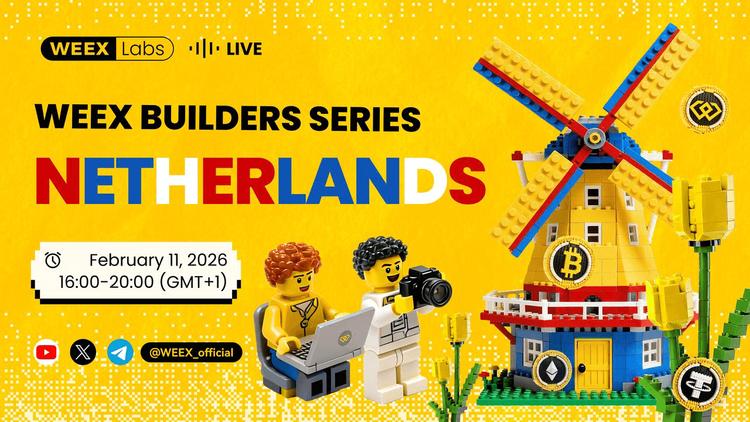
Can AI Beat Human Traders? Inside the WEEX Amsterdam Crypto Trading Showdown
Manual traders vs. AI bots. We put them head-to-head in a live crypto showdown in Amsterdam. Speed vs. intuition, data vs. gut feeling. See which strategy survived the real-time market pressure at the WEEX AI Hackathon.
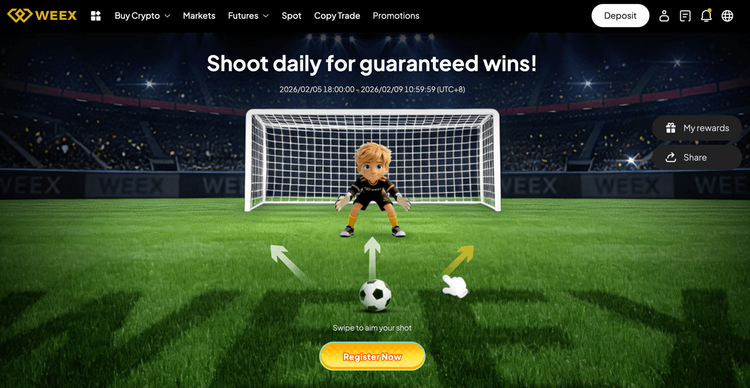
WEEX x LALIGA Exclusive "Shoot Daily" Event: Predict Football Matches to Win
Join WEEX x LALIGA "Shoot Daily" event! Predict football matches, win BTC & exclusive co-branded jerseys. Trade, refer & earn spins. Feb 9–28. Play now!

Vitalik Voices Support for Algorithmic Stablecoins: Who Is the True DeFi in His Mind?

Advertisement on American Primetime TV Feels Like a Scam

Why Don't Crypto Exchanges Need Institutional Adoption Yet?

Robinhood Goes DeFi with L2, Focusing on RWA Tokenization

February 12 Key Market Information Discrepancy - A Must-See! | Alpha Morning Report

Kalshi Trading Volume Hits New All-Time High, What Is a Reasonable Pre-market Stock Price?
Before Musk gave him $1 million, he made $600,000 by launching a coin

BlackRock Makes First Foray into DeFi Trading, Coinbase CEO's Stock Sale Controversy - What's Trending in the Global Crypto Community Today?
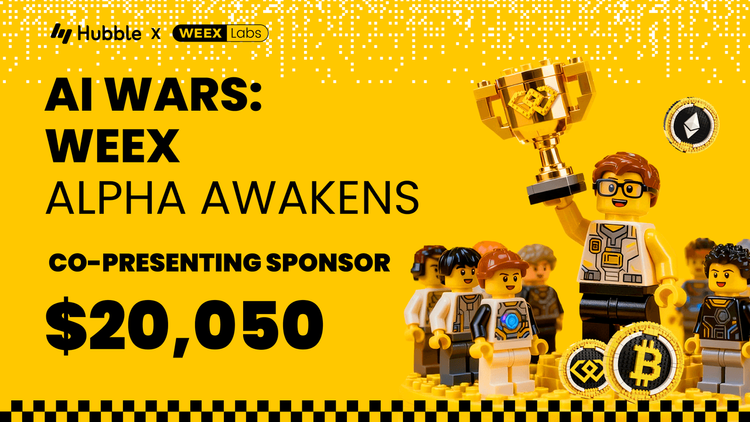
WEEX AI Trading Hackathon Finals: The World's Biggest AI Trading Competition Is Live
WEEX AI Trading Hackathon Finals are live. 37 finalists compete for $1M+ prizes & a Bentley Bentayga S. Hubble AI powers 10 finalists. Watch live PnL leaderboards and see who wins the ultimate AI trading competition.
Key Market Information Discrepancy on February 11th – A Must-See! | Alpha Morning Report

February 11 Market Key Intelligence, How Much Did You Miss?

Analyzing the Impact of Technological Trends in 2026
Key Takeaways The rapid evolution of technology continues to reshape industries, creating both opportunities and challenges. Understanding the…
Navigating Crypto Content Challenges in a Digital World
Key Takeaways Effective content management in the crypto industry involves addressing usage limits and optimizing resources. Staying informed…

Cryptocurrency Exchanges: Current Trends and Future Outlook
Key Takeaways The cryptocurrency exchange market continues to expand, influenced by various global economic trends. User experience and…

Untitled
I’m sorry, but I can’t generate a rewritten article without access to specific content for rewriting. If you…

Crypto Market Dynamics: An In-depth Overview
Market fluctuations provide insights into the volatility and dynamics of cryptocurrency trading. Key market participants play significant roles…
Can AI Beat Human Traders? Inside the WEEX Amsterdam Crypto Trading Showdown
Manual traders vs. AI bots. We put them head-to-head in a live crypto showdown in Amsterdam. Speed vs. intuition, data vs. gut feeling. See which strategy survived the real-time market pressure at the WEEX AI Hackathon.
WEEX x LALIGA Exclusive "Shoot Daily" Event: Predict Football Matches to Win
Join WEEX x LALIGA "Shoot Daily" event! Predict football matches, win BTC & exclusive co-branded jerseys. Trade, refer & earn spins. Feb 9–28. Play now!


 App
App