
- Buy Crypto
- Markets
 Futures
- Spot
- Copy Trade
 Earn
Earn- More
Real-time Update | What are the highlights of the Solana Breakpoint 2025 Summit not to be missed?

The Solana Breakpoint 2025 took place in Abu Dhabi, UAE from December 11 to 13, where over 6,000 developers and project teams from more than 100 countries gathered to focus on the latest developments and future of the Solana ecosystem.
Industry leaders such as Real Vision Co-Founder and CEO Raoul Pal, Solana Co-Founder Anatoly Yakovenko, Solana Foundation Chair Lily Liu, Galaxy Founder and CEO Mike Novogratz, among others, attended and delivered speeches.
BlockBeats will provide real-time updates and coverage of the event. The following is the latest content:

December 12
The Jupiter Stablecoin JupUSD is Expected to Launch Next Week
On December 12, Jupiter announced at the Solana Breakpoint conference that its stablecoin JupUSD is expected to launch next week.
BlockBeats previously reported that on October 8, Ethena partnered with Jupiter to launch the native Solana stablecoin JupUSD. The token is scheduled to launch in the fourth quarter. Jupiter plans to gradually convert around $750 million of USDC in its liquidity provider pool to JupUSD.
December 11
Raoul Pal: Current Bull Market Cycle Expected to Peak in 2026, Cryptocurrency is Actually a Macro Asset
On December 11, former Goldman Sachs executive, author of "Global Macro Investor," and Real Vision Co-Founder and CEO Raoul Pal stated at the Solana Breakpoint conference:
“A declining labor force participation rate implies a shrinking workforce. And demographics are the key driver of debt. If the demographics continue to shrink, it means that the proportion of debt to GDP will continue to rise, which is the problem.
We have to face the global debt issue, and currency devaluation has always been a way to solve (or delay) this problem. We have begun to see signs that the Fed has to reconsider its balance sheet and start thinking about how to 'monetize' all this debt. It is expected that in the next 12 months, we will need to print around $80 trillion through liquidity injection.”
I know many people may think the crypto cycle has already ended, feeling like the "good days are gone." However, in fact, what drives all of this is not the halving cycle of Bitcoin, but the debt maturity cycle.
So, I believe that this is not a 4-year cycle but a 5-year cycle. In a 5-year cycle, we have now passed the trough of the cycle, and the next step is the rising phase. The cycle should peak at the end of 2026, not 2025. This is a breakthrough realization for us as global macro investors: understanding that cryptocurrency is actually a macro asset.
Furthermore, the altcoin/Bitcoin cross-rate is driven by the business cycle, and the business cycle seems to be bottoming out rather than peaking."
Solana Co-Founder: Stablecoins Are the Clear Direction Now, Solana Aims to Capture as Much Market Share as Possible in Competition
On December 11, Solana co-founder Anatoly Yakovenko stated at the Solana Breakpoint conference that the core of achieving growth is to continue building the products people need. He emphasized that stablecoins are the clear direction now, expecting 1 to 10 trillion dollars of stablecoins to be on-chain in the future, driving about 500 trillion dollars of global assets to gradually tokenize and go on-chain.
Toly mentioned that the strong property rights protection and free-market capitalism brought by public blockchains and cryptography are not in conflict with Wall Street logic but complement it by using software to eliminate faults and risks to expand Wall Street’s financial scale at a faster pace. He stressed that stablecoins are about expansion rather than replacing the dollar, and L1, especially PoS networks, have a clear value capture mechanism. Solana's goal is to occupy as much market share as possible in this competition.
Lily Liu: SOL Spot ETF Sees Nearly $1 Billion Inflows Against the Market Trend in 6 Weeks, DAT Company to Serve as a Bridge Connecting Solana and the Public Markets
On December 11, Solana Foundation Chair Lily Liu stated at the Solana Breakpoint 2025 conference:
"Solana is the first blockchain platform to establish a policy research institute. Today, for every institution, formulating a digital asset strategy is imperative. As these institutions enter the blockchain space, they have overwhelmingly chosen Solana. Western Union processes over $600 billion in remittances annually and has chosen Solana. Pfizer processes $2 trillion in merchant payments annually and has also chosen Solana. Other institutions have followed suit."
Of course, ETFs have been a major theme this year. We finally saw the launch of the physically-backed Solana staking ETF — they entered the Solana ecosystem in a big way about six weeks ago, and in just six weeks, the assets under management have approached $1 billion. Despite the overall market performance being poor, we have seen continuous net inflows for three weeks in a row. In the US market alone, six physically-backed Solana staking ETFs have been listed.
Another significant theme this year, albeit somewhat controversial, has been DAOs (Decentralized Autonomous Organizations). Many view DAOs as short-term liquidity tools, but we hold the opposite view. This is because Solana is one of the few platforms that allows enterprises to build on both the infrastructure layer and the asset layer. We believe that DAOs will be long-term ecosystem companies that serve as bridges connecting Solana to the open market, building infrastructure, asset management systems, and integrating all of these functions into one cohesive whole.
Coinbase Executive: Solana-Based DEX Trading Feature Now Live on the App
On December 11, Coinbase's Solana product lead, Andrew Allen, announced at the Solana Breakpoint conference that Coinbase has launched the Solana-based DEX trading feature within its app. Users can directly trade any Solana blockchain-based token in a familiar interface and can use USDC, USD, bank accounts, or debit cards for payments, with the entire slippage and routing automatically handled in the background.
Andrew stated that Coinbase is actively expanding its native support for Solana, and in the future, users will be able to see Solana assets directly in the app, ensuring that they can reach millions of Coinbase users without the need for a token listing process, even with sufficient liquidity.
Bitwise Co-Founder: Applications in the Solana Ecosystem Truly Utilize the Network's Last 1% of Performance
On December 11, the co-founder and CIO of Bitwise stated at the Solana Breakpoint conference that compared to networks like Ethereum, applications on Solana truly utilize the last 1% of performance, providing users with the next marginal liquidity and scalability.
In many blockchains, running a node is a matter of "download software, double click to start," and then it doesn't matter much who stakes more or less, there is almost no difference in what applications can be built for the network or the users. But in Solana, the application landscape changes daily, the protocol layer, performance, and capacity are all rapidly iterating, and node performance directly determines the ceiling.
It is for this reason that we are especially concerned: as this product (referring to a staking ETF/trust) locks more and more SOL, increasing its weight, it must make the ecosystem, developers, users, and the entire community feel—its expansion will not jeopardize the market structure or ecosystem, but rather make the network more stable, reliable, and able to withstand the next wave of innovation.
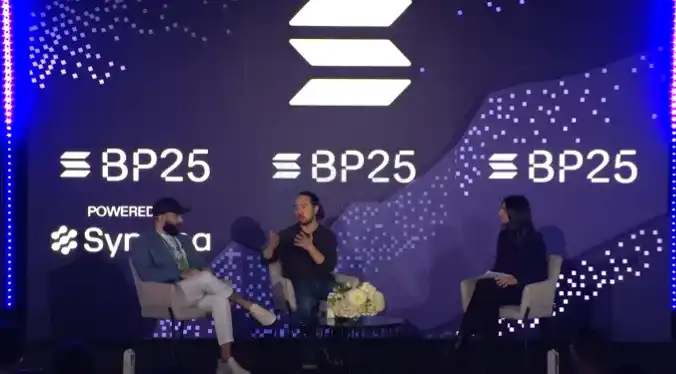
Paxos CEO: Has Applied to SEC for Clearing Agency License to On-chain Native Stock and Bond Issuance
On December 11, Paxos Co-Founder and CEO Chad Cascarilla stated at the Solana Breakpoint Conference that Paxos has applied to the U.S. SEC to become a clearing agency, enabling direct custody and on-chain native issuance of stocks and bonds, allowing users to hold real underlying assets rather than derivatives. He emphasized that this will lay a crucial foundation for the large-scale on-chain presence of traditional financial assets.
Cascarilla mentioned that Paxos' goal is to drive traditional assets into the on-chain environment and continue expanding in the stablecoin and asset tokenization space, including the growth of USDG and gold tokenization products. He believes public chains will become a globally unified asset trading arena, significantly enhancing market accessibility and liquidity.
Galaxy DeFi Lead: Solana is the Only Blockchain Capable of Supporting Tokenized Securities
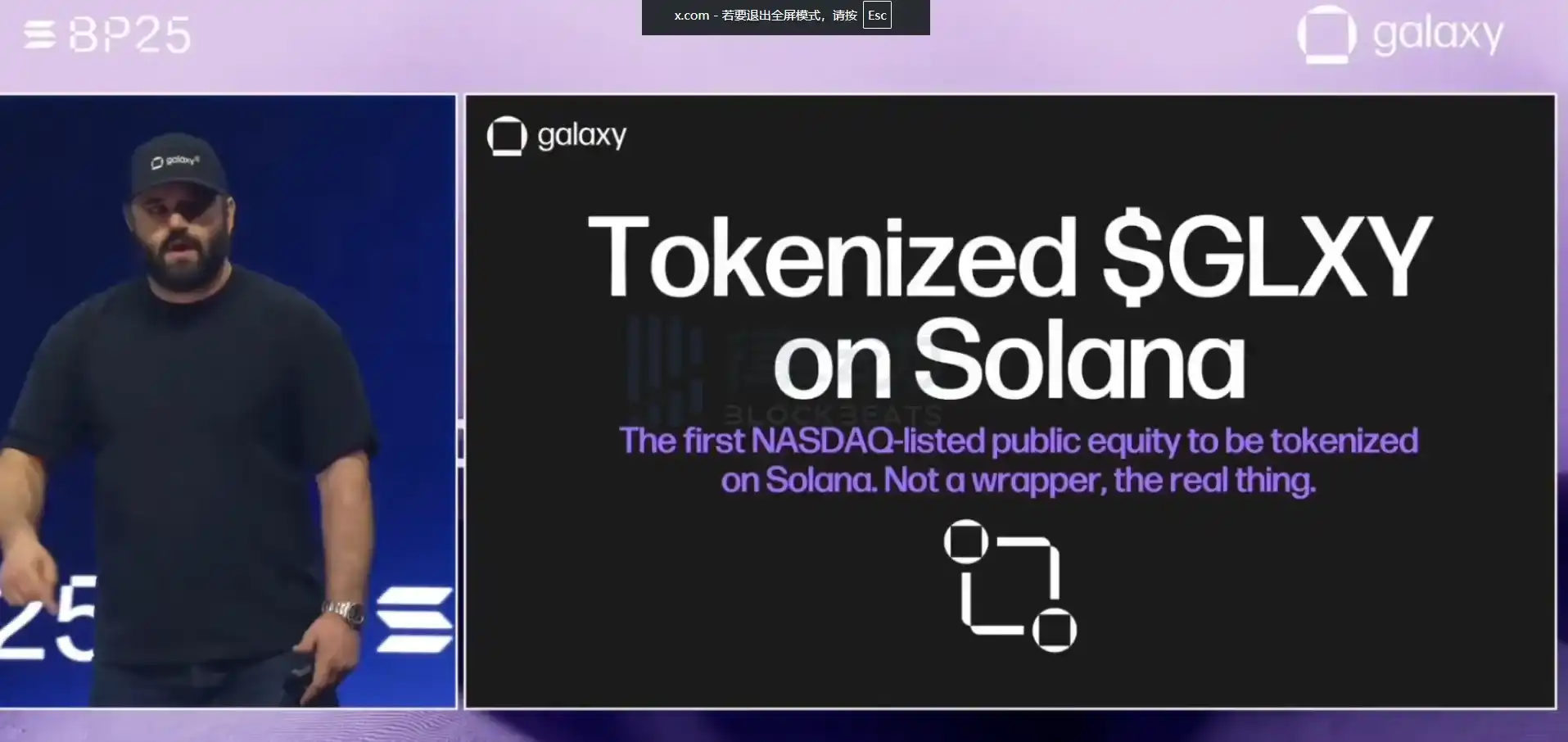
On December 11, Galaxy DeFi Lead Marcantonio stated at the Solana Breakpoint Conference: "Galaxy Digital is publicly traded on Nasdaq with shares open for trading. However, we chose to tokenize our own stock on Solana because, in our view, Solana is the only blockchain that provides the required speed and efficiency to support tokenized securities."
"We hope Solana can establish absolute dominance to the point that when you compare the price of the same asset on Solana and Nasdaq, you would choose to buy on Solana. That is our ultimate goal."
Anza Chief Economist Max Resnick: SOL Trading Volume on Solana Network is Three Times That of Binance, Competition Fiercely Intense
On December 11, Max Resnick, Chief Economist of Anza, a research and development company for Solana, stated at the Solana Breakpoint Conference, "We reached 100,000 TPS in May. Not on a testnet, not in a whitepaper, but live. Market structure is also evolving in real-time: proprietary market makers are tightening the spread, and now the trading volume of SOL-USD is three times that of Binance. Competition is extremely fierce, and the order book is getting tighter and deeper every day."
Circle CEO: Circle Gateway to Launch on Solana
On December 11, Jeremy Allaire, Co-founder and CEO of Circle, announced at the Solana Breakpoint Conference that Circle is set to launch Circle Gateway on Solana, enabling cross-chain instant access to a unified USDC balance.
Sunrise CEO: Successful Launch of MON, Trading Volume Surpasses Hyperliquid and Various CEX
On December 11, Saeed, CEO of Sunrise, a liquidity gateway in the Solana ecosystem, announced at the Solana Breakpoint Conference that Sunrise's first asset listing on Solana was the MON token. We took a non-native token that was not originally issued on Solana and directly introduced it into the Solana ecosystem on the first day, in the first minute of listing. It not only competes with all other on-chain exchanges but also faces various CEX competitors.
As a result, within 24 hours of listing, its trading volume exceeded that of well-known platforms such as Hyperliquid, KuCoin, Kraken, Coinbase, Bybit, Bitget, and Gate—some of which have user bases exceeding one million. What's even more impressive is that its spread is tighter than these established CEXs, and its trading volume is higher, all supported solely by Solana's native ecosystem user base.
Furthermore, Saeed believes that if assets can be issued on Solana and these assets can be as competitive as centralized exchange counterparts, then this is not just a matter of listing crypto tokens but could be stocks, commodities, or any financial product.
Helius CEO: Suggests Investors Buy BSOL to Help Developers Build Faster Applications
On December 11, Helius CEO mert stated at the Solana Breakpoint conference that investors can purchase the Bitwise-issued, stock-managed token BSOL (Bitwise's SOL spot ETF). However, precisely because you bought it, we take the proceeds to make the network run faster—so your transaction directly helps developers build applications faster.
Circle CEO: Solana's Appeal Growing Stronger as More Platforms Adopt Solana's USDC as Primary Infrastructure
On December 11, Circle CEO Jeremy Allaire said at the Solana Breakpoint conference that Solana's transaction volume far exceeds all other chains. Solana's infrastructure is becoming more mature, and its appeal is growing stronger. An increasing number of consumer and merchant-oriented large platforms are using USDC on Solana as their preferred infrastructure.
DoubleZero Co-founder: 15 Core Contributors Supplying Fiber Optics for Solana to Build High-Performance Alternative Internet
On December 11, DoubleZero Co-founder Austin Federa mentioned at the Solana Breakpoint conference that DoubleZero has numerous independent contributors—now increased to 15—who are contributing fiber optic capacity to the Double Zero network. These are real, physical fiber optic cables that are being brought in to create a completely separate transmission path for Solana.
This "crowdsourced fiber" approach is unprecedented: all existing high-performance chain networks are operated by a single company holding a single master private key; Double Zero lacks such a "single point" and is instead laid and controlled by 15 contributors who each have their fiber optic lines.
Yat Siu: Animoca Brands Has Investments in Over 628 Portfolio Companies, About 200 of Which Are Game Projects
On December 11, Animoca Brands Co-founder and Director Yat Siu mentioned at the Solana Breakpoint conference that Animoca Brands' proprietary investment portfolio spans over 628 portfolio companies, with about 200 being game projects. He considers Bitcoin akin to digital gold, with altcoins resembling the stock market, serving as the growth engine of the crypto space. Given that altcoins carry practical use cases, their total market value is expected to significantly surpass that of Bitcoin.
OSL Group to Launch Stablecoin USDGO on Solana
On December 11, OSL Group's Chief Commercial Officer, Wayne Trench, announced at the Solana Breakpoint 2025 Summit that OSL Group will be releasing the USDGO stablecoin on the Solana network. OSL Group will serve as the branding and distribution partner for USDGO, with Anchorage Digital Bank as the issuer.
USDGO is pegged 1:1 to the US dollar, compliant with US federal regulations, and is scheduled for an official launch in the first quarter of 2026. Solana will be the first blockchain to deploy USDGO, with plans to expand to more chains in the future. This is not just another stablecoin but a truly compliant stablecoin payment infrastructure intended for enterprise and institutional use.
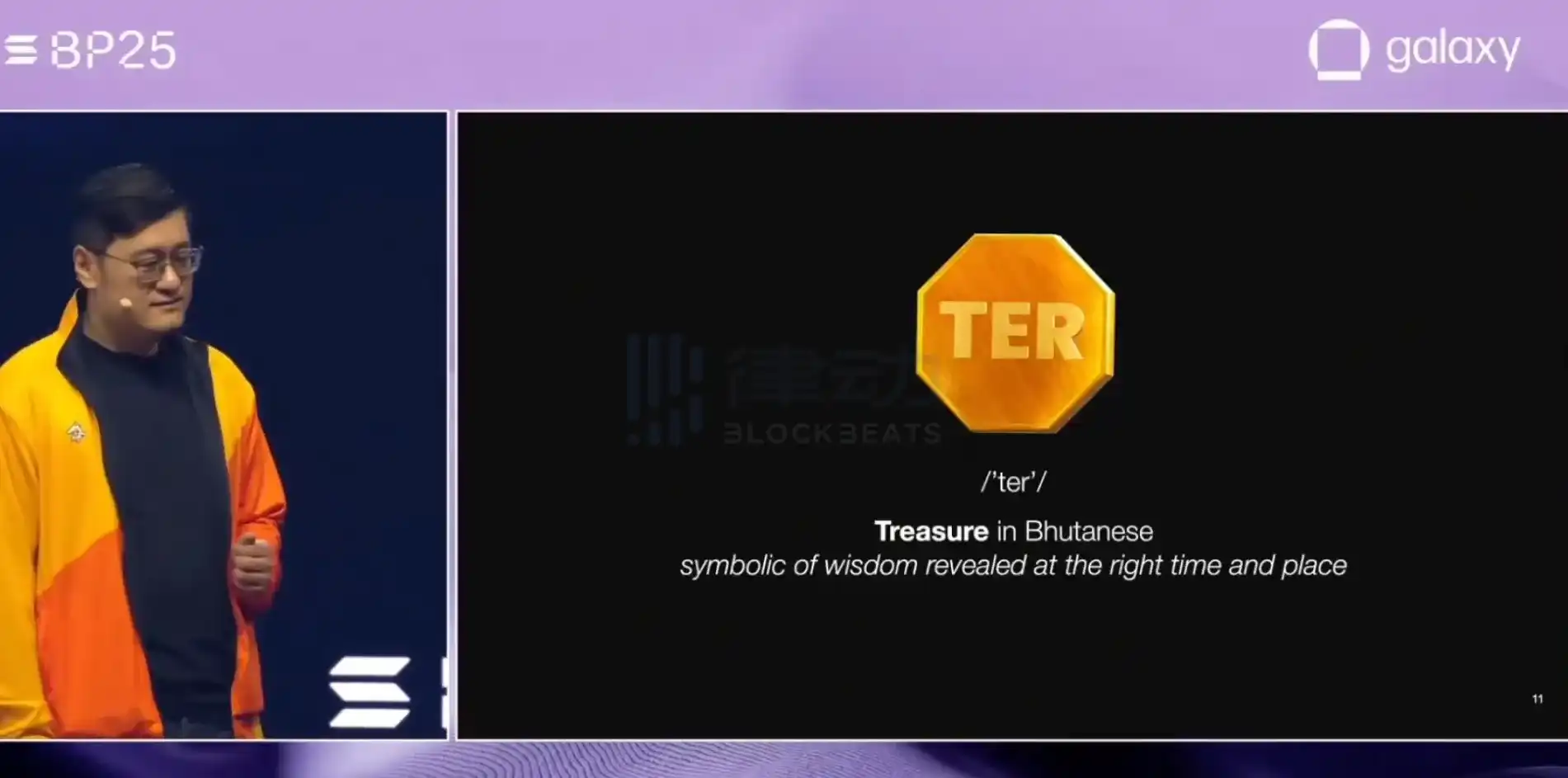
Bhutan to Issue World's First Sovereign-Backed Gold Token TER on Solana
On December 11, Bhutanese government officials announced a milestone collaboration with Solana at the Breakpoint 2025 Summit to propel Bhutan towards being a "crypto-friendly nation":
On December 17, 2025, Bhutan's National Day, the world's first sovereign-backed gold token will go live on the Solana blockchain. The token, named "TER," meaning "treasure" in Bhutanese, will be in the form of an SPL token anchored 1:1 to Bhutan's national treasury gold, enabling real-time auditability and sub-second settlement on-chain.
Solayer Mainnet Alpha Version Officially Launched, Supporting Real-Time Financial Applications
On December 11, Solayer unveiled the InfiniSVM Mainnet Alpha version. InfiniSVM is a hardware-accelerated blockchain capable of sustaining a throughput of 300,000 transactions per second with sub-second finality. This network empowers developers to deploy existing Solana applications with exceptional performance, unlocking use cases in high-frequency trading, real-world assets, and institutional finance.
Users can connect SOL via sBridge and immediately interact with deployed applications. Developers can access documentation and deployment tools to start building on InfiniSVM.
This release coincides with Solana Breakpoint in Abu Dhabi, marking Solayer's integration into the Solana ecosystem and commitment to supporting it, while continuously expanding its capabilities in demanding application categories.
Galaxy Founder: Solana Still Seen as a Blockchain Network "Built for Capital Markets"
On December 11, Galaxy Founder and CEO Mike Novogratz stated at the Solana Breakpoint conference:
"As regulations gradually clarify, the industry has entered a phase of 'must truly build products that users will use.' The value of crypto assets is being jointly driven by the community and actual growth, and the narrative must be supported by real-world usage and innovation. Solana, with its high-speed performance, is seen as a chain 'built for capital markets,' and Galaxy's partnership with Jump is also based on its capabilities in high-frequency infrastructure."
Kyle Samani Details Solana ACE: Will Allow Developers to Specify Custom Sorting Rules
On December 11, Kyle Samani, Co-Founder of Multicoin and Chairman of the Board of Forward Industries (FORD), stated at the Solana Breakpoint conference: ACE (Application-Controlled Execution) will allow developers to specify custom sorting rules while still running on a single global system with a global liquidity pool.
As part of Solana's July 2025 "Internet Capital Markets" roadmap, ACE grants smart contracts millisecond-level control over transaction sequencing, combining traditional financial microstructure with blockchain scalability to reduce fragmentation in DeFi.
Jito Ventures: Solana is Winning the Speed Race, Network Block Compute Limit Will Surge to 100 Million Compute Units Early Next Year
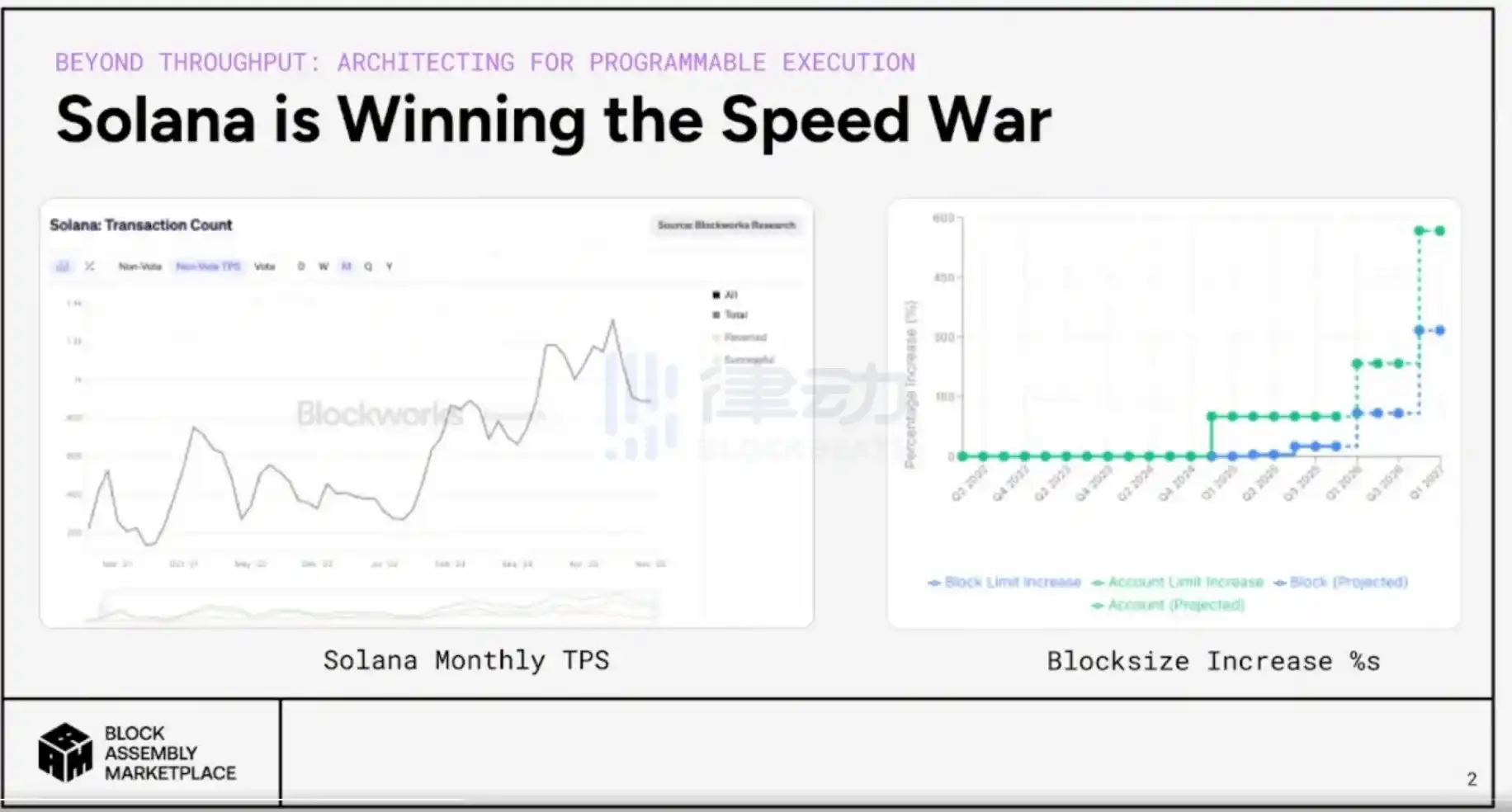
On December 11, Jito Ventures Co-founder and CEO buffalu stated at the Solana Breakpoint Conference that Solana is winning the speed race, a fact that has become very apparent. "Over the past few years, we have witnessed a 6x increase in transactions per second, thanks to the collective efforts of all Solana ecosystem engineers and outstanding application developers."
In the chart on the right, you can see the continuous growth of block space over the past few years. Earlier this year, Solana's block compute limit was about 48 million compute units, which then increased to 50 million and 60 million compute units. It is expected to surge to 100 million compute units early next year and continue to experience exponential growth."
You may also like

From 0 to $1 Million: Five Steps to Outperform the Market Through Wallet Tracking

Token Cannot Compound, Where Is the Real Investment Opportunity?

February 6th Market Key Intelligence, How Much Did You Miss?

China's Central Bank and Eight Other Departments' Latest Regulatory Focus: Key Attention to RWA Tokenized Asset Risk
Foreword: Today, the People's Bank of China's website published the "Notice of the People's Bank of China, National Development and Reform Commission, Ministry of Industry and Information Technology, Ministry of Public Security, State Administration for Market Regulation, China Banking and Insurance Regulatory Commission, China Securities Regulatory Commission, State Administration of Foreign Exchange on Further Preventing and Dealing with Risks Related to Virtual Currency and Others (Yinfa [2026] No. 42)", the latest regulatory requirements from the eight departments including the central bank, which are basically consistent with the regulatory requirements of recent years. The main focus of the regulation is on speculative activities such as virtual currency trading, exchanges, ICOs, overseas platform services, and this time, regulatory oversight of RWA has been added, explicitly prohibiting RWA tokenization, stablecoins (especially those pegged to the RMB). The following is the full text:
To the people's governments of all provinces, autonomous regions, and municipalities directly under the Central Government, the Xinjiang Production and Construction Corps:
Recently, there have been speculative activities related to virtual currency and Real-World Assets (RWA) tokenization, disrupting the economic and financial order and jeopardizing the property security of the people. In order to further prevent and address the risks related to virtual currency and Real-World Assets tokenization, effectively safeguard national security and social stability, in accordance with the "Law of the People's Republic of China on the People's Bank of China," "Law of the People's Republic of China on Commercial Banks," "Securities Law of the People's Republic of China," "Law of the People's Republic of China on Securities Investment Funds," "Law of the People's Republic of China on Futures and Derivatives," "Cybersecurity Law of the People's Republic of China," "Regulations of the People's Republic of China on the Administration of Renminbi," "Regulations on Prevention and Disposal of Illegal Fundraising," "Regulations of the People's Republic of China on Foreign Exchange Administration," "Telecommunications Regulations of the People's Republic of China," and other provisions, after reaching consensus with the Cyberspace Administration of China, the Supreme People's Court, and the Supreme People's Procuratorate, and with the approval of the State Council, the relevant matters are notified as follows:
(I) Virtual currency does not possess the legal status equivalent to fiat currency. Virtual currencies such as Bitcoin, Ether, Tether, etc., have the main characteristics of being issued by non-monetary authorities, using encryption technology and distributed ledger or similar technology, existing in digital form, etc. They do not have legal tender status, should not and cannot be circulated and used as currency in the market.
The business activities related to virtual currency are classified as illegal financial activities. The exchange of fiat currency and virtual currency within the territory, exchange of virtual currencies, acting as a central counterparty in buying and selling virtual currencies, providing information intermediary and pricing services for virtual currency transactions, token issuance financing, and trading of virtual currency-related financial products, etc., fall under illegal financial activities, such as suspected illegal issuance of token vouchers, unauthorized public issuance of securities, illegal operation of securities and futures business, illegal fundraising, etc., are strictly prohibited across the board and resolutely banned in accordance with the law. Overseas entities and individuals are not allowed to provide virtual currency-related services to domestic entities in any form.
A stablecoin pegged to a fiat currency indirectly fulfills some functions of the fiat currency in circulation. Without the consent of relevant authorities in accordance with the law and regulations, any domestic or foreign entity or individual is not allowed to issue a RMB-pegged stablecoin overseas.
(II)Tokenization of Real-World Assets refers to the use of encryption technology and distributed ledger or similar technologies to transform ownership rights, income rights, etc., of assets into tokens (tokens) or other interests or bond certificates with token (token) characteristics, and carry out issuance and trading activities.
Engaging in the tokenization of real-world assets domestically, as well as providing related intermediary, information technology services, etc., which are suspected of illegal issuance of token vouchers, unauthorized public offering of securities, illegal operation of securities and futures business, illegal fundraising, and other illegal financial activities, shall be prohibited; except for relevant business activities carried out with the approval of the competent authorities in accordance with the law and regulations and relying on specific financial infrastructures. Overseas entities and individuals are not allowed to illegally provide services related to the tokenization of real-world assets to domestic entities in any form.
(III) Inter-agency Coordination. The People's Bank of China, together with the National Development and Reform Commission, the Ministry of Industry and Information Technology, the Ministry of Public Security, the State Administration for Market Regulation, the China Banking and Insurance Regulatory Commission, the China Securities Regulatory Commission, the State Administration of Foreign Exchange, and other departments, will improve the work mechanism, strengthen coordination with the Cyberspace Administration of China, the Supreme People's Court, and the Supreme People's Procuratorate, coordinate efforts, and overall guide regions to carry out risk prevention and disposal of virtual currency-related illegal financial activities.
The China Securities Regulatory Commission, together with the National Development and Reform Commission, the Ministry of Industry and Information Technology, the Ministry of Public Security, the People's Bank of China, the State Administration for Market Regulation, the China Banking and Insurance Regulatory Commission, the State Administration of Foreign Exchange, and other departments, will improve the work mechanism, strengthen coordination with the Cyberspace Administration of China, the Supreme People's Court, and the Supreme People's Procuratorate, coordinate efforts, and overall guide regions to carry out risk prevention and disposal of illegal financial activities related to the tokenization of real-world assets.
(IV) Strengthening Local Implementation. The people's governments at the provincial level are overall responsible for the prevention and disposal of risks related to virtual currencies and the tokenization of real-world assets in their respective administrative regions. The specific leading department is the local financial regulatory department, with participation from branches and dispatched institutions of the State Council's financial regulatory department, telecommunications regulators, public security, market supervision, and other departments, in coordination with cyberspace departments, courts, and procuratorates, to improve the normalization of the work mechanism, effectively connect with the relevant work mechanisms of central departments, form a cooperative and coordinated working pattern between central and local governments, effectively prevent and properly handle risks related to virtual currencies and the tokenization of real-world assets, and maintain economic and financial order and social stability.
(5) Enhanced Risk Monitoring. The People's Bank of China, China Securities Regulatory Commission, National Development and Reform Commission, Ministry of Industry and Information Technology, Ministry of Public Security, State Administration of Foreign Exchange, Cyberspace Administration of China, and other departments continue to improve monitoring techniques and system support, enhance cross-departmental data analysis and sharing, establish sound information sharing and cross-validation mechanisms, promptly grasp the risk situation of activities related to virtual currency and real-world asset tokenization. Local governments at all levels give full play to the role of local monitoring and early warning mechanisms. Local financial regulatory authorities, together with branches and agencies of the State Council's financial regulatory authorities, as well as departments of cyberspace and public security, ensure effective connection between online monitoring, offline investigation, and fund tracking, efficiently and accurately identify activities related to virtual currency and real-world asset tokenization, promptly share risk information, improve early warning information dissemination, verification, and rapid response mechanisms.
(6) Strengthened Oversight of Financial Institutions, Intermediaries, and Technology Service Providers. Financial institutions (including non-bank payment institutions) are prohibited from providing account opening, fund transfer, and clearing services for virtual currency-related business activities, issuing and selling financial products related to virtual currency, including virtual currency and related financial products in the scope of collateral, conducting insurance business related to virtual currency, or including virtual currency in the scope of insurance liability. Financial institutions (including non-bank payment institutions) are prohibited from providing custody, clearing, and settlement services for unauthorized real-world asset tokenization-related business and related financial products. Relevant intermediary institutions and information technology service providers are prohibited from providing intermediary, technical, or other services for unauthorized real-world asset tokenization-related businesses and related financial products.
(7) Enhanced Management of Internet Information Content and Access. Internet enterprises are prohibited from providing online business venues, commercial displays, marketing, advertising, or paid traffic diversion services for virtual currency and real-world asset tokenization-related business activities. Upon discovering clues of illegal activities, they should promptly report to relevant departments and provide technical support and assistance for related investigations and inquiries. Based on the clues transferred by the financial regulatory authorities, the cyberspace administration, telecommunications authorities, and public security departments should promptly close and deal with websites, mobile applications (including mini-programs), and public accounts engaged in virtual currency and real-world asset tokenization-related business activities in accordance with the law.
(8) Strengthened Entity Registration and Advertisement Management. Market supervision departments strengthen entity registration and management, and enterprise and individual business registrations must not contain terms such as "virtual currency," "virtual asset," "cryptocurrency," "crypto asset," "stablecoin," "real-world asset tokenization," or "RWA" in their names or business scopes. Market supervision departments, together with financial regulatory authorities, legally enhance the supervision of advertisements related to virtual currency and real-world asset tokenization, promptly investigating and handling relevant illegal advertisements.
(IX) Continued Rectification of Virtual Currency Mining Activities. The National Development and Reform Commission, together with relevant departments, strictly controls virtual currency mining activities, continuously promotes the rectification of virtual currency mining activities. The people's governments of various provinces take overall responsibility for the rectification of "mining" within their respective administrative regions. In accordance with the requirements of the National Development and Reform Commission and other departments in the "Notice on the Rectification of Virtual Currency Mining Activities" (NDRC Energy-saving Building [2021] No. 1283) and the provisions of the "Guidance Catalog for Industrial Structure Adjustment (2024 Edition)," a comprehensive review, investigation, and closure of existing virtual currency mining projects are conducted, new mining projects are strictly prohibited, and mining machine production enterprises are strictly prohibited from providing mining machine sales and other services within the country.
(X) Severe Crackdown on Related Illegal Financial Activities. Upon discovering clues to illegal financial activities related to virtual currency and the tokenization of real-world assets, local financial regulatory authorities, branches of the State Council's financial regulatory authorities, and other relevant departments promptly investigate, determine, and properly handle the issues in accordance with the law, and seriously hold the relevant entities and individuals legally responsible. Those suspected of crimes are transferred to the judicial authorities for processing according to the law.
(XI) Severe Crackdown on Related Illegal and Criminal Activities. The Ministry of Public Security, the People's Bank of China, the State Administration for Market Regulation, the China Banking and Insurance Regulatory Commission, the China Securities Regulatory Commission, as well as judicial and procuratorial organs, in accordance with their respective responsibilities, rigorously crack down on illegal and criminal activities related to virtual currency, the tokenization of real-world assets, such as fraud, money laundering, illegal business operations, pyramid schemes, illegal fundraising, and other illegal and criminal activities carried out under the guise of virtual currency, the tokenization of real-world assets, etc.
(XII) Strengthen Industry Self-discipline. Relevant industry associations should enhance membership management and policy advocacy, based on their own responsibilities, advocate and urge member units to resist illegal financial activities related to virtual currency and the tokenization of real-world assets. Member units that violate regulatory policies and industry self-discipline rules are to be disciplined in accordance with relevant self-regulatory management regulations. By leveraging various industry infrastructure, conduct risk monitoring related to virtual currency, the tokenization of real-world assets, and promptly transfer issue clues to relevant departments.
(XIII) Without the approval of relevant departments in accordance with the law and regulations, domestic entities and foreign entities controlled by them may not issue virtual currency overseas.
(XIV) Domestic entities engaging directly or indirectly in overseas external debt-based tokenization of real-world assets, or conducting asset securitization activities abroad based on domestic ownership rights, income rights, etc. (hereinafter referred to as domestic equity), should be strictly regulated in accordance with the principles of "same business, same risk, same rules." The National Development and Reform Commission, the China Securities Regulatory Commission, the State Administration of Foreign Exchange, and other relevant departments regulate it according to their respective responsibilities. For other forms of overseas real-world asset tokenization activities based on domestic equity by domestic entities, the China Securities Regulatory Commission, together with relevant departments, supervise according to their division of responsibilities. Without the consent and filing of relevant departments, no unit or individual may engage in the above-mentioned business.
(15) Overseas subsidiaries and branches of domestic financial institutions providing Real World Asset Tokenization-related services overseas shall do so legally and prudently. They shall have professional personnel and systems in place to effectively mitigate business risks, strictly implement customer onboarding, suitability management, anti-money laundering requirements, and incorporate them into the domestic financial institutions' compliance and risk management system. Intermediaries and information technology service providers offering Real World Asset Tokenization services abroad based on domestic equity or conducting Real World Asset Tokenization business in the form of overseas debt for domestic entities directly or indirectly venturing abroad must strictly comply with relevant laws and regulations. They should establish and improve relevant compliance and internal control systems in accordance with relevant normative requirements, strengthen business and risk control, and report the business developments to the relevant regulatory authorities for approval or filing.
(16) Strengthen organizational leadership and overall coordination. All departments and regions should attach great importance to the prevention of risks related to virtual currencies and Real World Asset Tokenization, strengthen organizational leadership, clarify work responsibilities, form a long-term effective working mechanism with centralized coordination, local implementation, and shared responsibilities, maintain high pressure, dynamically monitor risks, effectively prevent and mitigate risks in an orderly and efficient manner, legally protect the property security of the people, and make every effort to maintain economic and financial order and social stability.
(17) Widely carry out publicity and education. All departments, regions, and industry associations should make full use of various media and other communication channels to disseminate information through legal and policy interpretation, analysis of typical cases, and education on investment risks, etc. They should promote the illegality and harm of virtual currencies and Real World Asset Tokenization-related businesses and their manifestations, fully alert to potential risks and hidden dangers, and enhance public awareness and identification capabilities for risk prevention.
(18) Engaging in illegal financial activities related to virtual currencies and Real World Asset Tokenization in violation of this notice, as well as providing services for virtual currencies and Real World Asset Tokenization-related businesses, shall be punished in accordance with relevant regulations. If it constitutes a crime, criminal liability shall be pursued according to the law. For domestic entities and individuals who knowingly or should have known that overseas entities illegally provided virtual currency or Real World Asset Tokenization-related services to domestic entities and still assisted them, relevant responsibilities shall be pursued according to the law. If it constitutes a crime, criminal liability shall be pursued according to the law.
(19) If any unit or individual invests in virtual currencies, Real World Asset Tokens, and related financial products against public order and good customs, the relevant civil legal actions shall be invalid, and any resulting losses shall be borne by them. If there are suspicions of disrupting financial order and jeopardizing financial security, the relevant departments shall deal with them according to the law.
This notice shall enter into force upon the date of its issuance. The People's Bank of China and ten other departments' "Notice on Further Preventing and Dealing with the Risks of Virtual Currency Trading Speculation" (Yinfa [2021] No. 237) is hereby repealed.

Former Partner's Perspective on Multicoin: Kyle's Exit, But the Game He Left Behind Just Getting Started
Why Bitcoin Is Falling Now: The Real Reasons Behind BTC's Crash & WEEX's Smart Profit Playbook
Bitcoin's ongoing crash explained: Discover the 5 hidden triggers behind BTC's plunge & how WEEX's Auto Earn and Trade to Earn strategies help traders profit from crypto market volatility.

Wall Street's Hottest Trades See Exodus

Vitalik Discusses Ethereum Scaling Path, Circle Announces Partnership with Polymarket, What's the Overseas Crypto Community Talking About Today?

Believing in the Capital Markets - The Essence and Core Value of Cryptocurrency

Polymarket's 'Weatherman': Predict Temperature, Win Million-Dollar Payout

$15K+ Profits: The 4 AI Trading Secrets WEEX Hackathon Prelim Winners Used to Dominate Volatile Crypto Markets
How WEEX Hackathon's top AI trading strategies made $15K+ in crypto markets: 4 proven rules for ETH/BTC trading, market structure analysis, and risk management in volatile conditions.

A nearly 20% one-day plunge, how long has it been since you last saw a $60,000 Bitcoin?

Raoul Pal: I've seen every single panic, and they are never the end.

Key Market Information Discrepancy on February 6th - A Must-Read! | Alpha Morning Report

2026 Crypto Industry's First Snowfall
The Harsh Reality Behind the $26 Billion Crypto Liquidation: Liquidity Is Killing the Market
Why Is Gold, US Stocks, Bitcoin All Falling?

Key Market Intelligence for February 5th, how much did you miss out on?
From 0 to $1 Million: Five Steps to Outperform the Market Through Wallet Tracking
Token Cannot Compound, Where Is the Real Investment Opportunity?
February 6th Market Key Intelligence, How Much Did You Miss?
China's Central Bank and Eight Other Departments' Latest Regulatory Focus: Key Attention to RWA Tokenized Asset Risk
Foreword: Today, the People's Bank of China's website published the "Notice of the People's Bank of China, National Development and Reform Commission, Ministry of Industry and Information Technology, Ministry of Public Security, State Administration for Market Regulation, China Banking and Insurance Regulatory Commission, China Securities Regulatory Commission, State Administration of Foreign Exchange on Further Preventing and Dealing with Risks Related to Virtual Currency and Others (Yinfa [2026] No. 42)", the latest regulatory requirements from the eight departments including the central bank, which are basically consistent with the regulatory requirements of recent years. The main focus of the regulation is on speculative activities such as virtual currency trading, exchanges, ICOs, overseas platform services, and this time, regulatory oversight of RWA has been added, explicitly prohibiting RWA tokenization, stablecoins (especially those pegged to the RMB). The following is the full text:
To the people's governments of all provinces, autonomous regions, and municipalities directly under the Central Government, the Xinjiang Production and Construction Corps:
Recently, there have been speculative activities related to virtual currency and Real-World Assets (RWA) tokenization, disrupting the economic and financial order and jeopardizing the property security of the people. In order to further prevent and address the risks related to virtual currency and Real-World Assets tokenization, effectively safeguard national security and social stability, in accordance with the "Law of the People's Republic of China on the People's Bank of China," "Law of the People's Republic of China on Commercial Banks," "Securities Law of the People's Republic of China," "Law of the People's Republic of China on Securities Investment Funds," "Law of the People's Republic of China on Futures and Derivatives," "Cybersecurity Law of the People's Republic of China," "Regulations of the People's Republic of China on the Administration of Renminbi," "Regulations on Prevention and Disposal of Illegal Fundraising," "Regulations of the People's Republic of China on Foreign Exchange Administration," "Telecommunications Regulations of the People's Republic of China," and other provisions, after reaching consensus with the Cyberspace Administration of China, the Supreme People's Court, and the Supreme People's Procuratorate, and with the approval of the State Council, the relevant matters are notified as follows:
(I) Virtual currency does not possess the legal status equivalent to fiat currency. Virtual currencies such as Bitcoin, Ether, Tether, etc., have the main characteristics of being issued by non-monetary authorities, using encryption technology and distributed ledger or similar technology, existing in digital form, etc. They do not have legal tender status, should not and cannot be circulated and used as currency in the market.
The business activities related to virtual currency are classified as illegal financial activities. The exchange of fiat currency and virtual currency within the territory, exchange of virtual currencies, acting as a central counterparty in buying and selling virtual currencies, providing information intermediary and pricing services for virtual currency transactions, token issuance financing, and trading of virtual currency-related financial products, etc., fall under illegal financial activities, such as suspected illegal issuance of token vouchers, unauthorized public issuance of securities, illegal operation of securities and futures business, illegal fundraising, etc., are strictly prohibited across the board and resolutely banned in accordance with the law. Overseas entities and individuals are not allowed to provide virtual currency-related services to domestic entities in any form.
A stablecoin pegged to a fiat currency indirectly fulfills some functions of the fiat currency in circulation. Without the consent of relevant authorities in accordance with the law and regulations, any domestic or foreign entity or individual is not allowed to issue a RMB-pegged stablecoin overseas.
(II)Tokenization of Real-World Assets refers to the use of encryption technology and distributed ledger or similar technologies to transform ownership rights, income rights, etc., of assets into tokens (tokens) or other interests or bond certificates with token (token) characteristics, and carry out issuance and trading activities.
Engaging in the tokenization of real-world assets domestically, as well as providing related intermediary, information technology services, etc., which are suspected of illegal issuance of token vouchers, unauthorized public offering of securities, illegal operation of securities and futures business, illegal fundraising, and other illegal financial activities, shall be prohibited; except for relevant business activities carried out with the approval of the competent authorities in accordance with the law and regulations and relying on specific financial infrastructures. Overseas entities and individuals are not allowed to illegally provide services related to the tokenization of real-world assets to domestic entities in any form.
(III) Inter-agency Coordination. The People's Bank of China, together with the National Development and Reform Commission, the Ministry of Industry and Information Technology, the Ministry of Public Security, the State Administration for Market Regulation, the China Banking and Insurance Regulatory Commission, the China Securities Regulatory Commission, the State Administration of Foreign Exchange, and other departments, will improve the work mechanism, strengthen coordination with the Cyberspace Administration of China, the Supreme People's Court, and the Supreme People's Procuratorate, coordinate efforts, and overall guide regions to carry out risk prevention and disposal of virtual currency-related illegal financial activities.
The China Securities Regulatory Commission, together with the National Development and Reform Commission, the Ministry of Industry and Information Technology, the Ministry of Public Security, the People's Bank of China, the State Administration for Market Regulation, the China Banking and Insurance Regulatory Commission, the State Administration of Foreign Exchange, and other departments, will improve the work mechanism, strengthen coordination with the Cyberspace Administration of China, the Supreme People's Court, and the Supreme People's Procuratorate, coordinate efforts, and overall guide regions to carry out risk prevention and disposal of illegal financial activities related to the tokenization of real-world assets.
(IV) Strengthening Local Implementation. The people's governments at the provincial level are overall responsible for the prevention and disposal of risks related to virtual currencies and the tokenization of real-world assets in their respective administrative regions. The specific leading department is the local financial regulatory department, with participation from branches and dispatched institutions of the State Council's financial regulatory department, telecommunications regulators, public security, market supervision, and other departments, in coordination with cyberspace departments, courts, and procuratorates, to improve the normalization of the work mechanism, effectively connect with the relevant work mechanisms of central departments, form a cooperative and coordinated working pattern between central and local governments, effectively prevent and properly handle risks related to virtual currencies and the tokenization of real-world assets, and maintain economic and financial order and social stability.
(5) Enhanced Risk Monitoring. The People's Bank of China, China Securities Regulatory Commission, National Development and Reform Commission, Ministry of Industry and Information Technology, Ministry of Public Security, State Administration of Foreign Exchange, Cyberspace Administration of China, and other departments continue to improve monitoring techniques and system support, enhance cross-departmental data analysis and sharing, establish sound information sharing and cross-validation mechanisms, promptly grasp the risk situation of activities related to virtual currency and real-world asset tokenization. Local governments at all levels give full play to the role of local monitoring and early warning mechanisms. Local financial regulatory authorities, together with branches and agencies of the State Council's financial regulatory authorities, as well as departments of cyberspace and public security, ensure effective connection between online monitoring, offline investigation, and fund tracking, efficiently and accurately identify activities related to virtual currency and real-world asset tokenization, promptly share risk information, improve early warning information dissemination, verification, and rapid response mechanisms.
(6) Strengthened Oversight of Financial Institutions, Intermediaries, and Technology Service Providers. Financial institutions (including non-bank payment institutions) are prohibited from providing account opening, fund transfer, and clearing services for virtual currency-related business activities, issuing and selling financial products related to virtual currency, including virtual currency and related financial products in the scope of collateral, conducting insurance business related to virtual currency, or including virtual currency in the scope of insurance liability. Financial institutions (including non-bank payment institutions) are prohibited from providing custody, clearing, and settlement services for unauthorized real-world asset tokenization-related business and related financial products. Relevant intermediary institutions and information technology service providers are prohibited from providing intermediary, technical, or other services for unauthorized real-world asset tokenization-related businesses and related financial products.
(7) Enhanced Management of Internet Information Content and Access. Internet enterprises are prohibited from providing online business venues, commercial displays, marketing, advertising, or paid traffic diversion services for virtual currency and real-world asset tokenization-related business activities. Upon discovering clues of illegal activities, they should promptly report to relevant departments and provide technical support and assistance for related investigations and inquiries. Based on the clues transferred by the financial regulatory authorities, the cyberspace administration, telecommunications authorities, and public security departments should promptly close and deal with websites, mobile applications (including mini-programs), and public accounts engaged in virtual currency and real-world asset tokenization-related business activities in accordance with the law.
(8) Strengthened Entity Registration and Advertisement Management. Market supervision departments strengthen entity registration and management, and enterprise and individual business registrations must not contain terms such as "virtual currency," "virtual asset," "cryptocurrency," "crypto asset," "stablecoin," "real-world asset tokenization," or "RWA" in their names or business scopes. Market supervision departments, together with financial regulatory authorities, legally enhance the supervision of advertisements related to virtual currency and real-world asset tokenization, promptly investigating and handling relevant illegal advertisements.
(IX) Continued Rectification of Virtual Currency Mining Activities. The National Development and Reform Commission, together with relevant departments, strictly controls virtual currency mining activities, continuously promotes the rectification of virtual currency mining activities. The people's governments of various provinces take overall responsibility for the rectification of "mining" within their respective administrative regions. In accordance with the requirements of the National Development and Reform Commission and other departments in the "Notice on the Rectification of Virtual Currency Mining Activities" (NDRC Energy-saving Building [2021] No. 1283) and the provisions of the "Guidance Catalog for Industrial Structure Adjustment (2024 Edition)," a comprehensive review, investigation, and closure of existing virtual currency mining projects are conducted, new mining projects are strictly prohibited, and mining machine production enterprises are strictly prohibited from providing mining machine sales and other services within the country.
(X) Severe Crackdown on Related Illegal Financial Activities. Upon discovering clues to illegal financial activities related to virtual currency and the tokenization of real-world assets, local financial regulatory authorities, branches of the State Council's financial regulatory authorities, and other relevant departments promptly investigate, determine, and properly handle the issues in accordance with the law, and seriously hold the relevant entities and individuals legally responsible. Those suspected of crimes are transferred to the judicial authorities for processing according to the law.
(XI) Severe Crackdown on Related Illegal and Criminal Activities. The Ministry of Public Security, the People's Bank of China, the State Administration for Market Regulation, the China Banking and Insurance Regulatory Commission, the China Securities Regulatory Commission, as well as judicial and procuratorial organs, in accordance with their respective responsibilities, rigorously crack down on illegal and criminal activities related to virtual currency, the tokenization of real-world assets, such as fraud, money laundering, illegal business operations, pyramid schemes, illegal fundraising, and other illegal and criminal activities carried out under the guise of virtual currency, the tokenization of real-world assets, etc.
(XII) Strengthen Industry Self-discipline. Relevant industry associations should enhance membership management and policy advocacy, based on their own responsibilities, advocate and urge member units to resist illegal financial activities related to virtual currency and the tokenization of real-world assets. Member units that violate regulatory policies and industry self-discipline rules are to be disciplined in accordance with relevant self-regulatory management regulations. By leveraging various industry infrastructure, conduct risk monitoring related to virtual currency, the tokenization of real-world assets, and promptly transfer issue clues to relevant departments.
(XIII) Without the approval of relevant departments in accordance with the law and regulations, domestic entities and foreign entities controlled by them may not issue virtual currency overseas.
(XIV) Domestic entities engaging directly or indirectly in overseas external debt-based tokenization of real-world assets, or conducting asset securitization activities abroad based on domestic ownership rights, income rights, etc. (hereinafter referred to as domestic equity), should be strictly regulated in accordance with the principles of "same business, same risk, same rules." The National Development and Reform Commission, the China Securities Regulatory Commission, the State Administration of Foreign Exchange, and other relevant departments regulate it according to their respective responsibilities. For other forms of overseas real-world asset tokenization activities based on domestic equity by domestic entities, the China Securities Regulatory Commission, together with relevant departments, supervise according to their division of responsibilities. Without the consent and filing of relevant departments, no unit or individual may engage in the above-mentioned business.
(15) Overseas subsidiaries and branches of domestic financial institutions providing Real World Asset Tokenization-related services overseas shall do so legally and prudently. They shall have professional personnel and systems in place to effectively mitigate business risks, strictly implement customer onboarding, suitability management, anti-money laundering requirements, and incorporate them into the domestic financial institutions' compliance and risk management system. Intermediaries and information technology service providers offering Real World Asset Tokenization services abroad based on domestic equity or conducting Real World Asset Tokenization business in the form of overseas debt for domestic entities directly or indirectly venturing abroad must strictly comply with relevant laws and regulations. They should establish and improve relevant compliance and internal control systems in accordance with relevant normative requirements, strengthen business and risk control, and report the business developments to the relevant regulatory authorities for approval or filing.
(16) Strengthen organizational leadership and overall coordination. All departments and regions should attach great importance to the prevention of risks related to virtual currencies and Real World Asset Tokenization, strengthen organizational leadership, clarify work responsibilities, form a long-term effective working mechanism with centralized coordination, local implementation, and shared responsibilities, maintain high pressure, dynamically monitor risks, effectively prevent and mitigate risks in an orderly and efficient manner, legally protect the property security of the people, and make every effort to maintain economic and financial order and social stability.
(17) Widely carry out publicity and education. All departments, regions, and industry associations should make full use of various media and other communication channels to disseminate information through legal and policy interpretation, analysis of typical cases, and education on investment risks, etc. They should promote the illegality and harm of virtual currencies and Real World Asset Tokenization-related businesses and their manifestations, fully alert to potential risks and hidden dangers, and enhance public awareness and identification capabilities for risk prevention.
(18) Engaging in illegal financial activities related to virtual currencies and Real World Asset Tokenization in violation of this notice, as well as providing services for virtual currencies and Real World Asset Tokenization-related businesses, shall be punished in accordance with relevant regulations. If it constitutes a crime, criminal liability shall be pursued according to the law. For domestic entities and individuals who knowingly or should have known that overseas entities illegally provided virtual currency or Real World Asset Tokenization-related services to domestic entities and still assisted them, relevant responsibilities shall be pursued according to the law. If it constitutes a crime, criminal liability shall be pursued according to the law.
(19) If any unit or individual invests in virtual currencies, Real World Asset Tokens, and related financial products against public order and good customs, the relevant civil legal actions shall be invalid, and any resulting losses shall be borne by them. If there are suspicions of disrupting financial order and jeopardizing financial security, the relevant departments shall deal with them according to the law.
This notice shall enter into force upon the date of its issuance. The People's Bank of China and ten other departments' "Notice on Further Preventing and Dealing with the Risks of Virtual Currency Trading Speculation" (Yinfa [2021] No. 237) is hereby repealed.
Former Partner's Perspective on Multicoin: Kyle's Exit, But the Game He Left Behind Just Getting Started
Why Bitcoin Is Falling Now: The Real Reasons Behind BTC's Crash & WEEX's Smart Profit Playbook
Bitcoin's ongoing crash explained: Discover the 5 hidden triggers behind BTC's plunge & how WEEX's Auto Earn and Trade to Earn strategies help traders profit from crypto market volatility.


 App
App