
- Buy Crypto
- Markets
- Futures
- Spot
- Copy Trade
 Earn
Earn- More
OpenAI May Integrate Iris Recognition: WLD Surges 20% in One Day, Receives Major Endorsement?

Original Title: "WLD Skyrockets 20%, Iris Scanning to be OpenAI's Trust Savior?"
Original Author: Mach, Foresight News
On January 29, World token WLD soared over 18% in the past 24 hours, jumping from around $0.46 to near $0.65, with a current market cap of around $25 billion. The price surge was directly attributed to a Forbes report: OpenAI is developing a new social networking app considering using iris scanning technology similar to World's to verify user identities, aiming to address the issue of online bot proliferation.
According to The Information, Nvidia, Amazon, and Microsoft are in talks to invest up to $60 billion in OpenAI. This new round of funding could value OpenAI at $730 billion.
Rampant Bot Fakery Sparks Need for Human-Verified OpenAI
OpenAI hopes to achieve "proof of personhood" through biometric means to filter out AI-generated fake accounts. The rapid advancement of AI is creating challenges that it cannot solve on its own, and World is stepping in to fill that void. Sam Altman's dual role is a key link. He is not only the head of OpenAI but also a co-founder of World.
Altman foresaw as early as 2020 that AI would blur the line between humans and machines, leading to a collapse of online trust. OpenAI's AI models like the GPT series have infiltrated social media, recruiting, financial fields, but the accompanying wave of misuse includes fake accounts spreading false information, AI agents manipulating markets, and even fabricating resumes on recruiting platforms.
OpenAI needs a reliable "personality filter" to maintain the purity of its ecosystem; otherwise, its products will face regulatory pressure and user attrition.
OpenAI's social app is said to aim to create a "bot-free" online space, but traditional CAPTCHAs or phone verifications have failed - AI can easily bypass them. World's Orb provides zero-knowledge proof through iris scanning, allowing users to prove they are human without revealing personal information. This technology has been implemented in the World App, covering 15 million users and expanding into the payment and gaming sectors. If OpenAI integrates a similar system, it could significantly enhance the competitiveness of its applications.
For example, embedding World ID verification in the ChatGPT interface allows users to securely engage in encrypted payments or identity authentication, avoiding AI-generated fake interactions. This can also open up new revenue streams for OpenAI: charging verification fees or sharing data infrastructure with World.
Integrating with Tokenomics to Benefit Everyone from AI Prosperity
Altman has publicly stated that AGI (Artificial General Intelligence) will reshape the global economy, but only if wealth distribution is ensured to be fair. World's design intent is to distribute "Universal Basic Income" (UBI) through WLD, allowing everyone to benefit from AI prosperity.
OpenAI can embed World's tokenomics into its platform to drive user adoption. For instance, social networking users who undergo iris verification can earn WLD rewards for AI service subscriptions. This creates a commercial loop: OpenAI provides AI tools, World handles identity and payments, jointly combating the monopolization of centralized platforms.
On the regulatory front, collaboration between World and OpenAI can also mitigate risks. World has already faced privacy inquiries in Europe and Asia (such as bans in Spain and Kenya), but with OpenAI's collaboration, it can leverage the latter's influence in Washington to advocate for policy loosening. Altman has lobbied the White House to discuss digital identity standards, paving the way for cooperation.
Currently, OpenAI has not disclosed specific details, but insiders have revealed that the application may integrate biometric hardware to ensure that every user on the platform is a real human.
Of course, there are also critics who point out that iris scanning poses privacy risks, especially in the AI era where data could be misused. OpenAI itself is under antitrust scrutiny, and its union with World may attract more regulatory scrutiny. However, from a business perspective, this move benefits OpenAI: it can benefit from World's blockchain infrastructure while injecting utility value into WLD, driving tokens from speculation to practical applications.

By 2025, World is pushing the protocol from a controversial project to mainstream adoption. In May, World officially launched in the United States. In early October, the World Chain mainnet went live, designed as a blockchain optimized for human activities, prioritizing verified user transactions. On October 21, World partnered with Mythical Games to integrate Orb technology into the game economy, allowing users to participate in the on-chain economy through iris verification and prevent reward farming by bots.
In addition, World has partnered with platforms such as Razer and Tinder to embed World ID into hardware and dating apps, allowing users to verify their identity to prevent fraud.
Next-Gen ID Authentication 4.0
In January 2026, World released the product and technical specifications for the next generation identity authentication protocol.
At its core is the OPRF node (Oblivious Pseudorandom Function), which generates a "pseudonym" for users when they log into different apps, making their identity more difficult to trace.
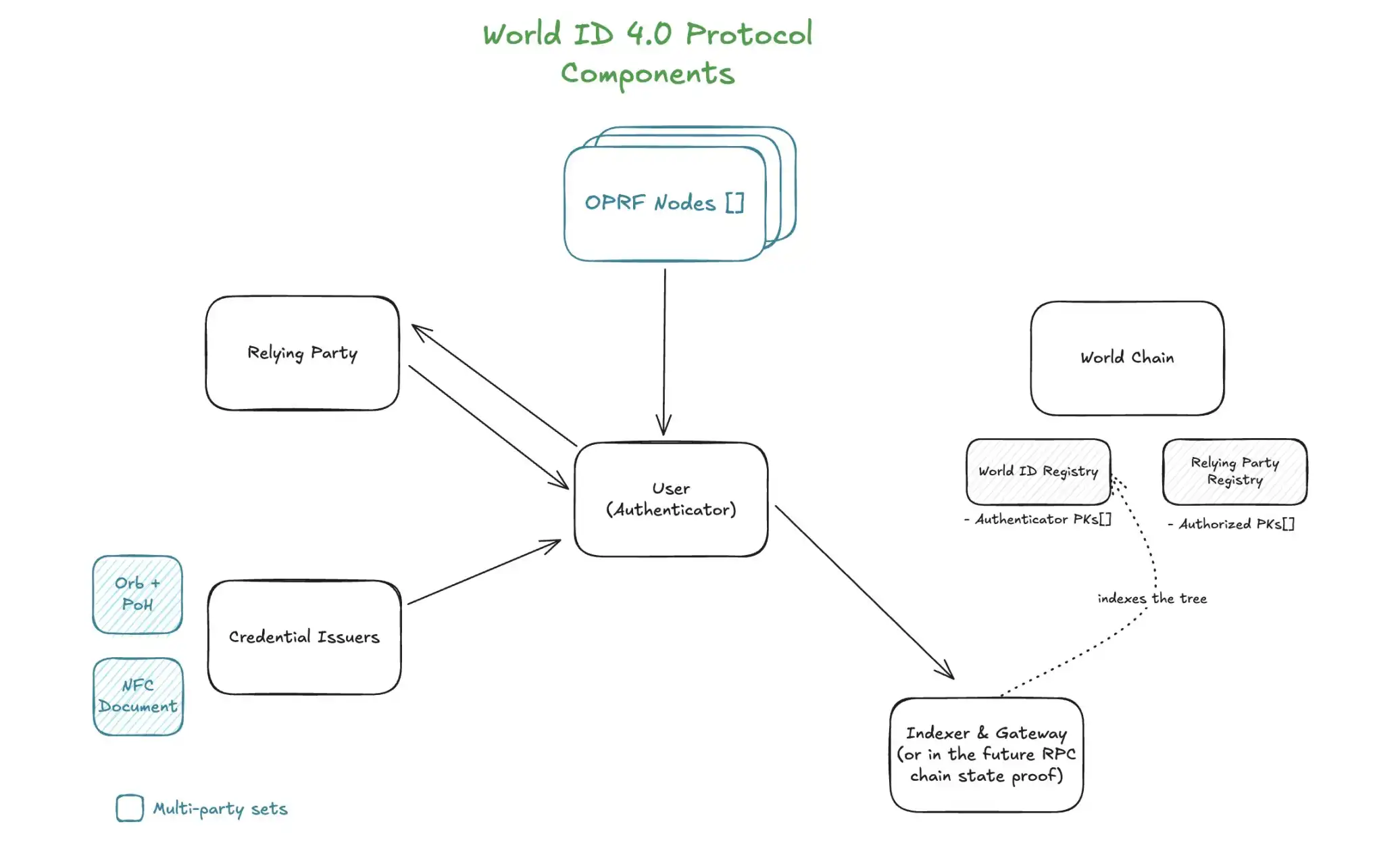
Compared to version 3.0, the new 4.0 version is a true "cloud-based identity account":
· Loss-proof: Supports multi-device login, so if you lose your phone, you can recover.
· More private: Introduces multiple nodes (OPRF), making it harder to trace your behavioral path than reaching the sky.
· More flexible: In a no-phone-scanning area, you can still get in with a passport swipe.
In the future, if the collaboration with OpenAI materializes, World may transition from an edge project to a core AI infrastructure.
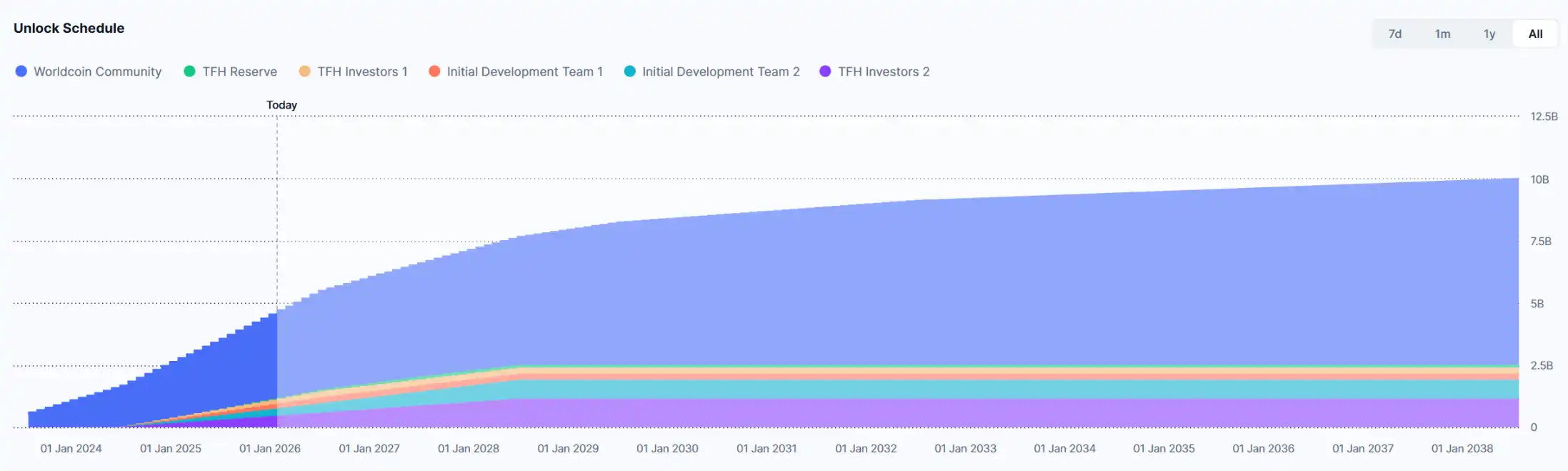
However, due to the sluggish overall market, lack of token demand, and unlocking sell pressure, the WLD price is currently about 20 times lower than its historical high, so investors should pay attention to risk control.
You may also like

Key Market Information Discrepancy on February 3rd - A Must-See! | Alpha Morning Report

Hyperliquid is about to launch a prediction market, what are the new features of the HIP-4 protocol?

When Kevin Wismar speaks, which assets will rise?

Reviewing the Epstein Files, Reveals Encounter with Satoshi Nakamoto
Six Years Later: If Soros Wanted to Destroy Bitcoin, How Would He Do It?

The early Epstein encryption investment was dug out, Tether launched a Bitcoin mining operating system, what are the overseas coin circles talking about today?

Escape from Leviathan: Epstein, Silicon Valley, and Sovereign Individual
AI Trading's Ultimate Test: Empower Your AI Strategy with Tencent Cloud to Win $1.88M & a Bentley
AI traders! Win $1.88M & a Bentley by crushing WEEX's live-market challenge. Tencent Cloud powers your AI Trading bot - can it survive the Feb 9 finals?

Russia’s Largest Bitcoin Miner BitRiver Faces Bankruptcy Crisis – What Went Wrong?
Key Takeaways BitRiver, the largest Bitcoin mining operator in Russia, faces a bankruptcy crisis due to unresolved debts…

Polymarket Predicts Over 70% Chance Bitcoin Will Drop Below $65K
Key Takeaways Polymarket bettors forecast a 71% chance for Bitcoin to fall below $65,000 by 2026. Strong bearish…

BitMine Reports 4.285M ETH Holdings, Expands Staked Position With Massive Reward Outlook
Key Takeaways BitMine Immersion Technologies holds 4,285,125 ETH, which is approximately 3.55% of Ethereum’s total supply. The company…

US Liquidity Crisis Sparked $250B Crash, Not a ‘Broken’ Crypto Market: Analyst
Key Takeaways: A massive $250 billion crash shook the cryptocurrency markets, attributed largely to liquidity issues in the…

Vitalik Advocates for Anonymous Voting in Ethereum’s Governance — A Solution to Attacks?
Key Takeaways Vitalik Buterin proposes a two-layer governance framework utilizing anonymous voting to address collusion and capture attacks,…

South Korea Utilizes AI to Pursue Unfair Crypto Trading: Offenders Face Severe Penalties
Key Takeaways South Korea is intensifying its use of AI to crack down on unfair cryptocurrency trading practices.…

Average Bitcoin ETF Investor Turns Underwater After Major Outflows
Key Takeaways: U.S. spot Bitcoin ETFs hold approximately $113 billion in assets, equivalent to around 1.28 million BTC.…
Japan’s Biggest Wealth Manager Adjusts Crypto Strategy After Q3 Setbacks
Key Takeaways Nomura Holdings, Japan’s leading wealth management firm, scales back its crypto involvement following significant third-quarter losses.…
CFTC Regulatory Shift Could Unlock New Opportunities for Coinbase Prediction Markets
Key Takeaways: The U.S. Commodity Futures Trading Commission (CFTC) is focusing on clearer regulations for crypto-linked prediction markets,…
Hong Kong Set to Approve First Stablecoin Licenses in March — Who’s In?
Key Takeaways Hong Kong’s financial regulator, the Hong Kong Monetary Authority (HKMA), is on the verge of approving…


 App
App