
- Buy Crypto
- Markets
 Futures
- Spot
- Copy Trade
 Earn
Earn- More
Interview with Virtuals Co-Founder empty: AI Startups Don't Need a Lot of Funding, Crypto is One of the Answers

In February this year, AI protocol Virtuals in the Base ecosystem announced its cross-chain integration with Solana. However, the crypto market shortly after entered a liquidity crunch period, causing the AI Agent sector's buzz to fade into a slump, and the Virtuals ecosystem fell into a dormant phase.
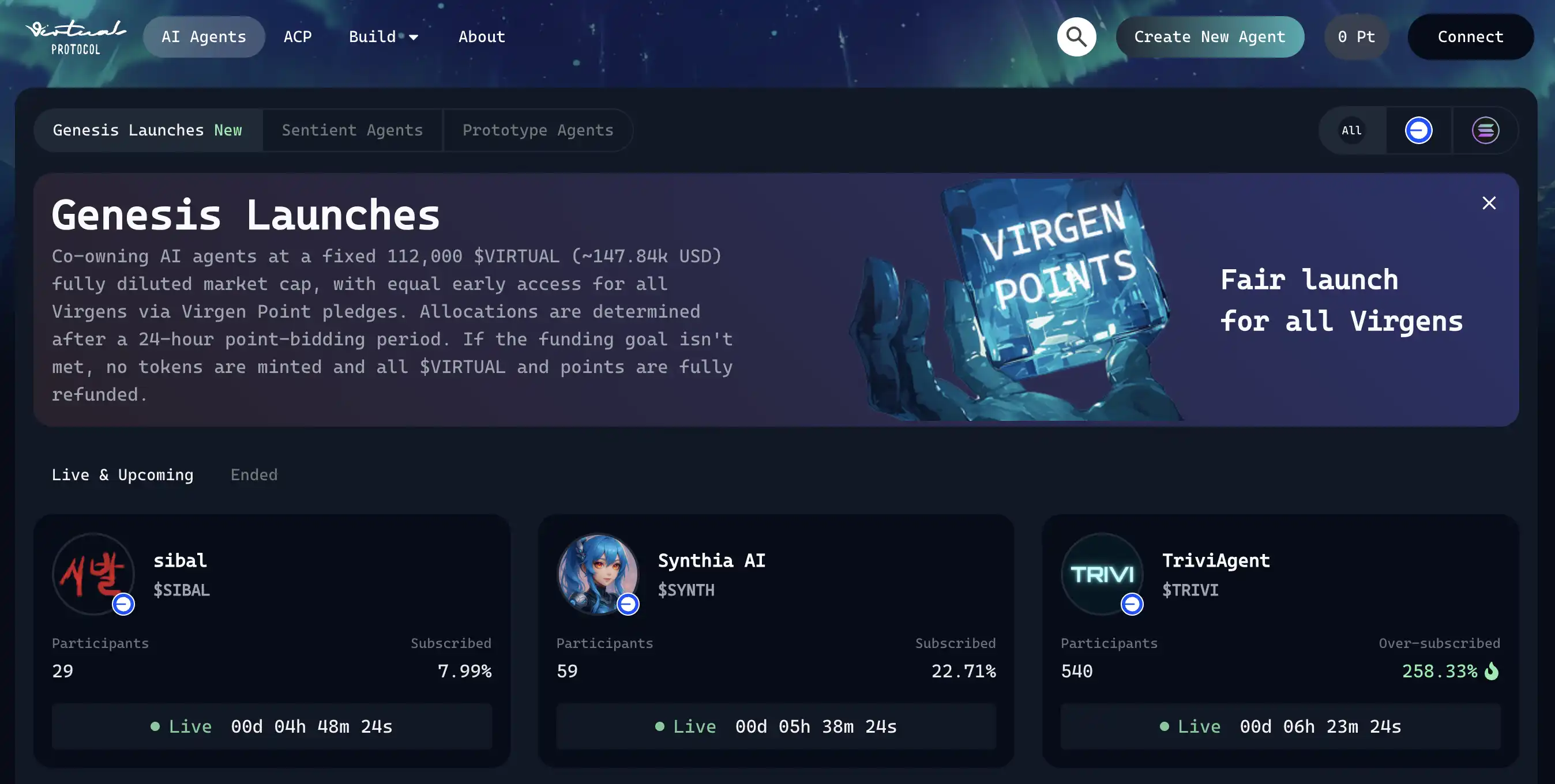
In early March, BlockBeats conducted an interview with Virtuals co-founder empty. At that time, the team had not yet launched the Genesis Launch mechanism, which is now widely discussed, but was internally exploring how to activate old assets, increase user engagement through mechanism design, and restructure the token issuance and funding path. It was a time when the market had not yet recovered, and the ecosystem was still in the cold start stage. However, the Virtuals team did not stop but instead continued to search for new product directions and narrative breakthroughs.
Two months later, the AI Agent sector warmed up again, with the Virtuals token rebounding over 150%, and the Genesis mechanism becoming a key driver of ecosystem recovery. From dynamic adjustments to point acquisition rules, to the continuous rise in project engagement, to the "new token with old token" mechanism loop, Virtuals gradually emerged from the cold winter and once again took the center stage of discussion.
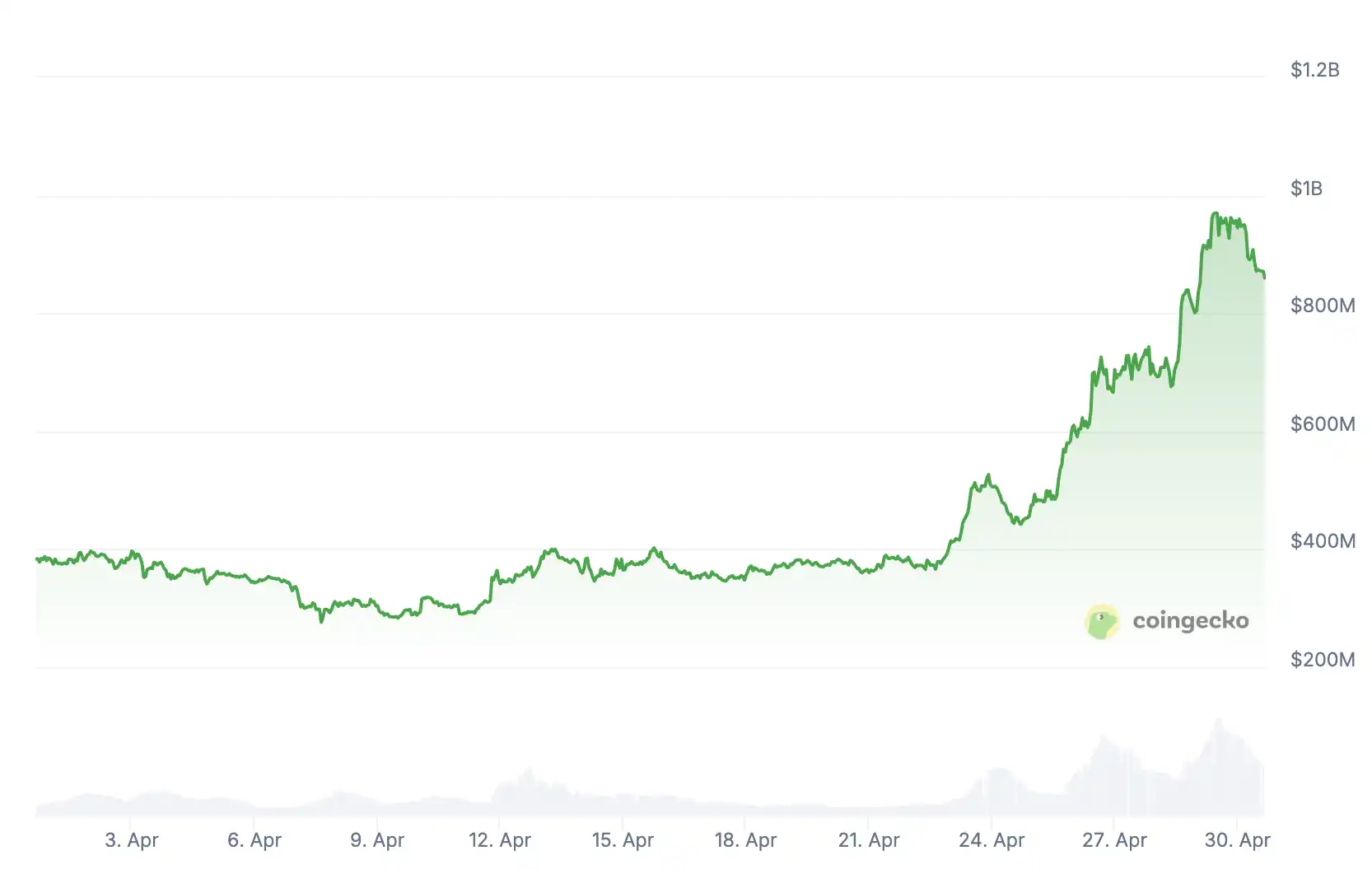
It is worth noting that Virtuals' Genesis mechanism shares some similarities with the recent Binance Alpha Point system, assessing user engagement within the Alpha and Binance wallet ecosystems to determine users' eligibility for Alpha token airdrops. Users can earn points through holdings, trading, and other means, with higher points leading to greater opportunities to participate in new projects. By filtering users and allocating resources through the point system, project teams can more effectively incentivize community participation, enhancing project fairness and transparency. The explorations of Virtuals and Binance may herald a new trend in crypto funding.
Looking back at this conversation, the insights and judgments displayed by empty in the interview are gradually demonstrating their foresight. This was not just an interview about the subscription mechanism but also a deep discussion on the construction path and underlying logic of an "asset-driven AI protocol."
From "Product" to "Platform": The Wall Street-Style Infrastructure of AI Agent
BlockBeats: Could you briefly share what the team has been primarily focused on recently?
empty: Currently, our work focuses mainly on two parts. The first part is that we hope to develop Virtuals into a platform similar to a "Wall Street"-like agent service. Imagine if you are an entrepreneur focusing on agent or agent team development. From fundraising and token issuance to liquidity withdrawal, the entire process requires systematic support. We aim to provide a full set of service systems for teams truly dedicated to agent and AI development, allowing them to focus on developing core capabilities without distractions. This work also includes content related to retail buying and selling, which can be detailed further later on.
In the second part, we are further advancing our AI-related initiatives. Our vision is to build an AI society where every Agent can focus on its strengths and, through collaboration, achieve greater value together. Therefore, recently, we have released a new standard—ACP (Agent Communication Protocol), with the aim of enabling different Agents to interact and cooperate with each other to jointly drive their respective business goals forward. These are the two main directions we are currently focusing on.
BlockBeats: Could you elaborate on that?
empty: In my view, the customer base we target can be divided into three categories: the first is teams focused on developing Agents; the second is investors, including retail investors, funds, and various investment institutions; the third is end users, namely individual users who ultimately use Agent products.
However, our main focus is actually on the first two categories—teams and investors. For the end user segment, we do not intend to intervene directly but rather hope that each Agent team can solve the expansion issues in the end-user market on their own.
Furthermore, we also believe that interaction between Agents should become a core model. In simple terms, in the future, services should more often be sold or provided by one Agent to another Agent, rather than merely to human users. Therefore, in the team's business development efforts, we are actively helping existing AI teams find such clients and partnership opportunities.
BlockBeats: Can you provide some specific examples?
empty: "Wall Street," in essence, revolves around the construction of a capital operation system. Suppose you are a tech team looking to raise funds. The traditional path is to seek VC funding, develop after securing the funds. If the project performs well, the next step might involve considering entry into the secondary market, such as listing on the New York Stock Exchange or listing on exchanges like Binance for liquidity exit.
We aim to streamline this entire process—from early-stage fundraising, through the flexible fund usage needs during project development, to the final liquidity exit in the secondary market—covering and perfecting the entire chain is what we hope to complement.
However, this part of the work is different from the ACP (Agent Communication Protocol). ACP is more about setting standards for interaction between agents and does not directly involve the capital operation system.
BlockBeats: How does it differ from the current Virtuals Launchpad? Is the funding also from the consumer end?
empty: Currently, when you launch a coin on Virtuals, if it is not actually funded, it's just creating a coin without actually raising money. The service we can currently provide is through setting a transaction tax mechanism during buying and selling, from which a portion of the tax is extracted and returned to the entrepreneurs, hoping this part can become their cash flow source.
However, the issue can actually be divided into two parts. The first is how to truly help teams complete their fundraising, a problem we have not completely solved yet. The second is about the structural issues in the current project issuance model itself. In simple terms, the current version is somewhat similar to the past Pumpfun model—where at the start of the project, some chips were sold to external investors. However, in reality, the entire market is filled with too many institutional groups and "snipers."
When a truly outstanding project launches its coin, before reaching ordinary retail investors, it has already been snatched up by institutions at a very high valuation. By the time retail investors can get involved, the price is often inflated, and the project quality may have deteriorated, distorting the entire value issuance system.
To address this issue, we hope to explore a new coin issuance and fundraising model with the aim of not holding onto the project's chips too tightly nor having them primarily flow to English-speaking institutional investors, but instead genuinely keeping them in the hands of regular investors who believe in the project and are willing to support it for the long term. We are considering how to design such a new issuance mechanism to address this fundamental problem.
BlockBeats: What will the specific ideas be for the new model?
empty: Regarding the funding aspect, we haven't fully figured it out yet. At this stage, the most direct way seems to be to seek VC funding or carry out fundraising through public presales and other forms. However, to be honest, I personally am not particularly fond of the traditional public presale model.
On the matter of "fair sales," we are trying to approach it from a different angle—hoping to redesign the mechanism starting from the concept of "reputation."
Specifically, if you have contributed to the entire Virtuals ecosystem, such as early participation, providing support, or building, then you can enjoy a higher priority when purchasing premium tokens later. In this way, we hope to reserve more resources for users who truly support the ecosystem's development, rather than being dominated by those seeking short-term arbitrage.
How to "Self-fund" the Team from Transaction Taxes
BlockBeats: Would you consider adopting a model similar to the previous LBP model launched by Fjord Foundry, or a model like Daos.fun that uses a whitelist mechanism? To some extent, these models are somewhat similar to the idea you just mentioned of giving priority to those who have contributed to the ecosystem. However, such practices have also sparked some controversies, such as whitelist insider trading and unfair allocation issues. When designing Virtuals, will you consider drawing on the strengths of these models or proactively avoiding similar problems?
empty: I believe the biggest problem with the whitelist mechanism is that the selection power for the whitelist is in the hands of the project team. This is very similar to "insider trading" behavior. The project team can choose to allocate whitelist spots to themselves or their close friends, resulting in the final chips still being held by a few individuals.
What we aim to do is still a mechanism similar to a whitelist, but the key difference is that the right to be whitelisted should be based on a publicly transparent rule system, rather than unilaterally decided by the project team. Only in this way can true fair distribution be achieved and insider trading issues be avoided.
I believe that in today's AI era, many times entrepreneurship does not necessarily require a large amount of funding. I often emphasize to the team that they should prioritize self-reliance, such as by building a community, rather than immediately seeking financing. Because once you get funding, it's essentially like taking on debt.
We prefer to view the early development path from the perspective of a Training Fee. That is, a project can choose to mint tokens directly and support day-to-day operations through the cash flow generated by transaction taxes. This way, the project can obtain initial funding during public development without relying on external investment. If the project grows, there will naturally be opportunities to exit through the secondary market liquidity.
Of course, the most ideal situation is for the project itself to have a stable source of cash flow, so much so that it doesn't even need to sell its own tokens. This is the truly healthy and sustainable state.
When I share this mindset with the team, it's interesting to note that those projects that truly hold a "get rich quick" mentality lose interest as soon as they hear about this mechanism. They feel that in this model, they cannot engage in insider trading and it's difficult to engage in short-term arbitrage, so they quickly choose to leave.
However, from our perspective, this is actually a good filtering mechanism. In this way, projects with different ideologies will naturally be filtered out, leaving behind those teams that are willing to truly build and align with our values, working together to make things happen.
BlockBeats: This concept can lead to the development of AI agents that can generate profits.
empty: I think this is very necessary. Frankly, looking at today's market, products with stable cash flow are rare, but I don't think that means we should stop trying. In fact, in the teams we interact with every day, at least more than half still hold a long-term vision. Many times, they have even provided us with VC-stage funding in advance or expressed strong willingness to cooperate.
Actually, for them, what they really want is to cultivate a strong community because the community can provide better feedback for their product, which is their true purpose. This may sound a bit far-fetched, but there are indeed many teams like this, and those are the teams we really want to support.
Who Should AI Agent Be Sold To?
BlockBeats: You just mentioned this "AI Wall Street" product ecosystem—from fundraising, issuance to exit, it builds a complete process. Is this mechanism more aimed at incentivizing teams willing to issue tokens? Or does it also consider how to better support teams that hope to develop through the product's cash flow? Will these two types of teams be treated differently in your system, or are there any mechanisms designed to support entrepreneurs on different paths?
empty: Yes, our core BD responsibility is actually to encourage teams to issue tokens. To be more direct, it is to guide them to think about the possibility and significance of issuing tokens. So the most common question teams ask is, "Why issue tokens?" At this point, we need to use different ways and perspectives to help them understand the underlying value logic. Of course, if it is ultimately deemed unsuitable, we will not force them to proceed.
However, we have noticed a very clear trend: the traditional fundraising path is becoming increasingly difficult. The old model of fundraising big and issuing tokens is gradually becoming ineffective. Faced with this reality, many teams find themselves in an awkward situation. We hope to provide a different solution from the perspective of the blockchain and crypto world, allowing them to find a new development path.
BlockBeats: I actually meant to say that just now, you also mentioned that traditional AI models still rely heavily on "burning money" competition. However, after the emergence of DeepSeek, some teams or investors with smaller fund sizes in the market have rekindled their confidence and are eager to enter this field. What is your view on this phenomenon? Will it have a certain impact on teams currently engaged in AI basic research or AI application layer development?
empty: Yes, I think, setting DeepSeek aside for the moment, from a traditional perspective, up to now, the only truly profitable player in the AI field is NVIDIA. Almost all other players have not yet achieved profitability. So, in reality, no one has truly enjoyed the fruits of this business model, and everyone is still exploring how to create truly productive applications for the consumer market.
No other field receives community feedback as quickly as the crypto space. Once you launch a coin, users will actively read every word of the whitepaper and try out every feature of your product.
Of course, this mechanism is not suitable for everyone. For example, some Agent products lean toward Web2, and for crypto users, they may not perceive their value. Therefore, I would also encourage teams developing Agent products in the Virtuals ecosystem to carefully consider how to truly leverage and design Crypto as a differentiating element for their own product.
BlockBeats: I particularly agree with this point. In the Crypto field, the iteration speed of AI is indeed very fast, but is the feedback from these users really representative of real market demand? Or do these feedback truly align with more mainstream and scalable needs?
empty: I think that many times, the product itself should not be forcefully promoted to an unsuitable user group. For example, the most successful aspect of AIXBT is that its users are those who hype others' content, so their usage behavior is very natural, and they do not feel compelled to use a boring product. The concept of mass adoption has been talked about for many years, and people may have long since abandoned this obsession. We might as well just accept it and sell things to people in the crypto community.
BlockBeats: What kind of dynamic relationship should there be between AI Agents and the tokens corresponding to AI Agents?
empty: Yes, I think this can be divided into two key points. First, it's not actually about investing in a specific AI Agent, but rather in investing in the team operating behind this Agent. You should understand it more as a mindset closer to venture capital: you are investing in this person, not in the product they are currently working on. Because the product itself can change rapidly, and the team may realize the direction is wrong a month later and adjust immediately. So, here, the "coin" essentially represents trust in the team, not in any specific Agent.
The second point is the expectation that once a particular Agent's product is developed, it will actually generate cash flow in the future, or have a real-world use case (utility), thereby enabling the corresponding token.
BlockBeats: What empowerment methods do you think are not seen yet but may appear in the future and are worth looking forward to?
empty: Actually, there are mainly two parts. The first is the more common type, where if you want to use my product, you have to pay a fee or use the token for payment, indirectly achieving "soft destruction" or consumption of the token.
But I think a more interesting empowerment method is to consider it from the customer acquisition cost perspective. That is, you want your users to also be your investors, so they are motivated to actively help you promote and attract more users.
Open Source ≠ Empowerment, Developers ≠ Community
BlockBeats: Based on these views, how do you view ai16z, which does not seem to perform optimally overall in terms of project design and tokenomics?
empty: From a very pure investment perspective, aside from our relationship with them, it's actually quite simple. What they are doing now does not empower the token itself. From an open-source perspective, an open-source model itself cannot directly empower the token.
But the reason it still has value is that it's like an option, meaning if someday they suddenly decide to do something, like launch a launchpad, those who knew early and participated early may benefit from it.
Developers might indeed use their Launchpad in the future; only at that moment will the token truly become empowered. This is currently the biggest question mark—if this model really works, I think it will indeed be very powerful because they have indeed reached a large number of developers.
However, I still have many personal questions. For example, even though I am a developer using Eliza, it does not mean that I will definitely choose to launch my coin on their Launchpad. I will shop around, I will compare. Moreover, the product requirements and community management capabilities needed to run a Launchpad are completely different from those needed to develop an open-source framework, which is another important uncertainty.
BlockBeats: Where does this difference manifest?
empty: At Virtuals, we deal with customer service-related issues almost every day. Whenever a team rugs on our platform, even if they are not directly associated with us, users will come to us first to complain.
At that point, we must step in to reassure users and consider how to reduce the overall rug risk. Once a team is rug pulled due to their token design error or technical mistake leading to a hack or asset theft, we often have to dip into our own pockets to ensure that their community can at least recover some funds so that the project can restart. These teams may be strong technically but not necessarily adept at token issuance, resulting in asset loss due to operational errors leading to an attack. Any issues related to "being deceived" are already very troublesome for us, and doing this work is not much different from handling customer service at an exchange.
On the other hand, BD work is also very challenging. Excellent teams have many choices; they can choose to launch on Pumpfun or an exchange, so why would they come to us? Behind this, there must be a comprehensive support system, including funding support, technical assistance, marketing, etc., and every step must go smoothly.
BlockBeats: Let's continue discussing Virtuals' current Launchpad business along this line of conversation. Some community members have compiled data on the overall profitability of Virtuals Launchpad on Twitter, and indeed, the number of profitable projects seems relatively low at the moment. Will Launchpad continue to be Virtuals' main business focus in the future? Or will the focus gradually shift to the "AI Wall Street" path you mentioned earlier?
empty: In fact, these two aspects are essentially the same thing, part of a complete system, so we must continue to advance. Market fluctuations are normal, and one thing we must always insist on is to be very clear about who our core customers are. I have always emphasized that we have only two types of customers—teams. So, the market's ups and downs are not the most important thing for us; what matters is that at every crucial juncture, the best choice for a team to launch its coin is still with us at Virtuals.
BlockBeats: Are you worried that the narrative of "Crypto + AI" or "Crypto AI Agent" is already outdated? If there is another bull market in the future, do you think the focus of market hype may have shifted away from these directions?
empty: It's possible. I think it is what it is. This is indeed a possibility, but it's also beyond our control. However, if you ask me, among all possible trends, which track has a better chance of maintaining a long-term lead, I still believe it's AI. From a poker-playing perspective, it remains the optimal choice.
Moreover, our team's technical framework and underlying capabilities have long been established. Now we are just going with the flow. More importantly, we genuinely love this thing and approach it with curiosity. Waking up every morning with the drive to research the latest technologies is quite fulfilling in itself, right?
Many times, people shouldn't just look at the product itself. In fact, many excellent teams have genes that determine their ability to excel in the rules—they may have traded on the exchange in the past, with each transaction amounting to millions. The CEOs of these teams may earn a million dollars a year. If they are willing to embark on a project themselves, from the perspective of an angel investor or VC, this is essentially acquiring a high-quality team at a very cost-effective price.
Furthermore, these assets are liquid, not locked. If you do not need the money urgently, you can completely buy tokens of excellent teams in the early stages and quietly wait for them to create some miracles. That's basically the logic.
You may also like

Token Cannot Compound, Where Is the Real Investment Opportunity?

February 6th Market Key Intelligence, How Much Did You Miss?

China's Central Bank and Eight Other Departments' Latest Regulatory Focus: Key Attention to RWA Tokenized Asset Risk
Foreword: Today, the People's Bank of China's website published the "Notice of the People's Bank of China, National Development and Reform Commission, Ministry of Industry and Information Technology, Ministry of Public Security, State Administration for Market Regulation, China Banking and Insurance Regulatory Commission, China Securities Regulatory Commission, State Administration of Foreign Exchange on Further Preventing and Dealing with Risks Related to Virtual Currency and Others (Yinfa [2026] No. 42)", the latest regulatory requirements from the eight departments including the central bank, which are basically consistent with the regulatory requirements of recent years. The main focus of the regulation is on speculative activities such as virtual currency trading, exchanges, ICOs, overseas platform services, and this time, regulatory oversight of RWA has been added, explicitly prohibiting RWA tokenization, stablecoins (especially those pegged to the RMB). The following is the full text:
To the people's governments of all provinces, autonomous regions, and municipalities directly under the Central Government, the Xinjiang Production and Construction Corps:
Recently, there have been speculative activities related to virtual currency and Real-World Assets (RWA) tokenization, disrupting the economic and financial order and jeopardizing the property security of the people. In order to further prevent and address the risks related to virtual currency and Real-World Assets tokenization, effectively safeguard national security and social stability, in accordance with the "Law of the People's Republic of China on the People's Bank of China," "Law of the People's Republic of China on Commercial Banks," "Securities Law of the People's Republic of China," "Law of the People's Republic of China on Securities Investment Funds," "Law of the People's Republic of China on Futures and Derivatives," "Cybersecurity Law of the People's Republic of China," "Regulations of the People's Republic of China on the Administration of Renminbi," "Regulations on Prevention and Disposal of Illegal Fundraising," "Regulations of the People's Republic of China on Foreign Exchange Administration," "Telecommunications Regulations of the People's Republic of China," and other provisions, after reaching consensus with the Cyberspace Administration of China, the Supreme People's Court, and the Supreme People's Procuratorate, and with the approval of the State Council, the relevant matters are notified as follows:
(I) Virtual currency does not possess the legal status equivalent to fiat currency. Virtual currencies such as Bitcoin, Ether, Tether, etc., have the main characteristics of being issued by non-monetary authorities, using encryption technology and distributed ledger or similar technology, existing in digital form, etc. They do not have legal tender status, should not and cannot be circulated and used as currency in the market.
The business activities related to virtual currency are classified as illegal financial activities. The exchange of fiat currency and virtual currency within the territory, exchange of virtual currencies, acting as a central counterparty in buying and selling virtual currencies, providing information intermediary and pricing services for virtual currency transactions, token issuance financing, and trading of virtual currency-related financial products, etc., fall under illegal financial activities, such as suspected illegal issuance of token vouchers, unauthorized public issuance of securities, illegal operation of securities and futures business, illegal fundraising, etc., are strictly prohibited across the board and resolutely banned in accordance with the law. Overseas entities and individuals are not allowed to provide virtual currency-related services to domestic entities in any form.
A stablecoin pegged to a fiat currency indirectly fulfills some functions of the fiat currency in circulation. Without the consent of relevant authorities in accordance with the law and regulations, any domestic or foreign entity or individual is not allowed to issue a RMB-pegged stablecoin overseas.
(II)Tokenization of Real-World Assets refers to the use of encryption technology and distributed ledger or similar technologies to transform ownership rights, income rights, etc., of assets into tokens (tokens) or other interests or bond certificates with token (token) characteristics, and carry out issuance and trading activities.
Engaging in the tokenization of real-world assets domestically, as well as providing related intermediary, information technology services, etc., which are suspected of illegal issuance of token vouchers, unauthorized public offering of securities, illegal operation of securities and futures business, illegal fundraising, and other illegal financial activities, shall be prohibited; except for relevant business activities carried out with the approval of the competent authorities in accordance with the law and regulations and relying on specific financial infrastructures. Overseas entities and individuals are not allowed to illegally provide services related to the tokenization of real-world assets to domestic entities in any form.
(III) Inter-agency Coordination. The People's Bank of China, together with the National Development and Reform Commission, the Ministry of Industry and Information Technology, the Ministry of Public Security, the State Administration for Market Regulation, the China Banking and Insurance Regulatory Commission, the China Securities Regulatory Commission, the State Administration of Foreign Exchange, and other departments, will improve the work mechanism, strengthen coordination with the Cyberspace Administration of China, the Supreme People's Court, and the Supreme People's Procuratorate, coordinate efforts, and overall guide regions to carry out risk prevention and disposal of virtual currency-related illegal financial activities.
The China Securities Regulatory Commission, together with the National Development and Reform Commission, the Ministry of Industry and Information Technology, the Ministry of Public Security, the People's Bank of China, the State Administration for Market Regulation, the China Banking and Insurance Regulatory Commission, the State Administration of Foreign Exchange, and other departments, will improve the work mechanism, strengthen coordination with the Cyberspace Administration of China, the Supreme People's Court, and the Supreme People's Procuratorate, coordinate efforts, and overall guide regions to carry out risk prevention and disposal of illegal financial activities related to the tokenization of real-world assets.
(IV) Strengthening Local Implementation. The people's governments at the provincial level are overall responsible for the prevention and disposal of risks related to virtual currencies and the tokenization of real-world assets in their respective administrative regions. The specific leading department is the local financial regulatory department, with participation from branches and dispatched institutions of the State Council's financial regulatory department, telecommunications regulators, public security, market supervision, and other departments, in coordination with cyberspace departments, courts, and procuratorates, to improve the normalization of the work mechanism, effectively connect with the relevant work mechanisms of central departments, form a cooperative and coordinated working pattern between central and local governments, effectively prevent and properly handle risks related to virtual currencies and the tokenization of real-world assets, and maintain economic and financial order and social stability.
(5) Enhanced Risk Monitoring. The People's Bank of China, China Securities Regulatory Commission, National Development and Reform Commission, Ministry of Industry and Information Technology, Ministry of Public Security, State Administration of Foreign Exchange, Cyberspace Administration of China, and other departments continue to improve monitoring techniques and system support, enhance cross-departmental data analysis and sharing, establish sound information sharing and cross-validation mechanisms, promptly grasp the risk situation of activities related to virtual currency and real-world asset tokenization. Local governments at all levels give full play to the role of local monitoring and early warning mechanisms. Local financial regulatory authorities, together with branches and agencies of the State Council's financial regulatory authorities, as well as departments of cyberspace and public security, ensure effective connection between online monitoring, offline investigation, and fund tracking, efficiently and accurately identify activities related to virtual currency and real-world asset tokenization, promptly share risk information, improve early warning information dissemination, verification, and rapid response mechanisms.
(6) Strengthened Oversight of Financial Institutions, Intermediaries, and Technology Service Providers. Financial institutions (including non-bank payment institutions) are prohibited from providing account opening, fund transfer, and clearing services for virtual currency-related business activities, issuing and selling financial products related to virtual currency, including virtual currency and related financial products in the scope of collateral, conducting insurance business related to virtual currency, or including virtual currency in the scope of insurance liability. Financial institutions (including non-bank payment institutions) are prohibited from providing custody, clearing, and settlement services for unauthorized real-world asset tokenization-related business and related financial products. Relevant intermediary institutions and information technology service providers are prohibited from providing intermediary, technical, or other services for unauthorized real-world asset tokenization-related businesses and related financial products.
(7) Enhanced Management of Internet Information Content and Access. Internet enterprises are prohibited from providing online business venues, commercial displays, marketing, advertising, or paid traffic diversion services for virtual currency and real-world asset tokenization-related business activities. Upon discovering clues of illegal activities, they should promptly report to relevant departments and provide technical support and assistance for related investigations and inquiries. Based on the clues transferred by the financial regulatory authorities, the cyberspace administration, telecommunications authorities, and public security departments should promptly close and deal with websites, mobile applications (including mini-programs), and public accounts engaged in virtual currency and real-world asset tokenization-related business activities in accordance with the law.
(8) Strengthened Entity Registration and Advertisement Management. Market supervision departments strengthen entity registration and management, and enterprise and individual business registrations must not contain terms such as "virtual currency," "virtual asset," "cryptocurrency," "crypto asset," "stablecoin," "real-world asset tokenization," or "RWA" in their names or business scopes. Market supervision departments, together with financial regulatory authorities, legally enhance the supervision of advertisements related to virtual currency and real-world asset tokenization, promptly investigating and handling relevant illegal advertisements.
(IX) Continued Rectification of Virtual Currency Mining Activities. The National Development and Reform Commission, together with relevant departments, strictly controls virtual currency mining activities, continuously promotes the rectification of virtual currency mining activities. The people's governments of various provinces take overall responsibility for the rectification of "mining" within their respective administrative regions. In accordance with the requirements of the National Development and Reform Commission and other departments in the "Notice on the Rectification of Virtual Currency Mining Activities" (NDRC Energy-saving Building [2021] No. 1283) and the provisions of the "Guidance Catalog for Industrial Structure Adjustment (2024 Edition)," a comprehensive review, investigation, and closure of existing virtual currency mining projects are conducted, new mining projects are strictly prohibited, and mining machine production enterprises are strictly prohibited from providing mining machine sales and other services within the country.
(X) Severe Crackdown on Related Illegal Financial Activities. Upon discovering clues to illegal financial activities related to virtual currency and the tokenization of real-world assets, local financial regulatory authorities, branches of the State Council's financial regulatory authorities, and other relevant departments promptly investigate, determine, and properly handle the issues in accordance with the law, and seriously hold the relevant entities and individuals legally responsible. Those suspected of crimes are transferred to the judicial authorities for processing according to the law.
(XI) Severe Crackdown on Related Illegal and Criminal Activities. The Ministry of Public Security, the People's Bank of China, the State Administration for Market Regulation, the China Banking and Insurance Regulatory Commission, the China Securities Regulatory Commission, as well as judicial and procuratorial organs, in accordance with their respective responsibilities, rigorously crack down on illegal and criminal activities related to virtual currency, the tokenization of real-world assets, such as fraud, money laundering, illegal business operations, pyramid schemes, illegal fundraising, and other illegal and criminal activities carried out under the guise of virtual currency, the tokenization of real-world assets, etc.
(XII) Strengthen Industry Self-discipline. Relevant industry associations should enhance membership management and policy advocacy, based on their own responsibilities, advocate and urge member units to resist illegal financial activities related to virtual currency and the tokenization of real-world assets. Member units that violate regulatory policies and industry self-discipline rules are to be disciplined in accordance with relevant self-regulatory management regulations. By leveraging various industry infrastructure, conduct risk monitoring related to virtual currency, the tokenization of real-world assets, and promptly transfer issue clues to relevant departments.
(XIII) Without the approval of relevant departments in accordance with the law and regulations, domestic entities and foreign entities controlled by them may not issue virtual currency overseas.
(XIV) Domestic entities engaging directly or indirectly in overseas external debt-based tokenization of real-world assets, or conducting asset securitization activities abroad based on domestic ownership rights, income rights, etc. (hereinafter referred to as domestic equity), should be strictly regulated in accordance with the principles of "same business, same risk, same rules." The National Development and Reform Commission, the China Securities Regulatory Commission, the State Administration of Foreign Exchange, and other relevant departments regulate it according to their respective responsibilities. For other forms of overseas real-world asset tokenization activities based on domestic equity by domestic entities, the China Securities Regulatory Commission, together with relevant departments, supervise according to their division of responsibilities. Without the consent and filing of relevant departments, no unit or individual may engage in the above-mentioned business.
(15) Overseas subsidiaries and branches of domestic financial institutions providing Real World Asset Tokenization-related services overseas shall do so legally and prudently. They shall have professional personnel and systems in place to effectively mitigate business risks, strictly implement customer onboarding, suitability management, anti-money laundering requirements, and incorporate them into the domestic financial institutions' compliance and risk management system. Intermediaries and information technology service providers offering Real World Asset Tokenization services abroad based on domestic equity or conducting Real World Asset Tokenization business in the form of overseas debt for domestic entities directly or indirectly venturing abroad must strictly comply with relevant laws and regulations. They should establish and improve relevant compliance and internal control systems in accordance with relevant normative requirements, strengthen business and risk control, and report the business developments to the relevant regulatory authorities for approval or filing.
(16) Strengthen organizational leadership and overall coordination. All departments and regions should attach great importance to the prevention of risks related to virtual currencies and Real World Asset Tokenization, strengthen organizational leadership, clarify work responsibilities, form a long-term effective working mechanism with centralized coordination, local implementation, and shared responsibilities, maintain high pressure, dynamically monitor risks, effectively prevent and mitigate risks in an orderly and efficient manner, legally protect the property security of the people, and make every effort to maintain economic and financial order and social stability.
(17) Widely carry out publicity and education. All departments, regions, and industry associations should make full use of various media and other communication channels to disseminate information through legal and policy interpretation, analysis of typical cases, and education on investment risks, etc. They should promote the illegality and harm of virtual currencies and Real World Asset Tokenization-related businesses and their manifestations, fully alert to potential risks and hidden dangers, and enhance public awareness and identification capabilities for risk prevention.
(18) Engaging in illegal financial activities related to virtual currencies and Real World Asset Tokenization in violation of this notice, as well as providing services for virtual currencies and Real World Asset Tokenization-related businesses, shall be punished in accordance with relevant regulations. If it constitutes a crime, criminal liability shall be pursued according to the law. For domestic entities and individuals who knowingly or should have known that overseas entities illegally provided virtual currency or Real World Asset Tokenization-related services to domestic entities and still assisted them, relevant responsibilities shall be pursued according to the law. If it constitutes a crime, criminal liability shall be pursued according to the law.
(19) If any unit or individual invests in virtual currencies, Real World Asset Tokens, and related financial products against public order and good customs, the relevant civil legal actions shall be invalid, and any resulting losses shall be borne by them. If there are suspicions of disrupting financial order and jeopardizing financial security, the relevant departments shall deal with them according to the law.
This notice shall enter into force upon the date of its issuance. The People's Bank of China and ten other departments' "Notice on Further Preventing and Dealing with the Risks of Virtual Currency Trading Speculation" (Yinfa [2021] No. 237) is hereby repealed.

Former Partner's Perspective on Multicoin: Kyle's Exit, But the Game He Left Behind Just Getting Started
Why Bitcoin Is Falling Now: The Real Reasons Behind BTC's Crash & WEEX's Smart Profit Playbook
Bitcoin's ongoing crash explained: Discover the 5 hidden triggers behind BTC's plunge & how WEEX's Auto Earn and Trade to Earn strategies help traders profit from crypto market volatility.

Wall Street's Hottest Trades See Exodus

Vitalik Discusses Ethereum Scaling Path, Circle Announces Partnership with Polymarket, What's the Overseas Crypto Community Talking About Today?

Believing in the Capital Markets - The Essence and Core Value of Cryptocurrency

Polymarket's 'Weatherman': Predict Temperature, Win Million-Dollar Payout

$15K+ Profits: The 4 AI Trading Secrets WEEX Hackathon Prelim Winners Used to Dominate Volatile Crypto Markets
How WEEX Hackathon's top AI trading strategies made $15K+ in crypto markets: 4 proven rules for ETH/BTC trading, market structure analysis, and risk management in volatile conditions.

A nearly 20% one-day plunge, how long has it been since you last saw a $60,000 Bitcoin?

Raoul Pal: I've seen every single panic, and they are never the end.

Key Market Information Discrepancy on February 6th - A Must-Read! | Alpha Morning Report

2026 Crypto Industry's First Snowfall
The Harsh Reality Behind the $26 Billion Crypto Liquidation: Liquidity Is Killing the Market
Why Is Gold, US Stocks, Bitcoin All Falling?

Key Market Intelligence for February 5th, how much did you miss out on?

Wintermute: By 2026, crypto had gradually become the settlement layer of the Internet economy
Token Cannot Compound, Where Is the Real Investment Opportunity?
February 6th Market Key Intelligence, How Much Did You Miss?
China's Central Bank and Eight Other Departments' Latest Regulatory Focus: Key Attention to RWA Tokenized Asset Risk
Foreword: Today, the People's Bank of China's website published the "Notice of the People's Bank of China, National Development and Reform Commission, Ministry of Industry and Information Technology, Ministry of Public Security, State Administration for Market Regulation, China Banking and Insurance Regulatory Commission, China Securities Regulatory Commission, State Administration of Foreign Exchange on Further Preventing and Dealing with Risks Related to Virtual Currency and Others (Yinfa [2026] No. 42)", the latest regulatory requirements from the eight departments including the central bank, which are basically consistent with the regulatory requirements of recent years. The main focus of the regulation is on speculative activities such as virtual currency trading, exchanges, ICOs, overseas platform services, and this time, regulatory oversight of RWA has been added, explicitly prohibiting RWA tokenization, stablecoins (especially those pegged to the RMB). The following is the full text:
To the people's governments of all provinces, autonomous regions, and municipalities directly under the Central Government, the Xinjiang Production and Construction Corps:
Recently, there have been speculative activities related to virtual currency and Real-World Assets (RWA) tokenization, disrupting the economic and financial order and jeopardizing the property security of the people. In order to further prevent and address the risks related to virtual currency and Real-World Assets tokenization, effectively safeguard national security and social stability, in accordance with the "Law of the People's Republic of China on the People's Bank of China," "Law of the People's Republic of China on Commercial Banks," "Securities Law of the People's Republic of China," "Law of the People's Republic of China on Securities Investment Funds," "Law of the People's Republic of China on Futures and Derivatives," "Cybersecurity Law of the People's Republic of China," "Regulations of the People's Republic of China on the Administration of Renminbi," "Regulations on Prevention and Disposal of Illegal Fundraising," "Regulations of the People's Republic of China on Foreign Exchange Administration," "Telecommunications Regulations of the People's Republic of China," and other provisions, after reaching consensus with the Cyberspace Administration of China, the Supreme People's Court, and the Supreme People's Procuratorate, and with the approval of the State Council, the relevant matters are notified as follows:
(I) Virtual currency does not possess the legal status equivalent to fiat currency. Virtual currencies such as Bitcoin, Ether, Tether, etc., have the main characteristics of being issued by non-monetary authorities, using encryption technology and distributed ledger or similar technology, existing in digital form, etc. They do not have legal tender status, should not and cannot be circulated and used as currency in the market.
The business activities related to virtual currency are classified as illegal financial activities. The exchange of fiat currency and virtual currency within the territory, exchange of virtual currencies, acting as a central counterparty in buying and selling virtual currencies, providing information intermediary and pricing services for virtual currency transactions, token issuance financing, and trading of virtual currency-related financial products, etc., fall under illegal financial activities, such as suspected illegal issuance of token vouchers, unauthorized public issuance of securities, illegal operation of securities and futures business, illegal fundraising, etc., are strictly prohibited across the board and resolutely banned in accordance with the law. Overseas entities and individuals are not allowed to provide virtual currency-related services to domestic entities in any form.
A stablecoin pegged to a fiat currency indirectly fulfills some functions of the fiat currency in circulation. Without the consent of relevant authorities in accordance with the law and regulations, any domestic or foreign entity or individual is not allowed to issue a RMB-pegged stablecoin overseas.
(II)Tokenization of Real-World Assets refers to the use of encryption technology and distributed ledger or similar technologies to transform ownership rights, income rights, etc., of assets into tokens (tokens) or other interests or bond certificates with token (token) characteristics, and carry out issuance and trading activities.
Engaging in the tokenization of real-world assets domestically, as well as providing related intermediary, information technology services, etc., which are suspected of illegal issuance of token vouchers, unauthorized public offering of securities, illegal operation of securities and futures business, illegal fundraising, and other illegal financial activities, shall be prohibited; except for relevant business activities carried out with the approval of the competent authorities in accordance with the law and regulations and relying on specific financial infrastructures. Overseas entities and individuals are not allowed to illegally provide services related to the tokenization of real-world assets to domestic entities in any form.
(III) Inter-agency Coordination. The People's Bank of China, together with the National Development and Reform Commission, the Ministry of Industry and Information Technology, the Ministry of Public Security, the State Administration for Market Regulation, the China Banking and Insurance Regulatory Commission, the China Securities Regulatory Commission, the State Administration of Foreign Exchange, and other departments, will improve the work mechanism, strengthen coordination with the Cyberspace Administration of China, the Supreme People's Court, and the Supreme People's Procuratorate, coordinate efforts, and overall guide regions to carry out risk prevention and disposal of virtual currency-related illegal financial activities.
The China Securities Regulatory Commission, together with the National Development and Reform Commission, the Ministry of Industry and Information Technology, the Ministry of Public Security, the People's Bank of China, the State Administration for Market Regulation, the China Banking and Insurance Regulatory Commission, the State Administration of Foreign Exchange, and other departments, will improve the work mechanism, strengthen coordination with the Cyberspace Administration of China, the Supreme People's Court, and the Supreme People's Procuratorate, coordinate efforts, and overall guide regions to carry out risk prevention and disposal of illegal financial activities related to the tokenization of real-world assets.
(IV) Strengthening Local Implementation. The people's governments at the provincial level are overall responsible for the prevention and disposal of risks related to virtual currencies and the tokenization of real-world assets in their respective administrative regions. The specific leading department is the local financial regulatory department, with participation from branches and dispatched institutions of the State Council's financial regulatory department, telecommunications regulators, public security, market supervision, and other departments, in coordination with cyberspace departments, courts, and procuratorates, to improve the normalization of the work mechanism, effectively connect with the relevant work mechanisms of central departments, form a cooperative and coordinated working pattern between central and local governments, effectively prevent and properly handle risks related to virtual currencies and the tokenization of real-world assets, and maintain economic and financial order and social stability.
(5) Enhanced Risk Monitoring. The People's Bank of China, China Securities Regulatory Commission, National Development and Reform Commission, Ministry of Industry and Information Technology, Ministry of Public Security, State Administration of Foreign Exchange, Cyberspace Administration of China, and other departments continue to improve monitoring techniques and system support, enhance cross-departmental data analysis and sharing, establish sound information sharing and cross-validation mechanisms, promptly grasp the risk situation of activities related to virtual currency and real-world asset tokenization. Local governments at all levels give full play to the role of local monitoring and early warning mechanisms. Local financial regulatory authorities, together with branches and agencies of the State Council's financial regulatory authorities, as well as departments of cyberspace and public security, ensure effective connection between online monitoring, offline investigation, and fund tracking, efficiently and accurately identify activities related to virtual currency and real-world asset tokenization, promptly share risk information, improve early warning information dissemination, verification, and rapid response mechanisms.
(6) Strengthened Oversight of Financial Institutions, Intermediaries, and Technology Service Providers. Financial institutions (including non-bank payment institutions) are prohibited from providing account opening, fund transfer, and clearing services for virtual currency-related business activities, issuing and selling financial products related to virtual currency, including virtual currency and related financial products in the scope of collateral, conducting insurance business related to virtual currency, or including virtual currency in the scope of insurance liability. Financial institutions (including non-bank payment institutions) are prohibited from providing custody, clearing, and settlement services for unauthorized real-world asset tokenization-related business and related financial products. Relevant intermediary institutions and information technology service providers are prohibited from providing intermediary, technical, or other services for unauthorized real-world asset tokenization-related businesses and related financial products.
(7) Enhanced Management of Internet Information Content and Access. Internet enterprises are prohibited from providing online business venues, commercial displays, marketing, advertising, or paid traffic diversion services for virtual currency and real-world asset tokenization-related business activities. Upon discovering clues of illegal activities, they should promptly report to relevant departments and provide technical support and assistance for related investigations and inquiries. Based on the clues transferred by the financial regulatory authorities, the cyberspace administration, telecommunications authorities, and public security departments should promptly close and deal with websites, mobile applications (including mini-programs), and public accounts engaged in virtual currency and real-world asset tokenization-related business activities in accordance with the law.
(8) Strengthened Entity Registration and Advertisement Management. Market supervision departments strengthen entity registration and management, and enterprise and individual business registrations must not contain terms such as "virtual currency," "virtual asset," "cryptocurrency," "crypto asset," "stablecoin," "real-world asset tokenization," or "RWA" in their names or business scopes. Market supervision departments, together with financial regulatory authorities, legally enhance the supervision of advertisements related to virtual currency and real-world asset tokenization, promptly investigating and handling relevant illegal advertisements.
(IX) Continued Rectification of Virtual Currency Mining Activities. The National Development and Reform Commission, together with relevant departments, strictly controls virtual currency mining activities, continuously promotes the rectification of virtual currency mining activities. The people's governments of various provinces take overall responsibility for the rectification of "mining" within their respective administrative regions. In accordance with the requirements of the National Development and Reform Commission and other departments in the "Notice on the Rectification of Virtual Currency Mining Activities" (NDRC Energy-saving Building [2021] No. 1283) and the provisions of the "Guidance Catalog for Industrial Structure Adjustment (2024 Edition)," a comprehensive review, investigation, and closure of existing virtual currency mining projects are conducted, new mining projects are strictly prohibited, and mining machine production enterprises are strictly prohibited from providing mining machine sales and other services within the country.
(X) Severe Crackdown on Related Illegal Financial Activities. Upon discovering clues to illegal financial activities related to virtual currency and the tokenization of real-world assets, local financial regulatory authorities, branches of the State Council's financial regulatory authorities, and other relevant departments promptly investigate, determine, and properly handle the issues in accordance with the law, and seriously hold the relevant entities and individuals legally responsible. Those suspected of crimes are transferred to the judicial authorities for processing according to the law.
(XI) Severe Crackdown on Related Illegal and Criminal Activities. The Ministry of Public Security, the People's Bank of China, the State Administration for Market Regulation, the China Banking and Insurance Regulatory Commission, the China Securities Regulatory Commission, as well as judicial and procuratorial organs, in accordance with their respective responsibilities, rigorously crack down on illegal and criminal activities related to virtual currency, the tokenization of real-world assets, such as fraud, money laundering, illegal business operations, pyramid schemes, illegal fundraising, and other illegal and criminal activities carried out under the guise of virtual currency, the tokenization of real-world assets, etc.
(XII) Strengthen Industry Self-discipline. Relevant industry associations should enhance membership management and policy advocacy, based on their own responsibilities, advocate and urge member units to resist illegal financial activities related to virtual currency and the tokenization of real-world assets. Member units that violate regulatory policies and industry self-discipline rules are to be disciplined in accordance with relevant self-regulatory management regulations. By leveraging various industry infrastructure, conduct risk monitoring related to virtual currency, the tokenization of real-world assets, and promptly transfer issue clues to relevant departments.
(XIII) Without the approval of relevant departments in accordance with the law and regulations, domestic entities and foreign entities controlled by them may not issue virtual currency overseas.
(XIV) Domestic entities engaging directly or indirectly in overseas external debt-based tokenization of real-world assets, or conducting asset securitization activities abroad based on domestic ownership rights, income rights, etc. (hereinafter referred to as domestic equity), should be strictly regulated in accordance with the principles of "same business, same risk, same rules." The National Development and Reform Commission, the China Securities Regulatory Commission, the State Administration of Foreign Exchange, and other relevant departments regulate it according to their respective responsibilities. For other forms of overseas real-world asset tokenization activities based on domestic equity by domestic entities, the China Securities Regulatory Commission, together with relevant departments, supervise according to their division of responsibilities. Without the consent and filing of relevant departments, no unit or individual may engage in the above-mentioned business.
(15) Overseas subsidiaries and branches of domestic financial institutions providing Real World Asset Tokenization-related services overseas shall do so legally and prudently. They shall have professional personnel and systems in place to effectively mitigate business risks, strictly implement customer onboarding, suitability management, anti-money laundering requirements, and incorporate them into the domestic financial institutions' compliance and risk management system. Intermediaries and information technology service providers offering Real World Asset Tokenization services abroad based on domestic equity or conducting Real World Asset Tokenization business in the form of overseas debt for domestic entities directly or indirectly venturing abroad must strictly comply with relevant laws and regulations. They should establish and improve relevant compliance and internal control systems in accordance with relevant normative requirements, strengthen business and risk control, and report the business developments to the relevant regulatory authorities for approval or filing.
(16) Strengthen organizational leadership and overall coordination. All departments and regions should attach great importance to the prevention of risks related to virtual currencies and Real World Asset Tokenization, strengthen organizational leadership, clarify work responsibilities, form a long-term effective working mechanism with centralized coordination, local implementation, and shared responsibilities, maintain high pressure, dynamically monitor risks, effectively prevent and mitigate risks in an orderly and efficient manner, legally protect the property security of the people, and make every effort to maintain economic and financial order and social stability.
(17) Widely carry out publicity and education. All departments, regions, and industry associations should make full use of various media and other communication channels to disseminate information through legal and policy interpretation, analysis of typical cases, and education on investment risks, etc. They should promote the illegality and harm of virtual currencies and Real World Asset Tokenization-related businesses and their manifestations, fully alert to potential risks and hidden dangers, and enhance public awareness and identification capabilities for risk prevention.
(18) Engaging in illegal financial activities related to virtual currencies and Real World Asset Tokenization in violation of this notice, as well as providing services for virtual currencies and Real World Asset Tokenization-related businesses, shall be punished in accordance with relevant regulations. If it constitutes a crime, criminal liability shall be pursued according to the law. For domestic entities and individuals who knowingly or should have known that overseas entities illegally provided virtual currency or Real World Asset Tokenization-related services to domestic entities and still assisted them, relevant responsibilities shall be pursued according to the law. If it constitutes a crime, criminal liability shall be pursued according to the law.
(19) If any unit or individual invests in virtual currencies, Real World Asset Tokens, and related financial products against public order and good customs, the relevant civil legal actions shall be invalid, and any resulting losses shall be borne by them. If there are suspicions of disrupting financial order and jeopardizing financial security, the relevant departments shall deal with them according to the law.
This notice shall enter into force upon the date of its issuance. The People's Bank of China and ten other departments' "Notice on Further Preventing and Dealing with the Risks of Virtual Currency Trading Speculation" (Yinfa [2021] No. 237) is hereby repealed.
Former Partner's Perspective on Multicoin: Kyle's Exit, But the Game He Left Behind Just Getting Started
Why Bitcoin Is Falling Now: The Real Reasons Behind BTC's Crash & WEEX's Smart Profit Playbook
Bitcoin's ongoing crash explained: Discover the 5 hidden triggers behind BTC's plunge & how WEEX's Auto Earn and Trade to Earn strategies help traders profit from crypto market volatility.


 App
App