
- Buy Crypto
- Markets
 Futures
- Spot
- Copy Trade
 Earn
Earn- More
Galaxy's 26 Predictions for Next Year: Bitcoin to Reach New ATH, Stablecoin Transaction Volume to Surpass ACH System

Original Title: 26 Crypto, Bitcoin, DeFi, and AI Predictions for 2026
Original Source: Galaxy Research
Original Translation: Deep Tide Techflow
Introduction
Somewhat anticlimactically, Bitcoin appears poised to end 2025 at roughly the same price level as the beginning of the year.
Over the first ten months of the year, the cryptocurrency market experienced a true bull market surge. Regulatory reforms advanced, ETFs continued to attract inflows, and on-chain activity also increased. Bitcoin (BTC) hit an all-time high on October 6th, reaching $126,080.
However, the market's euphoria failed to deliver a breakout as rotations, repricing, and readjustments came to define this period. A combination of macroeconomic disappointments, shifts in investment narratives, leverage liquidations, and significant whale sell-offs created market imbalances. Price declines, cooling confidence, and by December, BTC had retreated to just over $90,000, despite this not being a straightforward path.
While 2025 may conclude with a price downturn, the year still saw real institutional adoption and laid the groundwork for the next phase in 2026. We expect stablecoins to surpass traditional payment networks, asset tokenization to emerge in mainstream capital and collateral markets, enterprise-grade Layer 1 (L1) chains to move from pilot phases to actual settlement. Additionally, we anticipate public chains to rethink their value capture mechanisms, DeFi and prediction markets to continue expanding, and AI-driven payments to finally materialize on-chain.
Below are Galaxy Research's 26 predictions for the 2026 crypto market, along with a review of last year's predictions.
2026 Predictions
Bitcoin Price
By the end of 2027, the price of Bitcoin will reach $250,000.
The market for 2026 is too chaotic to predict accurately, but the possibility of Bitcoin hitting a new all-time high in 2026 still exists. Currently, the options market indicates that by the end of June 2026, Bitcoin reaching $70,000 or $130,000 is equally probable, while reaching $50,000 or $250,000 by the end of 2026 is also equally likely. These wide price ranges reflect the uncertainty of the market in the short term. At the time of writing, the entire crypto market has been deeply entrenched in a bear market, with Bitcoin yet to reestablish its bullish momentum. Until Bitcoin's price reclaims the $100,000 to $105,000 range, we believe there is still downside risk in the short term. Other factors in the broader financial markets also increase uncertainty, such as the pace of deployment of AI capital expenditures, monetary policy conditions, and the U.S. midterm elections in November.
Over the past year, we have observed a structural decline in Bitcoin's long-term volatility levels — partly owing to the introduction of larger-scale cross-asset optionality/Bitcoin yield generation strategies. Notably, the Bitcoin volatility curve now prices put options' implied volatility above call options, a dynamic that was not in place six months ago. In other words, we are transitioning from the skew typically seen in emerging, growth-oriented markets to a market closer to traditional macro assets.
This maturing trend is likely to persist, regardless of whether Bitcoin further retraces towards the 200-week moving average, as the asset class's maturity and institutional adoption continue to increase. 2026 may shape up to be a lackluster year for Bitcoin, with its year-end price landing at $70,000 or $150,000 — our conviction on Bitcoin's (long-term) bullish prospects only strengthens. With rising institutional access, relaxed monetary policies, and a market clamoring for non-dollar safe-haven assets, Bitcoin is poised to mimic gold over the next two years, widely embraced as a currency debasement hedge tool.
— Alex Thorn
Layer-1 and Layer-2
Solana's Internet Capital Market total market cap set to surge to $2 billion (currently around $750 million).
Solana's on-chain economy is gradually maturing, manifesting a shift from meme-driven activities to successful platforms launching business models oriented around real revenue. This transformation is aided by the improvement in Solana's market structure and increasing demand for tokens with intrinsic value. With investors more inclined to support sustainable on-chain businesses rather than fleeting meme cycles, the internet capital market will serve as a cornerstone of Solana's economic activity.
— Lucas Tcheyan
At least one general-purpose Layer-1 blockchain will embed a revenue-generating application directly contributing value to its native token.
As more projects rethink how L1 captures and sustains value, blockchains will evolve towards more purposefully designed functionalities. The successful embedding of a revenue model in its perpetual contract trading platform by Hyperliquid, along with the trend of economic value capture shifting from the protocol layer to the application layer (i.e., the "fat app theory"), is reshaping expectations for a neutral base-layer chain. Chains are beginning to explore whether to embed certain revenue-generating infrastructure directly into the protocol to fortify the tokenomics. Ethereum founder Vitalik Buterin recently called for low-risk and economically meaningful DeFi to showcase ETH's value, further underscoring the pressures faced by L1. MegaEth plans to launch a native stablecoin that returns revenue to validators, while Ambient's AI-focused L1 intends to internalize reasoning fees. These examples suggest that blockchains are increasingly willing to control and monetize critical applications. In 2026, there may be a major L1 formally embedding a revenue-generating application at the protocol layer, directing its economic benefits directly towards the native token.
——Lucas Tcheyan
The 2026 Solana inflation reduction proposal will not pass, and the existing proposal, SIMD-0411, will be withdrawn.
Solana's inflation rate has been a point of contention in the community over the past year. Despite the introduction of a new inflation reduction proposal (SIMD-0411) in November 2025, consensus on the optimal solution has not been reached. Instead, a viewpoint has gradually formed that the inflation issue has distracted attention from more critical priorities, such as the implementation of Solana's market microstructure adjustments. Furthermore, changes to SOL's inflation policy could impact its market perception as a neutral store of value and monetary asset.
——Lucas Tcheyan
Enterprise-grade L1 will transition from the pilot stage to a true settlement infrastructure.
At least one Fortune 500 bank, cloud provider, or e-commerce platform will launch a branded enterprise-grade L1 blockchain in 2026, settling over $1 billion in real economic activity while operating a production-grade bridge to public DeFi. Previous enterprise chains were mostly internal experiments or marketing exercises, and the next wave of enterprise chains will be closer to application-specific foundational chains designed for specific verticals. The validation layer will be managed by regulated issuers and bank licenses, while the public chain will be used for liquidity, collateral, and price discovery. This will further highlight the difference between a neutral public L1 and an enterprise-grade L1 that integrates issuance, settlement, and distribution functions.
——Christopher Rosa
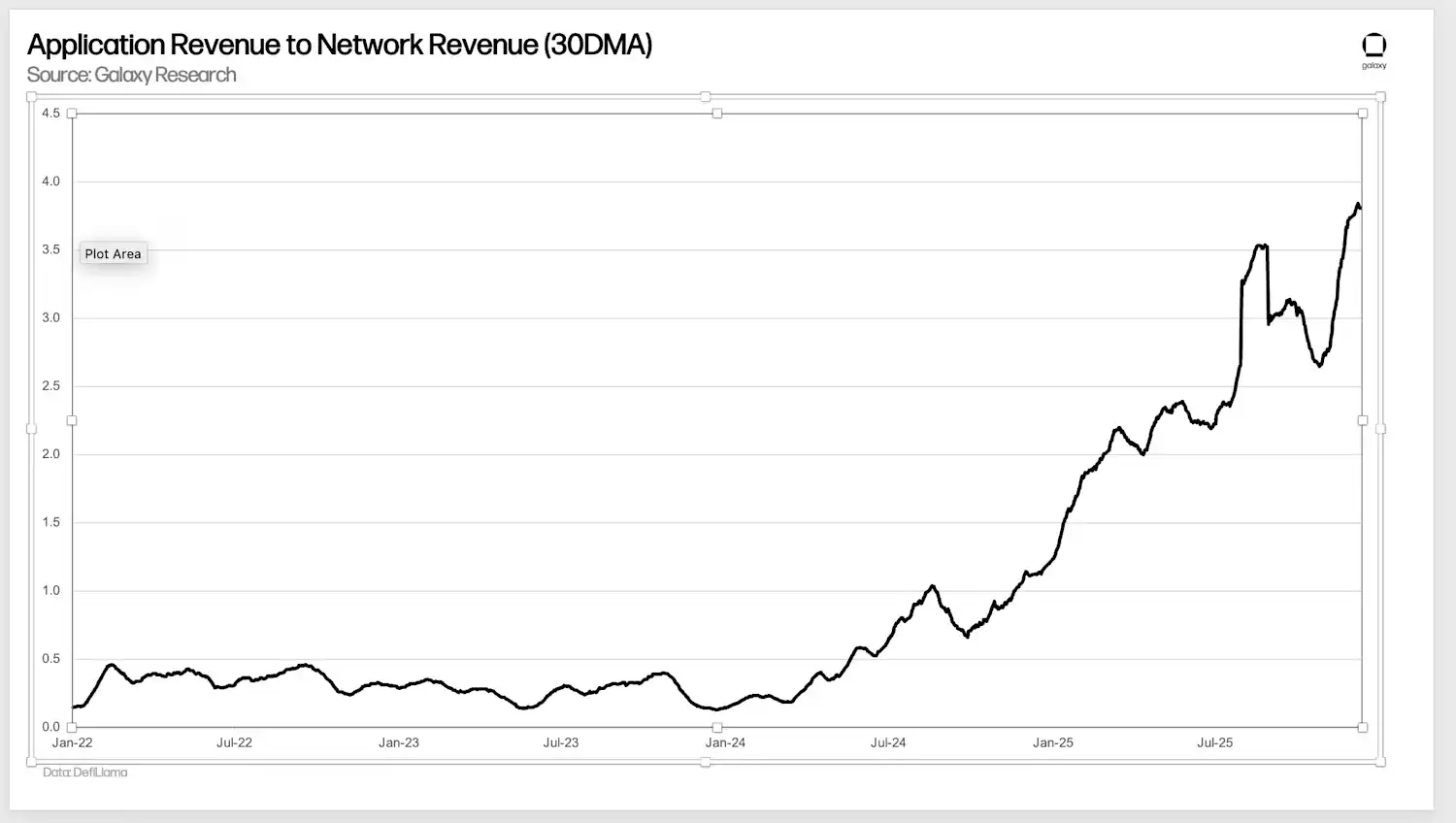
The ratio of application layer revenue to network layer revenue will double in 2026.
As transactions, DeFi, wallets, and emerging consumer applications continue to dominate on-chain fee generation, value capture is shifting from the underlying network to the application layer. At the same time, networks are structurally reducing MEV (Miner Extractable Value) spillage and pursuing fee compression on L1 and L2, reducing the revenue base of the infrastructure layer. This will accelerate application layer value capture, allowing the "fat application theory" to continue surpassing the "fat protocol theory."
——Lucas Tcheyan
Stablecoin and Asset Tokenization
The U.S. Securities and Exchange Commission (SEC) will provide some form of exemption for the use of tokenized securities in DeFi.
The U.S. Securities and Exchange Commission will provide an exemption allowing for the development of on-chain tokenized securities markets. This may take the form of a "no-action letter" or a new "innovation exemption," a concept that SEC Chairman Paul Atkins has mentioned multiple times. This will enable legitimate, non-packaged on-chain securities to enter the DeFi market, not just using blockchain technology for back-office capital market activities as seen in recent DTCC "no-action letters." The formal rule-making process is expected to begin in the second half of 2026, setting rules for brokers, dealers, trading platforms, and other traditional market participants to use cryptocurrency or tokenized securities.
— Alex Thorn
The U.S. Securities and Exchange Commission will face lawsuits from traditional market participants or industry groups over the "innovation exemption" plan.
Whether it's trading firms, market infrastructure, or lobbying groups, certain parts of traditional finance or banking will challenge regulatory agencies granting exemptions to DeFi applications or crypto firms, arguing that they have failed to create comprehensive rules to govern the expansion of tokenized securities.
— Alex Thorn
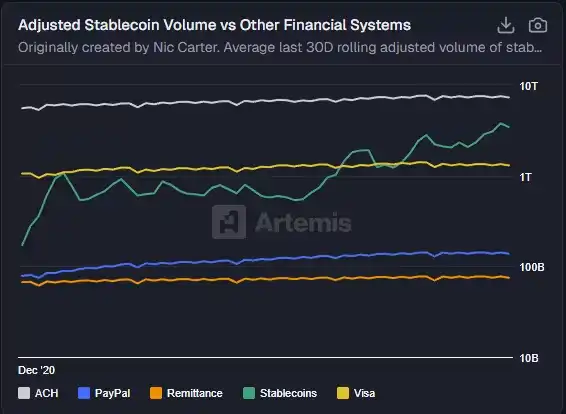
Stablecoin transaction volume will surpass the ACH system.
Compared to traditional payment systems, stablecoins have significantly faster circulation speeds. We have seen stablecoin supply continue to grow at a 30%-40% compound annual growth rate (CAGR), with transaction volumes increasing accordingly. Stablecoin transaction volume has already exceeded that of major credit card networks like Visa, currently processing around half of the Automated Clearing House (ACH) system's transaction volume. With the definition of the GENIUS Act finalized in early 2026, we may see stablecoins growing faster than their historical average growth rate as existing stablecoins continue to grow, and new entrants compete for this expanding market share.
— Thad Pinakiewicz
Stablecoins collaborating with Traditional Finance (TradFi) will accelerate integration.
Despite the introduction of many stablecoins in the United States by 2025, the market struggles to support a plethora of widely adopted options. Consumers and merchants will not be using multiple digital dollars concurrently; they will tend to choose one or two stablecoins with the broadest acceptance. We have seen this integration trend from major institutions: nine major banks (including Goldman Sachs, Deutsche Bank, Bank of America, Santander, BNP Paribas, Citigroup, MUFG Bank, DBS Group, and UBS Group) are exploring plans to launch stablecoins based on G7 currencies; PayPal and Paxos have teamed up to launch PYUSD, combining a global payment network with a regulated issuer.
These cases indicate that success hinges on distribution scale, i.e., the ability to onboard banks, payment processors, and enterprise platforms. It is expected that more stablecoin issuers will collaborate or consolidate systems in the future to compete for meaningful market share.
— Jianing Wu
A major bank or broker will accept tokenized stocks as collateral.
So far, tokenized stocks remain on the fringes, confined to DeFi experiments and private blockchains piloted by major banks. However, core infrastructure providers in traditional finance are now accelerating their shift to blockchain-based systems, with increasing regulatory support. In the upcoming year, we might see a major bank or broker start accepting tokenized stocks as on-chain deposits, considering them assets fully equivalent to traditional securities.
— Thad Pinakiewicz
A card payment network will tap into a public blockchain.
At least one of the top three global card payment networks will settle over 10% of its cross-border transaction volume via a public chain stablecoin in 2026, although most end users are unlikely to interact with cryptocurrency interfaces. Issuers and acquirers will still display balances and liabilities in traditional formats, but in the background, a portion of net settlement between regional entities will be conducted using tokenized dollars to reduce settlement finality times, pre-funding requirements, and correspondent banking risks. This development will position stablecoins as a core financial infrastructure of the existing payment networks.
— Christopher Rosa
DEFI
Decentralized Exchanges (DEXs) will account for over 25% of spot trading volume by the end of 2026.
While centralized exchanges (CEXs) still dominate liquidity and are responsible for onboarding new users, some structural changes are driving more and more spot trading activity to move on-chain. The two most obvious advantages of DEX are no KYC (Know Your Customer) requirements for entry and a more cost-efficient fee structure, features that are increasingly attractive to users and market makers seeking lower friction and greater composability. Currently, DEX spot trading volume accounts for around 15%-17% of the total, with the specific percentage depending on the data source.
——Will Owens
A DAO treasury holding governed by the Futarchy governance model is set to surpass $500 million.
Building upon our prediction from a year ago that futarchy (futurarchy) as a governance mechanism would see wider adoption, we now see it has demonstrated enough effectiveness in practical applications for decentralized autonomous organizations (DAOs) to start using it as the sole decision-making system for capital allocation and strategic direction. Therefore, we anticipate that by the end of 2026, the total assets held in DAO treasuries governed by the futarchy model will exceed $500 million. Currently, approximately $47 million of DAO treasury assets are fully governed by the futarchy model. We anticipate this growth will mainly come from newly established futarchy DAOs, with some contribution from the treasury growth of existing futarchy DAOs.
——Zack Pokorny
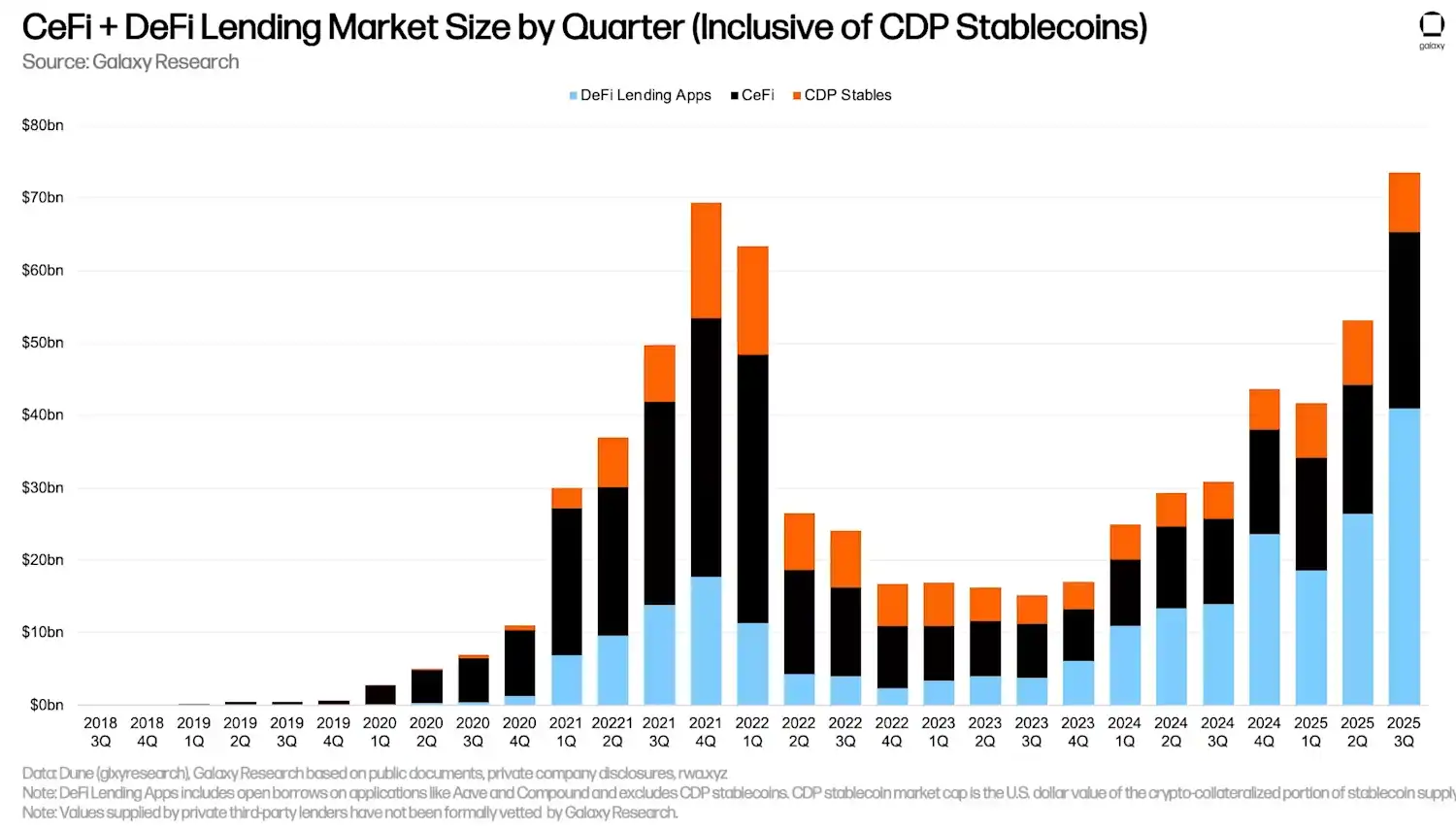
The total value locked in crypto collateralized loans will surpass $90 billion in the quarterly snapshot.
Following the momentum from 2025, the total volume of crypto collateralized loans in both decentralized finance (DeFi) and centralized finance (CeFi) is expected to continue growing in 2026. On-chain dominance (i.e., the share of loans issued through decentralized platforms) will continue to rise as institutional participants increasingly rely on DeFi protocols for lending activities.
——Zack Pokorny
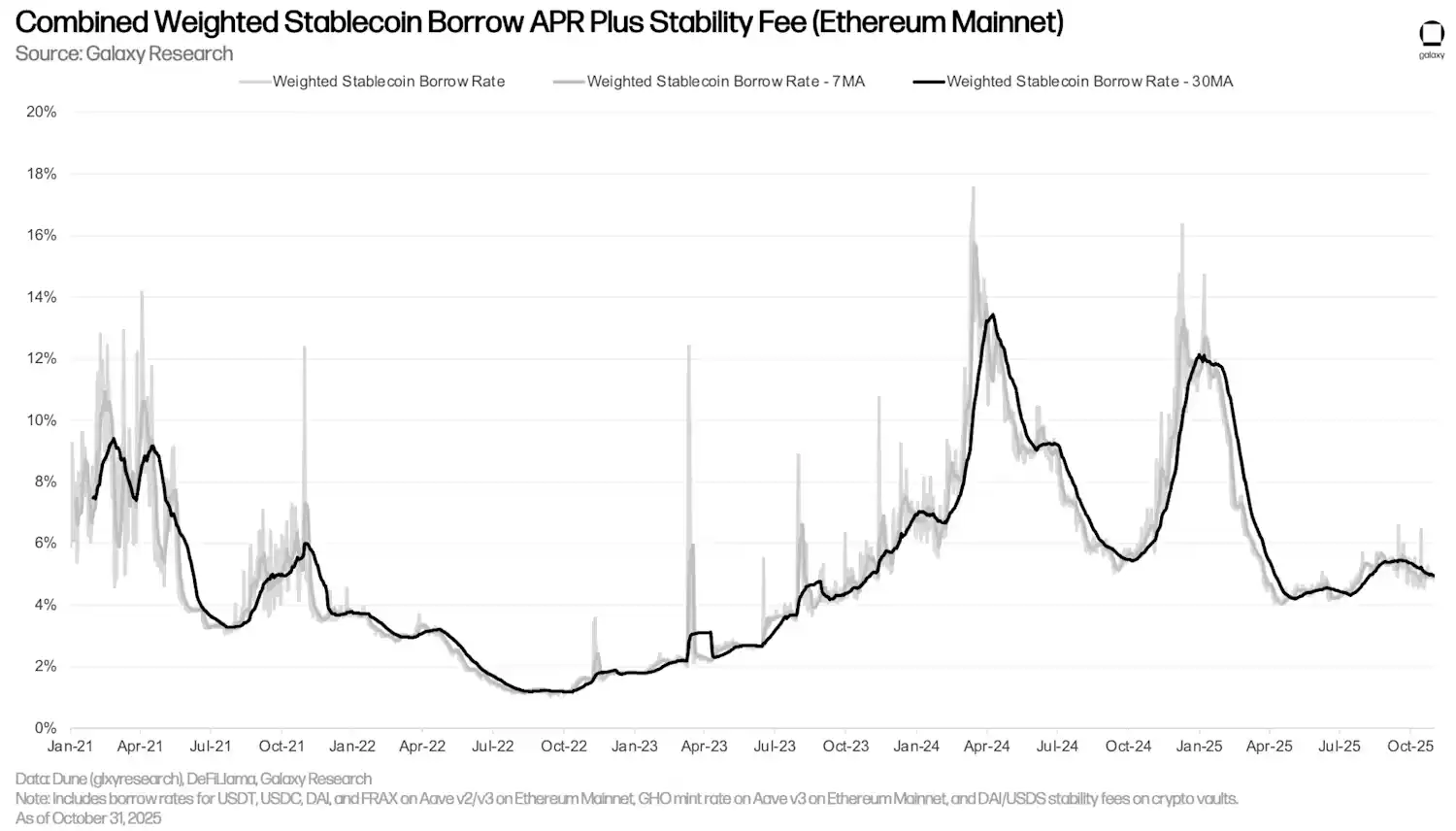
Stablecoin interest rate volatility will remain moderate, with DeFi borrowing costs not exceeding 10%.
With the growth of institutional participation in on-chain lending, we anticipate deeper liquidity and more stable, slower-moving capital to significantly reduce interest rate fluctuations. At the same time, on-chain and off-chain interest rate arbitrage becomes easier, and access to DeFi becomes more challenging. It is expected that off-chain rates will further decrease in 2026, keeping on-chain borrowing rates low—making off-chain rates an important floor even in a bull market.
The core points are:
(1) Institutional capital has brought stability and sustainability to the DeFi market;
(2) A declining off-chain interest rate environment will lead to on-chain rates below typical expansionary period levels.
— Zack Pokorny
The total market cap of Privacy Tokens will exceed $100 billion by the end of 2026.
In Q4 2025, Privacy Tokens gained significant market attention, with investors depositing more funds on-chain, shifting focus to on-chain privacy. Among the top three Privacy Tokens, Zcash saw an increase of about 800% in the quarter, Railgun rose by around 204%, and Monero experienced a more moderate 53% increase. Early Bitcoin developers, including the pseudonymous founder Satoshi Nakamoto, had explored making transactions more private or entirely anonymous, but practical zero-knowledge tech was not widely available or deployment-ready at the time.
As more funds reside on-chain, users, especially institutions, are starting to question whether they truly want their crypto asset balances to be publicly visible. Whether a fully private design or mixer-based approaches ultimately prevail, we anticipate the total market cap of Privacy Tokens to exceed $100 billion by the end of 2026, with the current CoinMarketCap valuation around $630 billion.
— Christopher Rosa
Polymarket's weekly trading volume will consistently exceed $1.5 billion by 2026.
Prediction markets have become one of the fastest-growing categories in the crypto space, and Polymarket's weekly nominal trading volume is nearing $1 billion. We anticipate this figure will consistently exceed $1.5 billion by 2026, benefiting from new capital efficiency layers enhancing liquidity, while AI-driven order flows increase trading frequency. Polymarket's distribution capabilities are also continuously improving, accelerating fund inflows.
— Will Owens
TradFi
Over 50 Spot Altcoin ETFs and an additional 50 Crypto ETFs (excluding single-spot token products) will launch in the United States.
With the approval of the General Listing Standards by the U.S. Securities and Exchange Commission (SEC), we expect the launch pace of Spot Crypto ETFs to accelerate in 2026. By 2025, there were already over 15 Spot ETFs for Solana, XRP, Hedera, Dogecoin, Litecoin, and Chainlink. We anticipate the remaining major assets to follow suit with Spot ETF applications. In addition to single-asset products, we also expect to see the introduction of multi-asset crypto ETFs and leveraged crypto ETFs. With over 100 applications in progress, we expect 2026 to see a continued influx of new products.
— Jianing Wu
The net inflow of U.S. Spot Crypto ETFs is projected to exceed $50 billion.
By 2025, U.S. Spot Crypto ETFs had attracted $23 billion in net inflows. With deepening institutional adoption, we anticipate this number to grow rapidly in 2026. As financial service firms lift restrictions on advisor-recommended crypto products and major platforms that were once cautious about crypto (such as Vanguard Group) join crypto funds, the inflow into Bitcoin and Ethereum will surpass 2025 levels and enter more investors' portfolios. Furthermore, the launch of numerous new crypto ETFs, especially Spot Crypto products, will unlock pent-up demand and drive additional inflows during the early distribution.
— Jianing Wu
A major asset allocation platform will include Bitcoin in its standard model portfolio.
Three out of the four major financial services firms (Wells Fargo, Morgan Stanley, and Bank of America) have lifted restrictions on advisor-recommended Bitcoin and endorsed allocations of 1%-4%. The next step is to list Bitcoin products in their recommended lists and incorporate them into formal research coverage, significantly raising their visibility among clients. The ultimate goal is to include Bitcoin in model portfolios, which typically require higher assets under management (AUM) and ongoing liquidity, but we expect Bitcoin funds to meet these thresholds and enter model portfolios with a strategic weight of 1%-2%.
— Jianing Wu
Over 15 crypto companies will go public or upgrade listings in the U.S.
By 2025, 10 crypto-related companies (including Galaxy) successfully went public or upgraded listings in the U.S. Since 2018, over 290 crypto and blockchain companies have completed private fundraises of over $50 million. With relaxed regulatory conditions, we believe many companies are now prepared to seek U.S. listings to access the U.S. capital markets. Among the most likely candidates, we expect CoinShares (if not listed in 2025), BitGo (applied already), Chainalysis, and FalconX to move towards listing or upgrading listings in 2026.
——Jianing Wu
Over five Digital Asset Treasury companies (DATs) will be forced to sell assets, be acquired, or shut down entirely.
By the second quarter of 2025, Digital Asset Treasury companies (DATs) experienced a wave of establishment frenzy. Starting in October, their market Net Asset Value (mNAV) multiples began to compress. As of the time of writing, the average mNAV trading for Bitcoin, Ethereum, and Solana DATs is below 1. In the initial frenzy, many companies operating in different business lines quickly transformed into DATs to take advantage of market financing conditions. The next phase will differentiate DATs with persistence from those companies lacking a coherent strategy or asset management capability. To succeed in 2026, DATs need to have a robust capital structure, innovative liquidity management and revenue generation mechanisms, and strong synergies with relevant protocols (if not already established). Scale advantages (such as Strategy's large-scale Bitcoin holdings) or geographical advantages (such as Metaplanet in Japan) may bring additional competitiveness. However, many DATs that rushed into the market early on did not engage in sufficient strategic planning. These DATs will struggle to maintain mNAV, potentially being forced to sell assets, be acquired by larger players, or even shut down completely in the worst-case scenario.
——Jianing Wu
Policy
Some Democrats will focus on the "unbanking" issue and gradually embrace cryptocurrency as a solution.
Although this scenario is less likely, it is worth noting: by the end of November 2025, the Financial Crimes Enforcement Network (FinCEN) under the U.S. Treasury Department urged financial institutions to "be vigilant about suspicious activity related to cross-border fund transfers involving illegal immigrants." While the alert primarily emphasized risks such as human trafficking and drug smuggling, it also mentioned that Money Service Businesses (MSBs) are obligated to file Suspicious Activity Reports (SARs), including cross-border fund transfers related to illicit employment income. This may cover remittances sent back by undocumented immigrants (such as plumbers, farmworkers, or restaurant servers), who, despite working in violation of federal law, are still part of the immigrant groups sympathized with by left-leaning voters.
This alert followed FinCEN's earlier Geographic Targeting Orders (GTO), requiring MSBs to automatically report cash transactions in designated border counties, with a threshold as low as $1,000 (much lower than the statutory $10,000 threshold for Currency Transaction Reports). These measures expanded the range of day-to-day financial behaviors that could trigger federal reporting, increasing the likelihood of immigrants and low-income workers facing fund freezes, service refusals, or other forms of financial exclusion. These circumstances may make some Democratic supporters of immigrants more sympathetic to the "unbanking" issue (a topic primarily addressed by the right wing in recent years) and more willing to accept permissionless, censorship-resistant financial networks.
Conversely, Republican supporters of populism, pro-banking, and rule of law may begin to sour on cryptocurrency for the same reasons, even though the Trump administration and the party's innovators have long championed the industry. Ongoing efforts by federal banking regulators to modernize the Bank Secrecy Act and enhance anti-money laundering compliance will only further draw attention to the inherent trade-offs between financial inclusion policy goals and crime reduction—noting that different political factions may prioritize these trade-offs differently. If this political realignment comes to pass, it would demonstrate that blockchain does not have a fixed political alignment. Its permissionless design means that people's acceptance or rejection of it is not based on ideology but rather on how it affects the political priorities of different groups in different eras.
—Marc Hochstein
The U.S. will launch a federal investigation into insider trading or match-fixing related to prediction markets.
With U.S. regulatory agencies easing restrictions on on-chain prediction markets, their trading volume and open interest have surged. At the same time, several scandals have emerged, including allegations of insiders using private information to front-run the market and federal agencies launching blitz investigations into match-fixing syndicates in major sports leagues. As traders can participate pseudonymously, bypassing KYC betting platforms, insiders are now more easily tempted to exploit privileged information or manipulate the market. Therefore, we may see investigations triggered by abnormal price movements in on-chain prediction markets, rather than the routine monitoring seen in traditional regulated sports betting platforms.
—Thad Pinakiewicz
AI
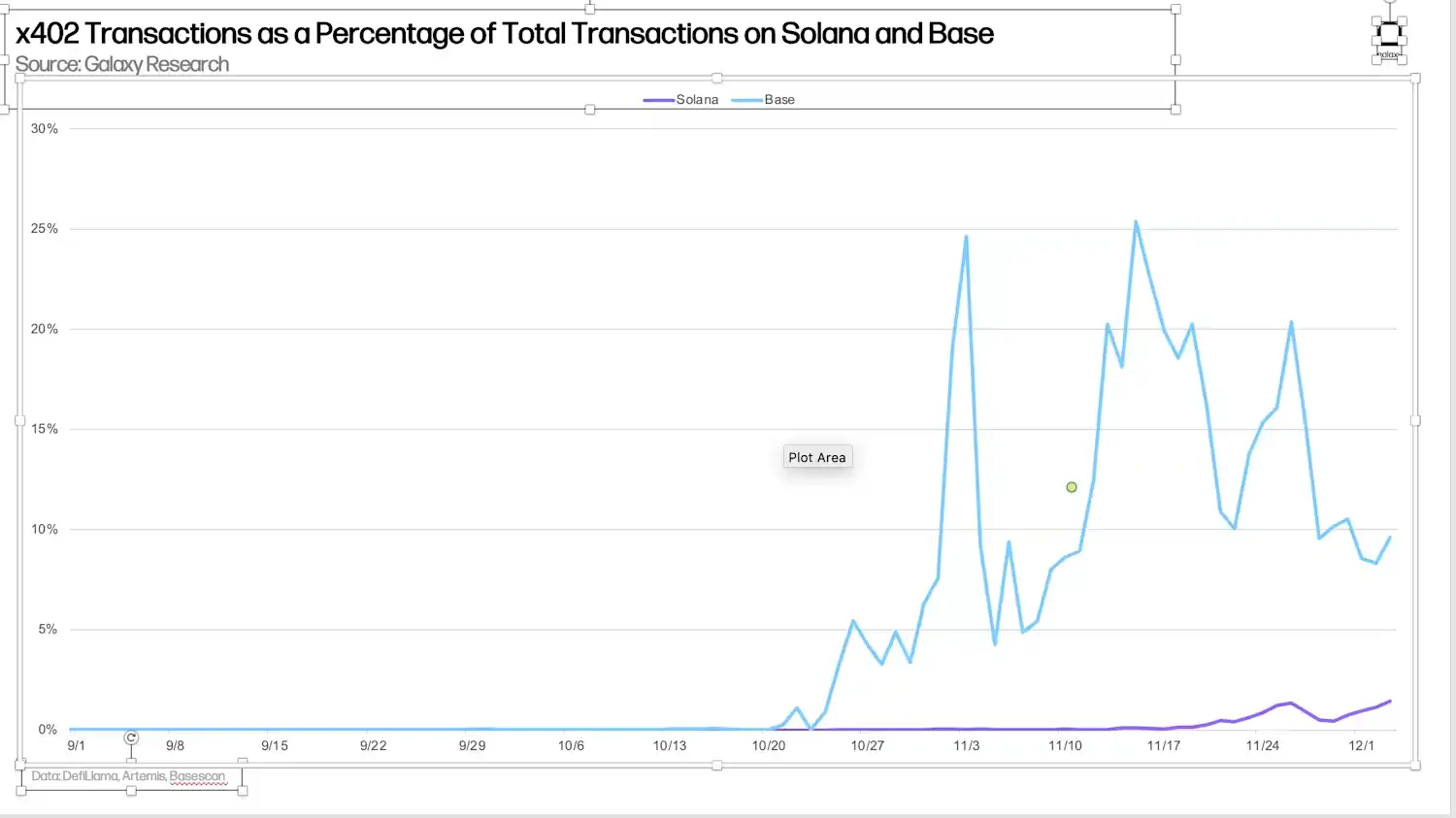
Payments based on the x402 standard will account for 30% of Base Chain's daily transaction volume and 5% of Solana's non-voting transaction volume, marking widespread adoption of on-chain proxy interactions.
With the increasing sophistication of AI proxies, continued adoption of stablecoins, and improvements in developer tools, x402 and other proxy-based payment standards will drive a larger share of on-chain activity. As AI proxies autonomously engage in transactions across various services, standardized payment primitives will become a core part of the execution layer.
Base and Solana have emerged as leading blockchains in this space—Base benefiting from Coinbase's significant role in creating and promoting the x402 standard, while Solana stands out with its large developer community and user base. Furthermore, we anticipate that with the development of proxy-driven business models, emerging payment-focused blockchains like Tempo and Arc will also experience rapid growth.
——Lucas Tcheyan
2025 Review: The Ups and Downs of Bitcoin and the Crypto Market
By the end of 2024, optimism for the future of Bitcoin and cryptocurrency was abound. The new presidential administration made a commitment to end the Biden administration's "enforcement-style regulation," while the incoming President Trump pledged to make the U.S. the "Crypto Capital of the World." With just a month to go until the presidential inauguration, longing Bitcoin became the hottest trade globally.
On December 31, 2024, we released 23 predictions for 2025, expecting further market breadth and narrative expansion in the year ahead. Some of these predictions were spot on, while others missed the mark. For many predictions, our team's direction was right but not entirely precise. From the resurgence of on-chain revenue sharing to the expansion of stablecoin use cases and the steady institutional adoption, the major trends we identified continue to evolve.
In the following sections, we will review our 23 predictions for 2025 and assess their accuracy. If there's one theme of 2025 that we underestimated, it's the surge of Digital Asset Treasury Companies (DATs). Though this craze was short-lived in the summer of 2025, its impact is undeniable. We hold ourselves to a high standard in reviewing our hits and misses and provide commentary where appropriate.
Bitcoin
❌ Bitcoin will break above $150,000 in the first half of 2025 and test or surpass $185,000 in Q4.
Result: Bitcoin failed to break above $150,000 but set a new high of $126,000. By November, we had revised our year-end target to $125,000. As of the time of writing, Bitcoin is trading between $80,000 and $90,000, seemingly unlikely to reach our updated end-of-year target for 2025.
——Alex Thorn
❌ In 2025, the total assets under management (AUM) of U.S. Bitcoin spot ETPs will surpass $250 billion.
Result: As of November 12, the AUM reached $141 billion, up from $105 billion on January 1, but fell short of the forecasted target.
— Alex Thorn
❌ By 2025, Bitcoin will once again be one of the best-performing assets in the world on a risk-adjusted basis.
Outcome: In the first half of 2025, this prediction was accurate. As of July 14, Bitcoin had a year-to-date Sharpe ratio of 0.87, outperforming the S&P 500 Index, Nvidia, Microsoft, and others. However, Bitcoin is expected to end the year with a negative Sharpe ratio, failing to be one of the top-performing assets for the year.
— Alex Thorn
✅ At least one top-tier wealth management platform will announce recommending a 2% or higher allocation to Bitcoin.
Outcome: Morgan Stanley, one of the Big Four financial services firms, removed the restriction on advisors allocating Bitcoin to any accounts. In the same week, Morgan Stanley released a report suggesting a maximum allocation of 4% to Bitcoin in portfolios. Additionally, the Digital Assets Council of Financial Professionals, led by Ric Edelman, issued a report recommending allocations of 10%-40% to Bitcoin. Bridgewater Associates founder Ray Dalio also suggested allocating 15% of assets to Bitcoin and gold. — Alex Thorn
❌ Five Nasdaq 100 companies and five sovereign wealth funds or nations will announce adding Bitcoin to their balance sheets.
Outcome: Currently, only three Nasdaq 100 Index companies hold Bitcoin. However, approximately 180 companies globally hold or have announced plans to purchase cryptocurrency for their balance sheets, involving over 10 different tokens. Over five countries have invested in Bitcoin through official reserves or sovereign wealth funds, including Bhutan, El Salvador, Kazakhstan, the Czech Republic, and Luxembourg. The Digital Asset Treasury (DAT) trend is one of the key institutional drivers of cryptocurrency purchases in 2025, especially in the second quarter.
— Jianing Wu
❌ Bitcoin developers will reach a consensus on the next protocol upgrade in 2025.
Result: Not only did they fail to reach a consensus on the next protocol upgrade, but there was also an internal dispute within the Bitcoin developer ecosystem on how to handle non-monetary transactions. In October 2025, the most widely used Bitcoin Core software released its 30th version, controversially expanding the OP_RETURN field's limit.
This extension of the data field aimed to steer the most disruptive arbitrary data transactions to a location on the blockchain with minimal harm, but this move sparked significant opposition within the Bitcoin community. By the end of October, an anonymous developer published a new Bitcoin Improvement Proposal (BIP) suggesting a "temporary soft fork" to "combat spam transactions." Although this proposal gradually lost momentum in the following months, the debate surrounding this issue essentially exhausted developers' efforts to reach a consensus on more forward-looking upgrades. While proposals such as OP_CAT and OP_CTV still garnered attention in 2025, unresolved governance issues prevented developers from reaching an agreement on the next major protocol upgrade by December.
——Will Owens
✅ Among the top 20 publicly listed Bitcoin mining companies by market capitalization, over half will announce a shift or establish partnerships with hyperscale computing, artificial intelligence (AI), or high-performance computing (HPC) firms.
Result: Major mining companies are broadly transitioning to a hybrid AI/HPC mining model to more flexibly monetize their infrastructure investments. Among the top 20 publicly listed Bitcoin mining companies by market capitalization, 18 have announced plans to pivot to an AI/HPC approach as part of business diversification. The two companies that have not announced a transition are American Bitcoin (ABTC) and Neptune Digital Assets Corp (NDA.V).
——Thad Pinakiewicz
❌ The Bitcoin DeFi ecosystem, referring to the amount of BTC locked in DeFi smart contracts and staking protocols, will nearly double in 2025.
Result: The amount of Bitcoin locked in DeFi in 2025 only increased by about 30% (from 134,987 BTC on December 31, 2024, to 174,224 BTC on December 3, 2025). This growth mainly came from lending activities, with Aave V3 Core adding 21,977 wrapped BTC throughout the year, and Morpho adding 29,917 wrapped BTC. However, Bitcoin staking protocols as a significant category experienced capital outflows, losing over 13,000 wrapped BTC.
——Zack Pokorny
ETH
❌ The Ethereum native token ETH will surpass $5500 in 2025.
Outcome: Ethereum's native token ETH briefly hit a new all-time high in September 2025 but failed to break $5000. Analysts believe that the price surge from April to fall 2025 was mainly driven by treasury companies like Bitminer. However, as the activity of these treasury companies waned, ETH's price also dropped and has struggled to stay above $3000 since October.
——Alex Thorn
❌ The Ethereum staking rate will exceed 50% in 2025.
Outcome: In 2025, Ethereum's staking rate peaked at around 29.7%, up from 28.3% at the beginning of the year. In recent months, ETH's staking has been constrained due to unstaking of circulating supply and key validator reshuffling, interrupting both exits and entries into the queue.
——Zack Pokorny
❌ The ETH/BTC ratio will drop below 0.03 in 2025 while also surpassing 0.045.
Outcome: This prediction was close to accurate. The ETH/BTC ratio dropped to a low of 0.01765 on April 22, meeting our lower limit prediction; it then reached a high of 0.04324 on August 24 but fell short of the upper limit of 0.045. Despite bounces in the ETH/BTC ratio, it is expected to end the year lower on a year-over-year basis.
——Alex Thorn
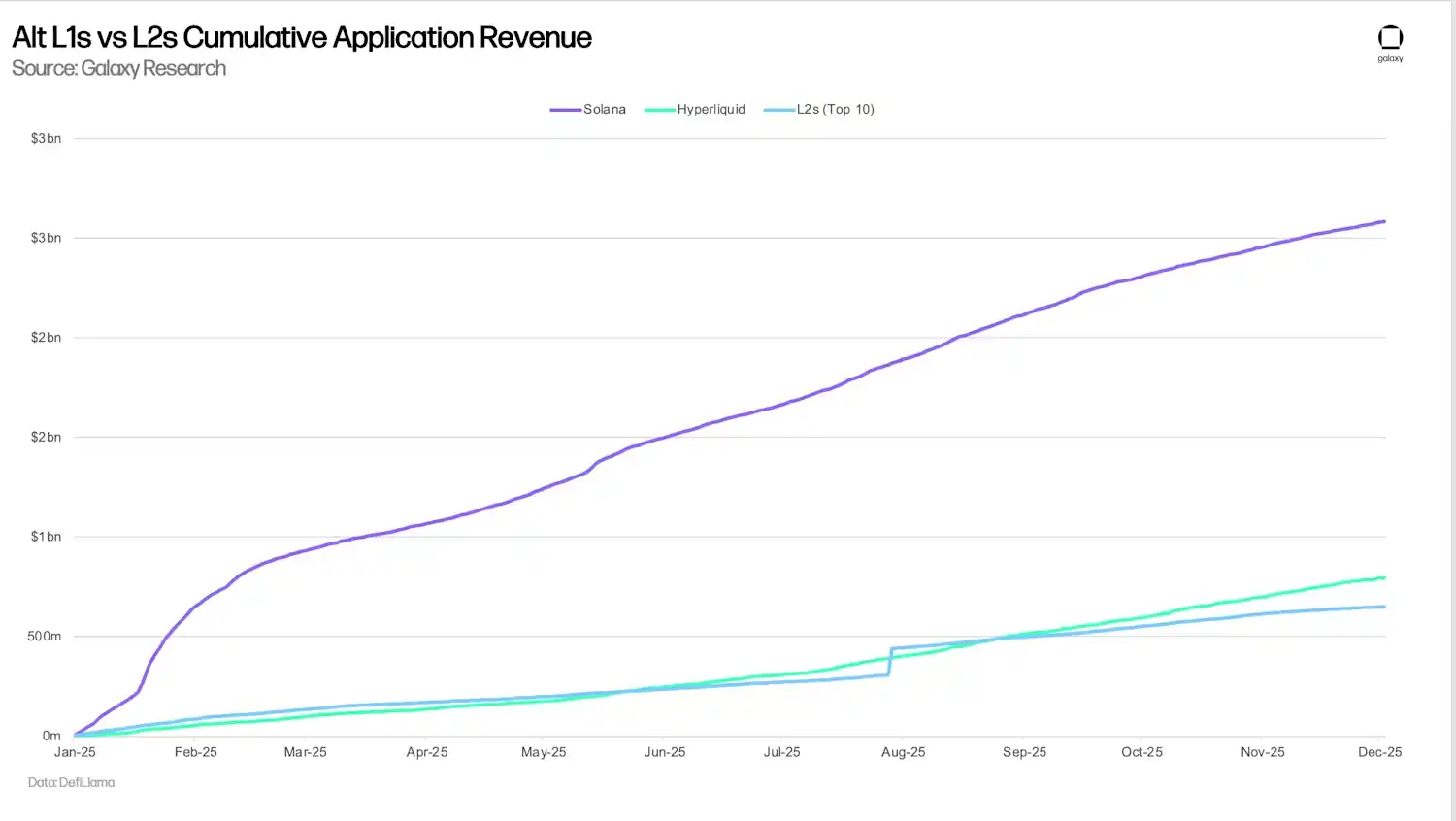
❌ Layer 2 (L2) overall economic activity will surpass Alt-L1 in 2025.
Outcome: This prediction did not materialize. On both network and application layers, Layer 2 performed below major Alt-L1 chains. Solana solidified its position as the de facto retail speculation chain, continuing to capture the largest share of industry-wide transaction volume and fee revenue. Meanwhile, Hyperliquid emerged as the dominant platform for perpetual contract trading, with its platform alone surpassing the total application revenue of the entire Layer 2 ecosystem. Although Base was the only Layer 2 chain that came close to Alt-L1-level appeal—occupying nearly 70% of Layer 2 application revenue in 2025—its growth was not sufficient to surpass the economic gravity of Solana and Hyperliquid.
——Lucas Tcheyan
DeFi
✅ DeFi is entering the "Dividend Era," where on-chain applications will distribute at least $10 billion in nominal value to users and token holders through treasury funds and revenue sharing.
Outcome: By November 2025, the amount distributed through application revenue buybacks reached at least $10.42 billion. Hyperliquid and Solana-based applications led the way this year in token buybacks. Buyback activities became a significant narrative this year, widely accepted by the market, with some projects even being shunned for not supporting such activities. So far, top applications have returned $8.188 billion to end-users. Hyperliquid leads the pack in this area, returning nearly $2.5 billion through token buybacks.
——Zack Pokorny
✅ On-chain governance will experience a revival, with applications exploring governance models based on futarchy (futarchy governance), and the total active voters will increase by at least 20%.
Outcome: In 2025, the use of futarchy models in DAO governance significantly increased. Optimism began experimenting with this concept, while the Solana-based MetaDAO introduced 15 DAOs in a year, including prominent organizations like Jito and Drift. Currently, 9 of these DAOs fully adopt the futarchy model to manage strategic decision-making and capital allocation. The participation in these decision markets has grown exponentially, with one MetaDAO market reaching a trading volume of $1 million. Furthermore, 9 of the top 10 proposal volumes in MetaDAO occurred this year. We have witnessed an increasing number of DAOs using futarchy for strategic decision-making, with some DAOs launching purely on a futarchy basis. However, the vast majority of futarchy experiments have taken place on the Solana network and are led by MetaDAO.
——Zack Pokorny
Banking and Stablecoins
❌ The four major custody banks globally (BNY Mellon, JPMorgan Chase, State Street, Citigroup) will offer digital asset custody services in 2025.
Result: This prediction was close to accurate. The Bank of New York Mellon (BNY Mellon) did indeed launch its crypto custody service in 2025. While State Street and Citigroup have not yet launched, they announced plans to offer related services in 2026. Only JPMorgan Chase remains cautious, with an executive telling CNBC in October, "Custody is not something that is front and center in our plans right now," but the large bank will engage in digital asset trading. In summary, out of the four major custody banks, three have either provided or announced plans to provide crypto custody services.
——Alex Thorn
✅ There will be at least 10 stablecoins launched backed by Traditional Finance (TradFi) partners.
Result: While some of these stablecoins have not been officially launched, at least 14 major global financial institutions have announced related plans. For example, in the U.S., JPMorgan Chase, Bank of America, Citigroup, and Wells Fargo formed a U.S. banking consortium planning to launch a joint stablecoin; there are also brokerage firms like Interactive Brokers, and payment and fintech companies like Fiserv and Stripe. The wave outside the U.S. is even stronger, including Klarna, Sony Bank, and a global banking coalition of nine major banks. In addition, crypto-native stablecoin issuers like Ethena have entered the competition, partnering with federally-regulated bank Anchorage to issue its native USDtb stablecoin.
——Jianing Wu
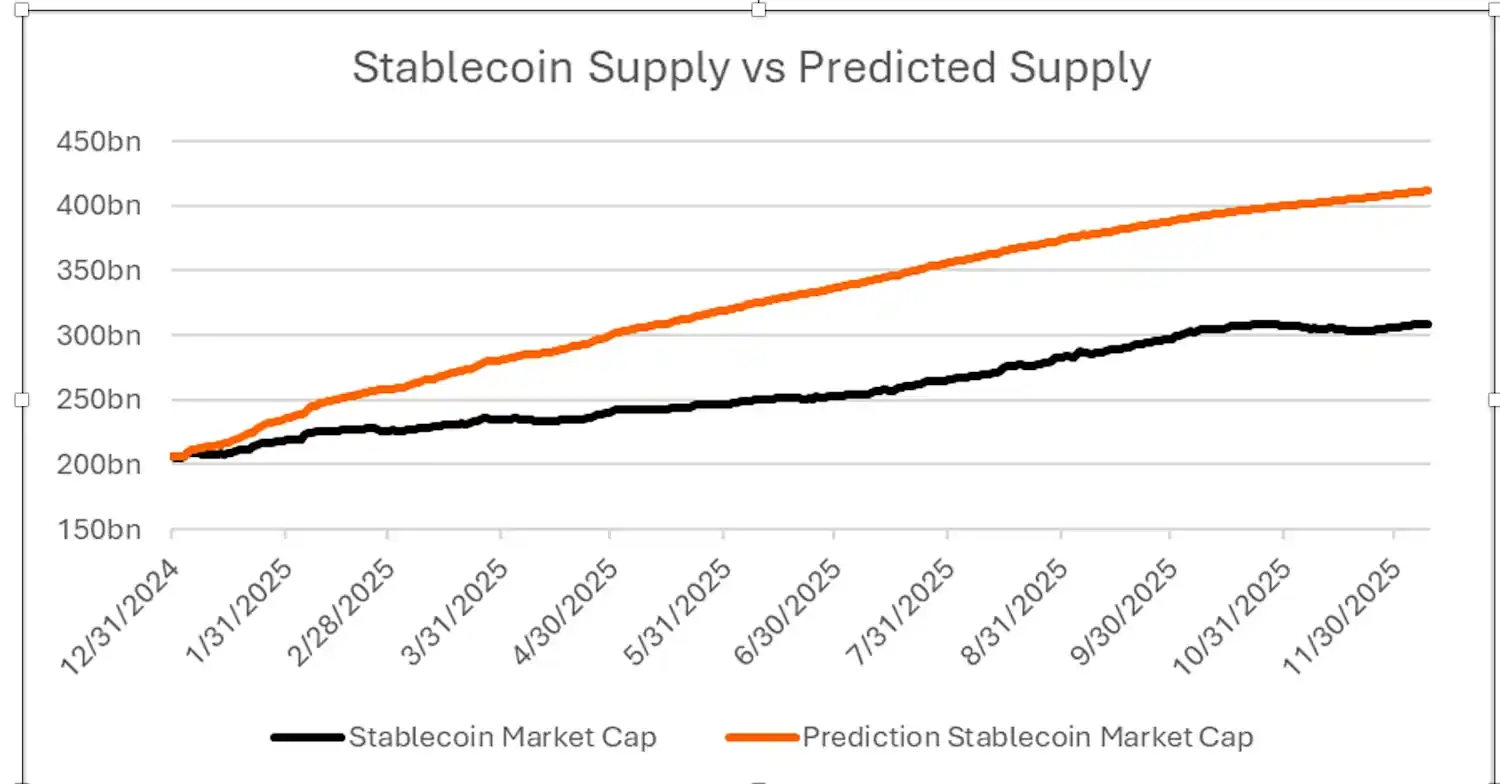
❌ The total supply of stablecoins in 2025 will double, exceeding 400 billion USD.
Result: The growth of stablecoins remains strong, having increased by 50% from the beginning of the year to nearly 310 billion USD, but it did not reach the projected 100% growth rate from the start of the year. With the passing of the GENIUS Act and the formulation of relevant implementation rules, regulatory clarity around stablecoins is emerging, so the growth of stablecoins is expected to remain robust.
——Thad Pinakiewicz
❌ Tether's long-standing stablecoin market dominance will fall below 50% by 2025, facing challenges from Blackrock's BUIDL, Ethena's USDe, and interest-bearing stablecoins such as USDC offered by Coinbase/Circle.
Outcome: This narrative seemed achievable earlier in the year due to the explosive growth of USDe and interest-bearing stablecoins. However, as the market slumped in the latter half of the year and the overall stablecoin supply saw a slight decrease, Tether continued to maintain its position as the top stablecoin issuer in the crypto market. As of the time of writing, Tether held nearly 70% of the market supply. Tether has prepared to launch a new stablecoin, USAT, compliant with the "GENIUS Act," to complement its flagship token USDT, but it appears not to have realigned its collateral portfolio to meet the proposed U.S. regulatory construct. Circle's USDC remains a key competitor to Tether, with its market share increasing from 24% of the total supply to 28% over the year.
—Thad Pinakiewicz
You may also like

Token Cannot Compound, Where Is the Real Investment Opportunity?

February 6th Market Key Intelligence, How Much Did You Miss?

China's Central Bank and Eight Other Departments' Latest Regulatory Focus: Key Attention to RWA Tokenized Asset Risk
Foreword: Today, the People's Bank of China's website published the "Notice of the People's Bank of China, National Development and Reform Commission, Ministry of Industry and Information Technology, Ministry of Public Security, State Administration for Market Regulation, China Banking and Insurance Regulatory Commission, China Securities Regulatory Commission, State Administration of Foreign Exchange on Further Preventing and Dealing with Risks Related to Virtual Currency and Others (Yinfa [2026] No. 42)", the latest regulatory requirements from the eight departments including the central bank, which are basically consistent with the regulatory requirements of recent years. The main focus of the regulation is on speculative activities such as virtual currency trading, exchanges, ICOs, overseas platform services, and this time, regulatory oversight of RWA has been added, explicitly prohibiting RWA tokenization, stablecoins (especially those pegged to the RMB). The following is the full text:
To the people's governments of all provinces, autonomous regions, and municipalities directly under the Central Government, the Xinjiang Production and Construction Corps:
Recently, there have been speculative activities related to virtual currency and Real-World Assets (RWA) tokenization, disrupting the economic and financial order and jeopardizing the property security of the people. In order to further prevent and address the risks related to virtual currency and Real-World Assets tokenization, effectively safeguard national security and social stability, in accordance with the "Law of the People's Republic of China on the People's Bank of China," "Law of the People's Republic of China on Commercial Banks," "Securities Law of the People's Republic of China," "Law of the People's Republic of China on Securities Investment Funds," "Law of the People's Republic of China on Futures and Derivatives," "Cybersecurity Law of the People's Republic of China," "Regulations of the People's Republic of China on the Administration of Renminbi," "Regulations on Prevention and Disposal of Illegal Fundraising," "Regulations of the People's Republic of China on Foreign Exchange Administration," "Telecommunications Regulations of the People's Republic of China," and other provisions, after reaching consensus with the Cyberspace Administration of China, the Supreme People's Court, and the Supreme People's Procuratorate, and with the approval of the State Council, the relevant matters are notified as follows:
(I) Virtual currency does not possess the legal status equivalent to fiat currency. Virtual currencies such as Bitcoin, Ether, Tether, etc., have the main characteristics of being issued by non-monetary authorities, using encryption technology and distributed ledger or similar technology, existing in digital form, etc. They do not have legal tender status, should not and cannot be circulated and used as currency in the market.
The business activities related to virtual currency are classified as illegal financial activities. The exchange of fiat currency and virtual currency within the territory, exchange of virtual currencies, acting as a central counterparty in buying and selling virtual currencies, providing information intermediary and pricing services for virtual currency transactions, token issuance financing, and trading of virtual currency-related financial products, etc., fall under illegal financial activities, such as suspected illegal issuance of token vouchers, unauthorized public issuance of securities, illegal operation of securities and futures business, illegal fundraising, etc., are strictly prohibited across the board and resolutely banned in accordance with the law. Overseas entities and individuals are not allowed to provide virtual currency-related services to domestic entities in any form.
A stablecoin pegged to a fiat currency indirectly fulfills some functions of the fiat currency in circulation. Without the consent of relevant authorities in accordance with the law and regulations, any domestic or foreign entity or individual is not allowed to issue a RMB-pegged stablecoin overseas.
(II)Tokenization of Real-World Assets refers to the use of encryption technology and distributed ledger or similar technologies to transform ownership rights, income rights, etc., of assets into tokens (tokens) or other interests or bond certificates with token (token) characteristics, and carry out issuance and trading activities.
Engaging in the tokenization of real-world assets domestically, as well as providing related intermediary, information technology services, etc., which are suspected of illegal issuance of token vouchers, unauthorized public offering of securities, illegal operation of securities and futures business, illegal fundraising, and other illegal financial activities, shall be prohibited; except for relevant business activities carried out with the approval of the competent authorities in accordance with the law and regulations and relying on specific financial infrastructures. Overseas entities and individuals are not allowed to illegally provide services related to the tokenization of real-world assets to domestic entities in any form.
(III) Inter-agency Coordination. The People's Bank of China, together with the National Development and Reform Commission, the Ministry of Industry and Information Technology, the Ministry of Public Security, the State Administration for Market Regulation, the China Banking and Insurance Regulatory Commission, the China Securities Regulatory Commission, the State Administration of Foreign Exchange, and other departments, will improve the work mechanism, strengthen coordination with the Cyberspace Administration of China, the Supreme People's Court, and the Supreme People's Procuratorate, coordinate efforts, and overall guide regions to carry out risk prevention and disposal of virtual currency-related illegal financial activities.
The China Securities Regulatory Commission, together with the National Development and Reform Commission, the Ministry of Industry and Information Technology, the Ministry of Public Security, the People's Bank of China, the State Administration for Market Regulation, the China Banking and Insurance Regulatory Commission, the State Administration of Foreign Exchange, and other departments, will improve the work mechanism, strengthen coordination with the Cyberspace Administration of China, the Supreme People's Court, and the Supreme People's Procuratorate, coordinate efforts, and overall guide regions to carry out risk prevention and disposal of illegal financial activities related to the tokenization of real-world assets.
(IV) Strengthening Local Implementation. The people's governments at the provincial level are overall responsible for the prevention and disposal of risks related to virtual currencies and the tokenization of real-world assets in their respective administrative regions. The specific leading department is the local financial regulatory department, with participation from branches and dispatched institutions of the State Council's financial regulatory department, telecommunications regulators, public security, market supervision, and other departments, in coordination with cyberspace departments, courts, and procuratorates, to improve the normalization of the work mechanism, effectively connect with the relevant work mechanisms of central departments, form a cooperative and coordinated working pattern between central and local governments, effectively prevent and properly handle risks related to virtual currencies and the tokenization of real-world assets, and maintain economic and financial order and social stability.
(5) Enhanced Risk Monitoring. The People's Bank of China, China Securities Regulatory Commission, National Development and Reform Commission, Ministry of Industry and Information Technology, Ministry of Public Security, State Administration of Foreign Exchange, Cyberspace Administration of China, and other departments continue to improve monitoring techniques and system support, enhance cross-departmental data analysis and sharing, establish sound information sharing and cross-validation mechanisms, promptly grasp the risk situation of activities related to virtual currency and real-world asset tokenization. Local governments at all levels give full play to the role of local monitoring and early warning mechanisms. Local financial regulatory authorities, together with branches and agencies of the State Council's financial regulatory authorities, as well as departments of cyberspace and public security, ensure effective connection between online monitoring, offline investigation, and fund tracking, efficiently and accurately identify activities related to virtual currency and real-world asset tokenization, promptly share risk information, improve early warning information dissemination, verification, and rapid response mechanisms.
(6) Strengthened Oversight of Financial Institutions, Intermediaries, and Technology Service Providers. Financial institutions (including non-bank payment institutions) are prohibited from providing account opening, fund transfer, and clearing services for virtual currency-related business activities, issuing and selling financial products related to virtual currency, including virtual currency and related financial products in the scope of collateral, conducting insurance business related to virtual currency, or including virtual currency in the scope of insurance liability. Financial institutions (including non-bank payment institutions) are prohibited from providing custody, clearing, and settlement services for unauthorized real-world asset tokenization-related business and related financial products. Relevant intermediary institutions and information technology service providers are prohibited from providing intermediary, technical, or other services for unauthorized real-world asset tokenization-related businesses and related financial products.
(7) Enhanced Management of Internet Information Content and Access. Internet enterprises are prohibited from providing online business venues, commercial displays, marketing, advertising, or paid traffic diversion services for virtual currency and real-world asset tokenization-related business activities. Upon discovering clues of illegal activities, they should promptly report to relevant departments and provide technical support and assistance for related investigations and inquiries. Based on the clues transferred by the financial regulatory authorities, the cyberspace administration, telecommunications authorities, and public security departments should promptly close and deal with websites, mobile applications (including mini-programs), and public accounts engaged in virtual currency and real-world asset tokenization-related business activities in accordance with the law.
(8) Strengthened Entity Registration and Advertisement Management. Market supervision departments strengthen entity registration and management, and enterprise and individual business registrations must not contain terms such as "virtual currency," "virtual asset," "cryptocurrency," "crypto asset," "stablecoin," "real-world asset tokenization," or "RWA" in their names or business scopes. Market supervision departments, together with financial regulatory authorities, legally enhance the supervision of advertisements related to virtual currency and real-world asset tokenization, promptly investigating and handling relevant illegal advertisements.
(IX) Continued Rectification of Virtual Currency Mining Activities. The National Development and Reform Commission, together with relevant departments, strictly controls virtual currency mining activities, continuously promotes the rectification of virtual currency mining activities. The people's governments of various provinces take overall responsibility for the rectification of "mining" within their respective administrative regions. In accordance with the requirements of the National Development and Reform Commission and other departments in the "Notice on the Rectification of Virtual Currency Mining Activities" (NDRC Energy-saving Building [2021] No. 1283) and the provisions of the "Guidance Catalog for Industrial Structure Adjustment (2024 Edition)," a comprehensive review, investigation, and closure of existing virtual currency mining projects are conducted, new mining projects are strictly prohibited, and mining machine production enterprises are strictly prohibited from providing mining machine sales and other services within the country.
(X) Severe Crackdown on Related Illegal Financial Activities. Upon discovering clues to illegal financial activities related to virtual currency and the tokenization of real-world assets, local financial regulatory authorities, branches of the State Council's financial regulatory authorities, and other relevant departments promptly investigate, determine, and properly handle the issues in accordance with the law, and seriously hold the relevant entities and individuals legally responsible. Those suspected of crimes are transferred to the judicial authorities for processing according to the law.
(XI) Severe Crackdown on Related Illegal and Criminal Activities. The Ministry of Public Security, the People's Bank of China, the State Administration for Market Regulation, the China Banking and Insurance Regulatory Commission, the China Securities Regulatory Commission, as well as judicial and procuratorial organs, in accordance with their respective responsibilities, rigorously crack down on illegal and criminal activities related to virtual currency, the tokenization of real-world assets, such as fraud, money laundering, illegal business operations, pyramid schemes, illegal fundraising, and other illegal and criminal activities carried out under the guise of virtual currency, the tokenization of real-world assets, etc.
(XII) Strengthen Industry Self-discipline. Relevant industry associations should enhance membership management and policy advocacy, based on their own responsibilities, advocate and urge member units to resist illegal financial activities related to virtual currency and the tokenization of real-world assets. Member units that violate regulatory policies and industry self-discipline rules are to be disciplined in accordance with relevant self-regulatory management regulations. By leveraging various industry infrastructure, conduct risk monitoring related to virtual currency, the tokenization of real-world assets, and promptly transfer issue clues to relevant departments.
(XIII) Without the approval of relevant departments in accordance with the law and regulations, domestic entities and foreign entities controlled by them may not issue virtual currency overseas.
(XIV) Domestic entities engaging directly or indirectly in overseas external debt-based tokenization of real-world assets, or conducting asset securitization activities abroad based on domestic ownership rights, income rights, etc. (hereinafter referred to as domestic equity), should be strictly regulated in accordance with the principles of "same business, same risk, same rules." The National Development and Reform Commission, the China Securities Regulatory Commission, the State Administration of Foreign Exchange, and other relevant departments regulate it according to their respective responsibilities. For other forms of overseas real-world asset tokenization activities based on domestic equity by domestic entities, the China Securities Regulatory Commission, together with relevant departments, supervise according to their division of responsibilities. Without the consent and filing of relevant departments, no unit or individual may engage in the above-mentioned business.
(15) Overseas subsidiaries and branches of domestic financial institutions providing Real World Asset Tokenization-related services overseas shall do so legally and prudently. They shall have professional personnel and systems in place to effectively mitigate business risks, strictly implement customer onboarding, suitability management, anti-money laundering requirements, and incorporate them into the domestic financial institutions' compliance and risk management system. Intermediaries and information technology service providers offering Real World Asset Tokenization services abroad based on domestic equity or conducting Real World Asset Tokenization business in the form of overseas debt for domestic entities directly or indirectly venturing abroad must strictly comply with relevant laws and regulations. They should establish and improve relevant compliance and internal control systems in accordance with relevant normative requirements, strengthen business and risk control, and report the business developments to the relevant regulatory authorities for approval or filing.
(16) Strengthen organizational leadership and overall coordination. All departments and regions should attach great importance to the prevention of risks related to virtual currencies and Real World Asset Tokenization, strengthen organizational leadership, clarify work responsibilities, form a long-term effective working mechanism with centralized coordination, local implementation, and shared responsibilities, maintain high pressure, dynamically monitor risks, effectively prevent and mitigate risks in an orderly and efficient manner, legally protect the property security of the people, and make every effort to maintain economic and financial order and social stability.
(17) Widely carry out publicity and education. All departments, regions, and industry associations should make full use of various media and other communication channels to disseminate information through legal and policy interpretation, analysis of typical cases, and education on investment risks, etc. They should promote the illegality and harm of virtual currencies and Real World Asset Tokenization-related businesses and their manifestations, fully alert to potential risks and hidden dangers, and enhance public awareness and identification capabilities for risk prevention.
(18) Engaging in illegal financial activities related to virtual currencies and Real World Asset Tokenization in violation of this notice, as well as providing services for virtual currencies and Real World Asset Tokenization-related businesses, shall be punished in accordance with relevant regulations. If it constitutes a crime, criminal liability shall be pursued according to the law. For domestic entities and individuals who knowingly or should have known that overseas entities illegally provided virtual currency or Real World Asset Tokenization-related services to domestic entities and still assisted them, relevant responsibilities shall be pursued according to the law. If it constitutes a crime, criminal liability shall be pursued according to the law.
(19) If any unit or individual invests in virtual currencies, Real World Asset Tokens, and related financial products against public order and good customs, the relevant civil legal actions shall be invalid, and any resulting losses shall be borne by them. If there are suspicions of disrupting financial order and jeopardizing financial security, the relevant departments shall deal with them according to the law.
This notice shall enter into force upon the date of its issuance. The People's Bank of China and ten other departments' "Notice on Further Preventing and Dealing with the Risks of Virtual Currency Trading Speculation" (Yinfa [2021] No. 237) is hereby repealed.

Former Partner's Perspective on Multicoin: Kyle's Exit, But the Game He Left Behind Just Getting Started
Why Bitcoin Is Falling Now: The Real Reasons Behind BTC's Crash & WEEX's Smart Profit Playbook
Bitcoin's ongoing crash explained: Discover the 5 hidden triggers behind BTC's plunge & how WEEX's Auto Earn and Trade to Earn strategies help traders profit from crypto market volatility.

Wall Street's Hottest Trades See Exodus

Vitalik Discusses Ethereum Scaling Path, Circle Announces Partnership with Polymarket, What's the Overseas Crypto Community Talking About Today?

Believing in the Capital Markets - The Essence and Core Value of Cryptocurrency

Polymarket's 'Weatherman': Predict Temperature, Win Million-Dollar Payout

$15K+ Profits: The 4 AI Trading Secrets WEEX Hackathon Prelim Winners Used to Dominate Volatile Crypto Markets
How WEEX Hackathon's top AI trading strategies made $15K+ in crypto markets: 4 proven rules for ETH/BTC trading, market structure analysis, and risk management in volatile conditions.

A nearly 20% one-day plunge, how long has it been since you last saw a $60,000 Bitcoin?

Raoul Pal: I've seen every single panic, and they are never the end.

Key Market Information Discrepancy on February 6th - A Must-Read! | Alpha Morning Report

2026 Crypto Industry's First Snowfall
The Harsh Reality Behind the $26 Billion Crypto Liquidation: Liquidity Is Killing the Market
Why Is Gold, US Stocks, Bitcoin All Falling?

Key Market Intelligence for February 5th, how much did you miss out on?

Wintermute: By 2026, crypto had gradually become the settlement layer of the Internet economy
Token Cannot Compound, Where Is the Real Investment Opportunity?
February 6th Market Key Intelligence, How Much Did You Miss?
China's Central Bank and Eight Other Departments' Latest Regulatory Focus: Key Attention to RWA Tokenized Asset Risk
Foreword: Today, the People's Bank of China's website published the "Notice of the People's Bank of China, National Development and Reform Commission, Ministry of Industry and Information Technology, Ministry of Public Security, State Administration for Market Regulation, China Banking and Insurance Regulatory Commission, China Securities Regulatory Commission, State Administration of Foreign Exchange on Further Preventing and Dealing with Risks Related to Virtual Currency and Others (Yinfa [2026] No. 42)", the latest regulatory requirements from the eight departments including the central bank, which are basically consistent with the regulatory requirements of recent years. The main focus of the regulation is on speculative activities such as virtual currency trading, exchanges, ICOs, overseas platform services, and this time, regulatory oversight of RWA has been added, explicitly prohibiting RWA tokenization, stablecoins (especially those pegged to the RMB). The following is the full text:
To the people's governments of all provinces, autonomous regions, and municipalities directly under the Central Government, the Xinjiang Production and Construction Corps:
Recently, there have been speculative activities related to virtual currency and Real-World Assets (RWA) tokenization, disrupting the economic and financial order and jeopardizing the property security of the people. In order to further prevent and address the risks related to virtual currency and Real-World Assets tokenization, effectively safeguard national security and social stability, in accordance with the "Law of the People's Republic of China on the People's Bank of China," "Law of the People's Republic of China on Commercial Banks," "Securities Law of the People's Republic of China," "Law of the People's Republic of China on Securities Investment Funds," "Law of the People's Republic of China on Futures and Derivatives," "Cybersecurity Law of the People's Republic of China," "Regulations of the People's Republic of China on the Administration of Renminbi," "Regulations on Prevention and Disposal of Illegal Fundraising," "Regulations of the People's Republic of China on Foreign Exchange Administration," "Telecommunications Regulations of the People's Republic of China," and other provisions, after reaching consensus with the Cyberspace Administration of China, the Supreme People's Court, and the Supreme People's Procuratorate, and with the approval of the State Council, the relevant matters are notified as follows:
(I) Virtual currency does not possess the legal status equivalent to fiat currency. Virtual currencies such as Bitcoin, Ether, Tether, etc., have the main characteristics of being issued by non-monetary authorities, using encryption technology and distributed ledger or similar technology, existing in digital form, etc. They do not have legal tender status, should not and cannot be circulated and used as currency in the market.
The business activities related to virtual currency are classified as illegal financial activities. The exchange of fiat currency and virtual currency within the territory, exchange of virtual currencies, acting as a central counterparty in buying and selling virtual currencies, providing information intermediary and pricing services for virtual currency transactions, token issuance financing, and trading of virtual currency-related financial products, etc., fall under illegal financial activities, such as suspected illegal issuance of token vouchers, unauthorized public issuance of securities, illegal operation of securities and futures business, illegal fundraising, etc., are strictly prohibited across the board and resolutely banned in accordance with the law. Overseas entities and individuals are not allowed to provide virtual currency-related services to domestic entities in any form.
A stablecoin pegged to a fiat currency indirectly fulfills some functions of the fiat currency in circulation. Without the consent of relevant authorities in accordance with the law and regulations, any domestic or foreign entity or individual is not allowed to issue a RMB-pegged stablecoin overseas.
(II)Tokenization of Real-World Assets refers to the use of encryption technology and distributed ledger or similar technologies to transform ownership rights, income rights, etc., of assets into tokens (tokens) or other interests or bond certificates with token (token) characteristics, and carry out issuance and trading activities.
Engaging in the tokenization of real-world assets domestically, as well as providing related intermediary, information technology services, etc., which are suspected of illegal issuance of token vouchers, unauthorized public offering of securities, illegal operation of securities and futures business, illegal fundraising, and other illegal financial activities, shall be prohibited; except for relevant business activities carried out with the approval of the competent authorities in accordance with the law and regulations and relying on specific financial infrastructures. Overseas entities and individuals are not allowed to illegally provide services related to the tokenization of real-world assets to domestic entities in any form.
(III) Inter-agency Coordination. The People's Bank of China, together with the National Development and Reform Commission, the Ministry of Industry and Information Technology, the Ministry of Public Security, the State Administration for Market Regulation, the China Banking and Insurance Regulatory Commission, the China Securities Regulatory Commission, the State Administration of Foreign Exchange, and other departments, will improve the work mechanism, strengthen coordination with the Cyberspace Administration of China, the Supreme People's Court, and the Supreme People's Procuratorate, coordinate efforts, and overall guide regions to carry out risk prevention and disposal of virtual currency-related illegal financial activities.
The China Securities Regulatory Commission, together with the National Development and Reform Commission, the Ministry of Industry and Information Technology, the Ministry of Public Security, the People's Bank of China, the State Administration for Market Regulation, the China Banking and Insurance Regulatory Commission, the State Administration of Foreign Exchange, and other departments, will improve the work mechanism, strengthen coordination with the Cyberspace Administration of China, the Supreme People's Court, and the Supreme People's Procuratorate, coordinate efforts, and overall guide regions to carry out risk prevention and disposal of illegal financial activities related to the tokenization of real-world assets.
(IV) Strengthening Local Implementation. The people's governments at the provincial level are overall responsible for the prevention and disposal of risks related to virtual currencies and the tokenization of real-world assets in their respective administrative regions. The specific leading department is the local financial regulatory department, with participation from branches and dispatched institutions of the State Council's financial regulatory department, telecommunications regulators, public security, market supervision, and other departments, in coordination with cyberspace departments, courts, and procuratorates, to improve the normalization of the work mechanism, effectively connect with the relevant work mechanisms of central departments, form a cooperative and coordinated working pattern between central and local governments, effectively prevent and properly handle risks related to virtual currencies and the tokenization of real-world assets, and maintain economic and financial order and social stability.
(5) Enhanced Risk Monitoring. The People's Bank of China, China Securities Regulatory Commission, National Development and Reform Commission, Ministry of Industry and Information Technology, Ministry of Public Security, State Administration of Foreign Exchange, Cyberspace Administration of China, and other departments continue to improve monitoring techniques and system support, enhance cross-departmental data analysis and sharing, establish sound information sharing and cross-validation mechanisms, promptly grasp the risk situation of activities related to virtual currency and real-world asset tokenization. Local governments at all levels give full play to the role of local monitoring and early warning mechanisms. Local financial regulatory authorities, together with branches and agencies of the State Council's financial regulatory authorities, as well as departments of cyberspace and public security, ensure effective connection between online monitoring, offline investigation, and fund tracking, efficiently and accurately identify activities related to virtual currency and real-world asset tokenization, promptly share risk information, improve early warning information dissemination, verification, and rapid response mechanisms.
(6) Strengthened Oversight of Financial Institutions, Intermediaries, and Technology Service Providers. Financial institutions (including non-bank payment institutions) are prohibited from providing account opening, fund transfer, and clearing services for virtual currency-related business activities, issuing and selling financial products related to virtual currency, including virtual currency and related financial products in the scope of collateral, conducting insurance business related to virtual currency, or including virtual currency in the scope of insurance liability. Financial institutions (including non-bank payment institutions) are prohibited from providing custody, clearing, and settlement services for unauthorized real-world asset tokenization-related business and related financial products. Relevant intermediary institutions and information technology service providers are prohibited from providing intermediary, technical, or other services for unauthorized real-world asset tokenization-related businesses and related financial products.
(7) Enhanced Management of Internet Information Content and Access. Internet enterprises are prohibited from providing online business venues, commercial displays, marketing, advertising, or paid traffic diversion services for virtual currency and real-world asset tokenization-related business activities. Upon discovering clues of illegal activities, they should promptly report to relevant departments and provide technical support and assistance for related investigations and inquiries. Based on the clues transferred by the financial regulatory authorities, the cyberspace administration, telecommunications authorities, and public security departments should promptly close and deal with websites, mobile applications (including mini-programs), and public accounts engaged in virtual currency and real-world asset tokenization-related business activities in accordance with the law.
(8) Strengthened Entity Registration and Advertisement Management. Market supervision departments strengthen entity registration and management, and enterprise and individual business registrations must not contain terms such as "virtual currency," "virtual asset," "cryptocurrency," "crypto asset," "stablecoin," "real-world asset tokenization," or "RWA" in their names or business scopes. Market supervision departments, together with financial regulatory authorities, legally enhance the supervision of advertisements related to virtual currency and real-world asset tokenization, promptly investigating and handling relevant illegal advertisements.
(IX) Continued Rectification of Virtual Currency Mining Activities. The National Development and Reform Commission, together with relevant departments, strictly controls virtual currency mining activities, continuously promotes the rectification of virtual currency mining activities. The people's governments of various provinces take overall responsibility for the rectification of "mining" within their respective administrative regions. In accordance with the requirements of the National Development and Reform Commission and other departments in the "Notice on the Rectification of Virtual Currency Mining Activities" (NDRC Energy-saving Building [2021] No. 1283) and the provisions of the "Guidance Catalog for Industrial Structure Adjustment (2024 Edition)," a comprehensive review, investigation, and closure of existing virtual currency mining projects are conducted, new mining projects are strictly prohibited, and mining machine production enterprises are strictly prohibited from providing mining machine sales and other services within the country.
(X) Severe Crackdown on Related Illegal Financial Activities. Upon discovering clues to illegal financial activities related to virtual currency and the tokenization of real-world assets, local financial regulatory authorities, branches of the State Council's financial regulatory authorities, and other relevant departments promptly investigate, determine, and properly handle the issues in accordance with the law, and seriously hold the relevant entities and individuals legally responsible. Those suspected of crimes are transferred to the judicial authorities for processing according to the law.
(XI) Severe Crackdown on Related Illegal and Criminal Activities. The Ministry of Public Security, the People's Bank of China, the State Administration for Market Regulation, the China Banking and Insurance Regulatory Commission, the China Securities Regulatory Commission, as well as judicial and procuratorial organs, in accordance with their respective responsibilities, rigorously crack down on illegal and criminal activities related to virtual currency, the tokenization of real-world assets, such as fraud, money laundering, illegal business operations, pyramid schemes, illegal fundraising, and other illegal and criminal activities carried out under the guise of virtual currency, the tokenization of real-world assets, etc.
(XII) Strengthen Industry Self-discipline. Relevant industry associations should enhance membership management and policy advocacy, based on their own responsibilities, advocate and urge member units to resist illegal financial activities related to virtual currency and the tokenization of real-world assets. Member units that violate regulatory policies and industry self-discipline rules are to be disciplined in accordance with relevant self-regulatory management regulations. By leveraging various industry infrastructure, conduct risk monitoring related to virtual currency, the tokenization of real-world assets, and promptly transfer issue clues to relevant departments.
(XIII) Without the approval of relevant departments in accordance with the law and regulations, domestic entities and foreign entities controlled by them may not issue virtual currency overseas.
(XIV) Domestic entities engaging directly or indirectly in overseas external debt-based tokenization of real-world assets, or conducting asset securitization activities abroad based on domestic ownership rights, income rights, etc. (hereinafter referred to as domestic equity), should be strictly regulated in accordance with the principles of "same business, same risk, same rules." The National Development and Reform Commission, the China Securities Regulatory Commission, the State Administration of Foreign Exchange, and other relevant departments regulate it according to their respective responsibilities. For other forms of overseas real-world asset tokenization activities based on domestic equity by domestic entities, the China Securities Regulatory Commission, together with relevant departments, supervise according to their division of responsibilities. Without the consent and filing of relevant departments, no unit or individual may engage in the above-mentioned business.
(15) Overseas subsidiaries and branches of domestic financial institutions providing Real World Asset Tokenization-related services overseas shall do so legally and prudently. They shall have professional personnel and systems in place to effectively mitigate business risks, strictly implement customer onboarding, suitability management, anti-money laundering requirements, and incorporate them into the domestic financial institutions' compliance and risk management system. Intermediaries and information technology service providers offering Real World Asset Tokenization services abroad based on domestic equity or conducting Real World Asset Tokenization business in the form of overseas debt for domestic entities directly or indirectly venturing abroad must strictly comply with relevant laws and regulations. They should establish and improve relevant compliance and internal control systems in accordance with relevant normative requirements, strengthen business and risk control, and report the business developments to the relevant regulatory authorities for approval or filing.
(16) Strengthen organizational leadership and overall coordination. All departments and regions should attach great importance to the prevention of risks related to virtual currencies and Real World Asset Tokenization, strengthen organizational leadership, clarify work responsibilities, form a long-term effective working mechanism with centralized coordination, local implementation, and shared responsibilities, maintain high pressure, dynamically monitor risks, effectively prevent and mitigate risks in an orderly and efficient manner, legally protect the property security of the people, and make every effort to maintain economic and financial order and social stability.
(17) Widely carry out publicity and education. All departments, regions, and industry associations should make full use of various media and other communication channels to disseminate information through legal and policy interpretation, analysis of typical cases, and education on investment risks, etc. They should promote the illegality and harm of virtual currencies and Real World Asset Tokenization-related businesses and their manifestations, fully alert to potential risks and hidden dangers, and enhance public awareness and identification capabilities for risk prevention.
(18) Engaging in illegal financial activities related to virtual currencies and Real World Asset Tokenization in violation of this notice, as well as providing services for virtual currencies and Real World Asset Tokenization-related businesses, shall be punished in accordance with relevant regulations. If it constitutes a crime, criminal liability shall be pursued according to the law. For domestic entities and individuals who knowingly or should have known that overseas entities illegally provided virtual currency or Real World Asset Tokenization-related services to domestic entities and still assisted them, relevant responsibilities shall be pursued according to the law. If it constitutes a crime, criminal liability shall be pursued according to the law.
(19) If any unit or individual invests in virtual currencies, Real World Asset Tokens, and related financial products against public order and good customs, the relevant civil legal actions shall be invalid, and any resulting losses shall be borne by them. If there are suspicions of disrupting financial order and jeopardizing financial security, the relevant departments shall deal with them according to the law.
This notice shall enter into force upon the date of its issuance. The People's Bank of China and ten other departments' "Notice on Further Preventing and Dealing with the Risks of Virtual Currency Trading Speculation" (Yinfa [2021] No. 237) is hereby repealed.
Former Partner's Perspective on Multicoin: Kyle's Exit, But the Game He Left Behind Just Getting Started
Why Bitcoin Is Falling Now: The Real Reasons Behind BTC's Crash & WEEX's Smart Profit Playbook
Bitcoin's ongoing crash explained: Discover the 5 hidden triggers behind BTC's plunge & how WEEX's Auto Earn and Trade to Earn strategies help traders profit from crypto market volatility.


 App
App