
- Buy Crypto
- Markets
 Futures
- Spot
- Copy Trade
 Earn
Earn- More
Every country is heavily in debt, so who is the creditor?

Original Article Title: "Every Country is Buried in Debt, So Who is the Creditor? Former Greek Finance Minister: 'It's All of Us'"
Original Article Author: Zhang Yaqi, Wall Street News
Currently, every major nation on Earth is deeply mired in debt, sparking the century-old question of "if everyone is in debt, then who is actually lending?" Recently, former Greek Finance Minister Yanis Varoufakis delved into this complex and fragile global debt system on a podcast, warning that the system is facing an unprecedented risk of collapse.
Yanis Varoufakis stated that the lenders of government debt are far from outsiders, but rather an internal closed-loop system within the country. Taking the United States as an example, the government's largest debt holders are the Federal Reserve and government internal trust funds like Social Security. The deeper secret lies in ordinary citizens holding a significant amount of government debt through their pensions and savings, making them the biggest lenders.
For foreign countries like Japan, purchasing U.S. Treasury bonds is a tool to recycle trade surpluses and maintain local currency stability. Therefore, in affluent countries, government debt is actually seen as the safest asset that creditors eagerly hold.
Yanis Varoufakis cautioned that this system will face a crisis if confidence collapses, with historical precedents. Although the conventional view is that major economies will not default, risks such as high global debt levels, a high-interest-rate environment, political polarization, and climate change are accumulating, potentially leading to a loss of confidence in the system and triggering a disaster.
Yanis Varoufakis summarized the puzzle of "who is the creditor" with the answer being all of us. Through pensions, banks, central banks, and trade surpluses, countries collectively lend to each other, forming a vast and interconnected global debt system. This system has brought prosperity and stability, but it has also become extremely unstable due to debt levels reaching unprecedented heights.
The issue is not whether it can sustain indefinitely, but whether the adjustment will be gradual or suddenly erupt in a crisis. He warned that the margin of error is narrowing, and while no one can predict the future, structural issues such as disproportionate benefits to the wealthy, exorbitant interest payments by poor countries, etc., cannot persist forever, and no one truly controls this inherently logical complex system.
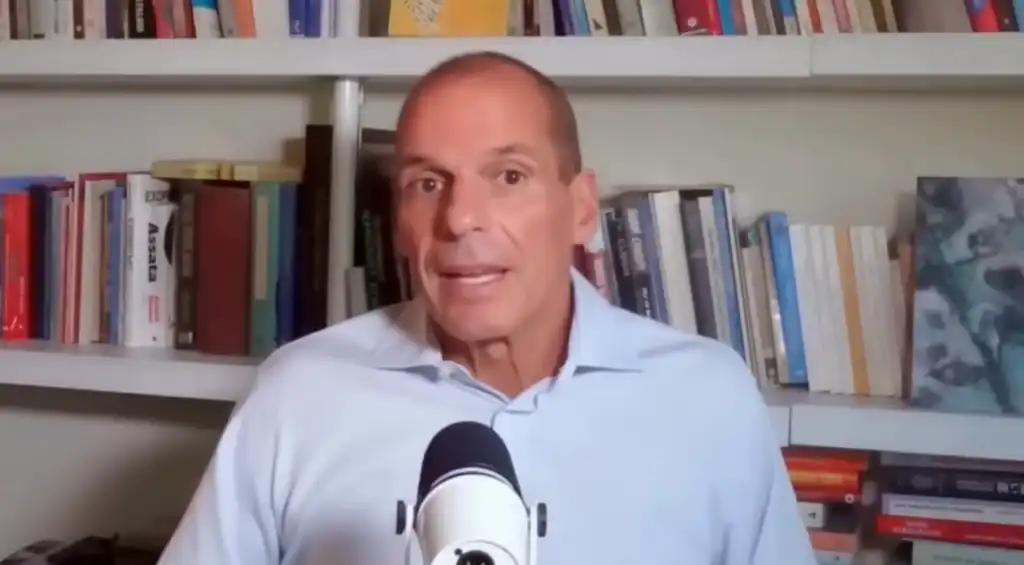
Key Podcast Highlights:
· In affluent countries, citizens are both borrowers (benefitting from government spending) and lenders because their savings, pensions, insurance policies are all invested in government bonds.
· U.S. government debt is not an imposed burden on unwilling creditors, but an asset they want to own.
· The U.S. is projected to pay $1 trillion in interest in the 2025 fiscal year.
· This is a great irony of modern monetary policy: we create money to rescue the economy, yet this money disproportionately benefits those who are already wealthy. While the system is effective, it exacerbates inequality.
· Paradoxically, the world needs government debt.
· Throughout history, crises have often erupted when confidence dissipates, when lenders suddenly decide to no longer trust borrowers.
· Every country has debt, so who is the creditor? The answer is all of us. Through our pension funds, banks, insurance policies, and savings accounts, through our government's central bank, through currency created via trade surpluses to purchase bonds, we collectively lend to ourselves.
· The issue is not whether this system can continue indefinitely—it cannot, nothing in history does. The issue is how it will adjust.
Below is the podcast transcript:
Global Debt Burden, the "Mysterious" Lender is Ourselves
Yanis Varoufakis:
I want to discuss with you something that sounds like a riddle, or like magic. Every major nation on Earth is deeply mired in debt. The U.S. carries $38 trillion in debt, Japan's debt is equivalent to 230% of its entire economy. The UK, France, Germany, all deep in deficits. Yet for some reason, the world keeps spinning, funds keep flowing, markets keep functioning.
This is the enigma that keeps people up at night: if everyone is in debt, then who is actually lending? Where does all this money come from? When you borrow from a bank, the bank has the money, that is a perfectly sensible question. It comes from somewhere, including depositors, investors, bank capital, pools of funds, and borrowers. Simple. But when we scale this up to the national level, very strange things start to happen, this math no longer makes intuitive sense. Let me explain to you what actually happens, because the answer is far more intriguing than most realize. I must warn you, once you understand how this system truly operates, you will never look at money the same way again.
Let's start with the United States, as it is the easiest case to examine. As of October 2, 2025, the U.S. federal debt reached $38 trillion. This is not a typo, it is $38 trillion. To give you a more intuitive sense, if you were to spend $1 million every day, it would take you over 100,000 years to spend that much money.
Now, who holds this debt? Who are these mysterious lenders? The first answer may surprise you: Americans themselves. The largest single holder of the U.S. government debt is actually the U.S. central bank—the Federal Reserve. They hold around $6.7 trillion of U.S. Treasury securities. Pause for a moment: the U.S. government owes money to the U.S. government's bank. But this is just the beginning.
Another $7 trillion exists in what we call "intragovernmental holdings," which is money that the government owes to itself. The Social Security Trust Fund holds $2.8 trillion of U.S. Treasury securities, the Military Retirement Fund holds $1.6 trillion, and Medicare holds a substantial amount as well. Therefore, the government borrows from the Social Security Fund to fund other projects and promises to pay it back later. It's like taking money out of your left pocket to pay off debt in your right pocket. So far, the U.S. owes itself around $13 trillion, which is already more than a third of the total debt.
The question of "who are the lenders" has become quite peculiar, hasn't it? But let's continue. The next significant category is private domestic investors, meaning everyday Americans involved through various channels. Mutual funds hold around $3.7 trillion, state and local governments hold $1.7 trillion, and there are also banks, insurance companies, pension funds, and the like. U.S. private investors collectively hold around $24 trillion of U.S. Treasury securities.
Now, here is where it gets really interesting. The funds from these pension funds and mutual funds come from American workers, retirement accounts, and ordinary people saving for the future. So, in a very real sense, the U.S. government is borrowing from its own citizens.
Let me tell you a story about how this works in practice. Imagine a school teacher in California, 55 years old, who has been teaching for 30 years. Each month, a portion of her salary is deposited into her pension fund. That pension fund needs to invest the money in a secure place, somewhere that can reliably generate returns so she can enjoy a comfortable retirement. What could be safer than loaning money to the U.S. government? So, her pension fund purchases Treasury securities. That teacher might also be concerned about the national debt. She hears the news, sees those alarming numbers, and it is indeed reasonable to worry. But here's the twist: she is one of the lenders. Her retirement depends on the government continuing to borrow and pay the interest on those bonds. If the U.S. were to suddenly pay off all its debt tomorrow, her pension fund would lose one of its safest and most reliable investments.
This is the first major secret of government debt. In wealthy countries, citizens are both borrowers (benefiting from government spending) and lenders, as their savings, pensions, insurance policies are all invested in government bonds.
Now let's talk about the next category: Foreign Investors. This is the scenario that most people imagine when they think about who holds US debt. Japan holds $1.13 trillion, the UK holds $723 billion. Foreign investors, including both government and private entities, collectively hold around $8.5 trillion of US Treasury bonds, approximately 30% of the publicly held portion.
But the interesting thing about foreign holdings is: why would other countries buy US Treasury bonds? Let's take Japan as an example. Japan is the world's third-largest economy. They export cars, electronics, and machinery to the US, and Americans purchase these products with US dollars. Now what? These companies need to convert the dollars into yen to pay their employees and suppliers domestically. But if they all try to convert dollars at the same time, the yen would appreciate significantly, leading to a rise in the price of Japanese export goods and a loss of competitiveness.
So what does Japan do? The Bank of Japan buys these dollars and invests them in US Treasury bonds. This is a way of recycling the trade surplus. You can think of it this way: the US buys tangible goods from Japan, such as Sony TVs, Toyota cars; Japan then uses these dollars to buy US financial assets, namely US Treasury bonds. Funds circulate, and debt is just an accounting record of this circulation.
This brings up a crucial point for most of the world: US government debt is not a burden imposed on unwilling creditors but an asset they want to hold. US Treasury bonds are considered the safest financial asset globally. When uncertainty strikes, such as in wars, pandemics, or financial crises, funds flow into US Treasury bonds. This is known as "flight to safety."
But I have been focusing on the US. What about the rest of the world? Because this is a global phenomenon. Global public debt currently stands at $111 trillion, equivalent to 95% of global GDP. Debt increased by $8 trillion in just one year. Japan may be the most extreme example. Japanese government debt is 230% of GDP. If Japan were a person, it would be like earning £50,000 per year but owing £115,000, which would already be considered bankrupt. However, Japan continues to function. The interest rate on Japanese government bonds is close to zero, sometimes even negative. Why? Because Japan's debt is mostly held domestically. Japanese banks, pension funds, insurance companies, and households hold 90% of Japanese government debt.
There is a certain psychological factor at play here. The Japanese are known for their high savings rate, diligently saving money. This savings is used to invest in government bonds as they are seen as the safest way to store wealth. The government then utilizes this borrowed fund for schools, hospitals, infrastructure, and pensions, benefiting the citizens whose savings form a closed loop.
Operation Mechanism and Inequality: QE, Trillion-Dollar Interest, and Global Debt Crisis
Now let's delve into its operation mechanism: Quantitative Easing (QE).
The actual meaning of Quantitative Easing is: Central banks create money out of thin air in digital form by tapping on keyboards, and then use this newly created money to purchase government bonds. The Federal Reserve, the Bank of England, the European Central Bank, and the Bank of Japan, they do not need to source funds from elsewhere to lend to their respective governments; instead, they create money by increasing the digits in their accounts. This money did not exist before, but now it does. During the 2008 and 2009 financial crisis, the Federal Reserve created around $3.5 trillion in this manner. During the COVID-19 pandemic, they created another huge sum of money.
Before you think of this as some carefully orchestrated scam, let me explain why central banks do this and how it is supposed to work. During a financial crisis or a pandemic, the economy stagnates. People stop consuming out of fear, businesses stop investing due to lack of demand, and banks stop lending out of fear of default, creating a vicious cycle. Reduced spending means reduced income, which leads to further reduced spending. At this point, the government needs to intervene, building hospitals, issuing stimulus checks, bailing out failing banks, taking all emergency measures. But the government also needs to borrow heavily for this. In abnormal times, there may not be enough people willing to lend at a reasonable interest rate. So, the central bank intervenes, creating money and buying government bonds to maintain low-interest rates, ensuring the government can borrow the needed funds.
In theory, this newly created money should flow into the economy, encouraging borrowing and consumption, and help end the recession. Once the economy recovers, the central bank can reverse this process by selling these bonds back to the market, withdrawing money, and returning everything to normal.
However, reality is more complex. The first round of Quantitative Easing post-financial crisis seemed to work well, preventing a complete systemic collapse. However, asset prices surged simultaneously, including the stock market and real estate. This is because all the newly created money eventually ended up in the hands of banks and financial institutions. They may not necessarily lend the money to small businesses or homebuyers but use it to buy stocks, bonds, and properties. Therefore, the wealthy who own a majority of financial assets become even richer.
The Bank of England's research estimates that quantitative easing has led to a roughly 20% increase in stock and bond prices. However, behind this, the average wealth of the richest 5% of households in the UK has increased by around £128,000, while households with almost no financial assets have benefited very little. This is a major irony of modern monetary policy: we create money to rescue the economy, but this money disproportionately benefits those who are already wealthy. While the system is effective, it exacerbates inequality.
Now, let's talk about the cost of all this debt because it is not free, it accrues interest. The United States is projected to pay $1 trillion in interest in the 2025 fiscal year. Yes, interest payments alone will amount to $1 trillion, more than the country's entire military spending. It is the second-largest item in the federal budget after Social Security and this figure is rapidly rising. Interest payments have nearly doubled in three years, from $497 billion in 2022 to $909 billion in 2024. It is expected that by 2035, interest payments will reach $1.8 trillion annually. Over the next decade, the US government's interest payments alone will amount to $13.8 trillion, money that is not used for schools, roads, healthcare, or defense, just interest.
Think about what this means: every penny spent on paying interest is money that cannot be used elsewhere. It is not used for building infrastructure, funding research, or helping the poor, just paying interest to bondholders. This is the current mathematical situation: as debt increases, interest payments increase; as interest payments increase, deficits increase; as deficits increase, more borrowing is needed. It's a feedback loop. The Congressional Budget Office projects that by 2034, interest costs will consume about 4% of the US GDP, 22% of total federal revenues, meaning over one dollar of every five dollars in taxes will purely go towards paying interest.
But the US is not the only country in this predicament. Within the Organisation for Economic Co-operation and Development (OECD) club of wealthy nations, interest payments currently average 3.3% of GDP, more than these governments' total spending on defense. Over 3.4 billion people globally live in countries where government debt interest payments exceed their spending on education or healthcare. In some countries, the money their government pays to bondholders is more than what they spend on educating children or treating patients.
For developing countries, the situation is even more dire. Low-income countries paid a record $96 billion towards debt repayment. In 2023, their interest costs reached $34.6 billion, four times what they were a decade ago. Some countries spend as much as 38% of their export revenue on interest payments. This money could have been used to modernize their armies, build infrastructure, educate their populations, but it flows out to foreign creditors in the form of interest payments. 61 developing countries currently allocate 10% or more of government revenue to pay interest, and many are in distress, with debt service expenses on existing debt exceeding the income from new loans. It's like drowning, trying to pay off a mortgage while watching your house sink into the sea.
So why don't countries simply default and refuse to repay their debts? Of course, defaults do happen. Argentina has defaulted on its debt nine times in history, Russia defaulted in 1998, and Greece came close to default in 2010. However, the consequences of default are catastrophic: being shut out of the global credit market, currency collapse, making imported goods unaffordable, and pensioners losing their savings. No government would choose to default unless there is no other option.
For major economies like the US, UK, Japan, and European powerhouses, default is unthinkable. These countries borrow in their own currency and can always print more money to repay. The issue is not about the ability to pay but rather about inflation—printing too much money leads to currency devaluation, which is a disaster in itself.
The Four Pillars Maintaining the Global Debt System and the Risk of Collapse
This raises a question: what exactly is keeping this system running?
The first reason is demographic structure and savings. The population in wealthy countries is aging, people are living longer, and they need a secure place to store their retirement wealth. Government bonds happen to fulfill this need. As long as people require safe assets, there will be a demand for government debt.
The second reason is the structure of the global economy. We live in a world with massive trade imbalances. Some countries have huge trade surpluses, with their exports far exceeding imports; while others face enormous deficits. Countries with surpluses often accumulate financial claims on deficit countries in the form of government bonds. As long as these imbalances persist, so will the debt.
The third reason is the monetary policy itself. Central banks use government bonds as a policy tool, buying bonds to inject funds into the economy and selling bonds to withdraw funds. Government debt is the lubricant of monetary policy; central banks need a substantial amount of government bonds to operate smoothly.
The fourth reason is that in modern economies, safe assets are valuable precisely because they are scarce. In a risky world, safety comes at a premium. The government bonds of stable countries provide this security. If the government were to truly pay off all its debt, it would create a scarcity of safe assets. Pension funds, insurance companies, banks—all struggle to find secure investment channels. Paradoxically, the world needs government debt.
However, there is one point that keeps me up at night and should also concern all of us: this system has been stable until it collapses. Throughout history, crises often erupt when confidence dissipates, when lenders suddenly decide to no longer trust borrowers, a crisis occurs. In 2010, Greece experienced such an event. Similar situations occurred during the 1997 Asian financial crisis and in many Latin American countries in the 1980s. The pattern is always the same: everything seems normal for years, then suddenly, due to an event or loss of confidence, investors panic, demand higher interest rates, governments cannot afford to pay, and a crisis erupts.
Will this happen to a major economy? Could this happen in the US or Japan? The traditional view is that it won't happen because these countries control their own currency, have deep financial markets, and are "too big to fail" on a global scale. But traditional views have been wrong before. In 2007, experts said national housing prices wouldn't fall, but they did. In 2010, experts said the euro was indestructible, but it came close to collapsing. In 2019, no one predicted a global pandemic would bring the world economy to a two-year halt.
Risks are continuing to build up. Global debt is at an unprecedented level in peacetime. After years of near-zero interest rates, rates have risen sharply, making debt servicing more expensive. Political polarization in many countries is worsening, making coherent fiscal policy more challenging. Climate change will require massive investment, which must be raised under already historically high debt levels. Aging populations mean fewer workers supporting the elderly, putting pressure on government budgets.
Lastly, there's a trust issue. The entire system relies on confidence in the following: that the government will fulfill payment commitments, that money will retain its value, that inflation will remain moderate. If this confidence collapses, the whole system will unravel.
Who is the creditor? We all are
Returning to our initial question: every country has debt, so who is the creditor? The answer is all of us. Through our pension funds, banks, insurance policies, and savings accounts, through our government's central bank, through currency created and circulated for bond purchases from trade surpluses, we collectively lend to ourselves. Debt is the obligation of different parts of the global economy to other parts, forming a vast and interconnected web of obligations.
This system has brought enormous prosperity, funding infrastructure, research, education, and healthcare; it enables governments to respond to crises unrestricted by tax revenue; it creates financial assets that support retirement and provide stability. But it's also highly unstable, especially as debt levels reach unprecedented heights. We are in uncharted territory, where in peacetime, governments have never borrowed on the scale they are now, and interest payments have never consumed such a large share of budgets.
The question isn't whether this system can continue indefinitely—it can't, nothing in history does. The question is how it will adjust. Will the adjustment be gradual? Will governments slowly rein in deficits with economic growth outpacing debt accumulation? Or will it come as a sudden crisis, forcing all painful changes to happen at once?
I don't have a crystal ball, and neither does anyone else. But I can tell you this: the longer the time frame, the narrower the path between those two possibilities, and the smaller the margin of error. We have constructed a global debt system in which everyone owes someone else, central banks create money to buy government debt, today's spending is billed to tomorrow's taxpayers. In such a place, the wealthy disproportionately benefit from policies meant to help everyone, while poor countries pay heavy interest to rich-country creditors. This cannot go on forever, and choices will have to be made. The only question is what, when, and whether we can manage the transition wisely or let it careen out of control.
When everyone is in debt, the "who is lending" puzzle is not really a puzzle at all; it's a mirror. When we ask who the lender is, we are really asking: who is involved? What is the direction of this system's development? Where is it taking us? The disconcerting fact is that no one is actually in control. This system has its own logic and momentum. We have built something complex, powerful, and fragile, and we are all struggling to steer it.
You may also like

Key Market Information Discrepancy on February 9th - A Must-See! | Alpha Morning Report

"2.5 Dip" Real Reason: Wall Street Deleveraging Induced Overreaction

Kyle's review of Hyperliquid sparks controversy, Solitude Bank officially opens, what are the overseas crypto communities talking about today?

Cryptocurrency prices in the dumps, but the prediction market is going wild?

Decoding Strategy’s Latest Financial Report: After a $12.4 Billion Loss, How Long Can the Bitcoin Flywheel Keep Spinning?
When earnings reports become electrocardiograms of Bitcoin’s price, Strategy is not merely a company—it’s an experiment testing whether faith can overcome gravity.

Discover How to Participate in Staking
Staking is a digital asset yield product launched by the WEEX platform. By subscribing to Staking products, users can stake their idle digital assets and earn corresponding Staking rewards.

WEEX AI Trading Hackathon Rules & Guidelines
This article explains the rules, requirements, and prize structure for the WEEX AI Trading Hackathon Finals, where finalists compete using AI-driven trading strategies under real market conditions.

From 0 to $1 Million: Five Steps to Outperform the Market Through Wallet Tracking

Token Cannot Compound, Where Is the Real Investment Opportunity?

February 6th Market Key Intelligence, How Much Did You Miss?

China's Central Bank and Eight Other Departments' Latest Regulatory Focus: Key Attention to RWA Tokenized Asset Risk
Foreword: Today, the People's Bank of China's website published the "Notice of the People's Bank of China, National Development and Reform Commission, Ministry of Industry and Information Technology, Ministry of Public Security, State Administration for Market Regulation, China Banking and Insurance Regulatory Commission, China Securities Regulatory Commission, State Administration of Foreign Exchange on Further Preventing and Dealing with Risks Related to Virtual Currency and Others (Yinfa [2026] No. 42)", the latest regulatory requirements from the eight departments including the central bank, which are basically consistent with the regulatory requirements of recent years. The main focus of the regulation is on speculative activities such as virtual currency trading, exchanges, ICOs, overseas platform services, and this time, regulatory oversight of RWA has been added, explicitly prohibiting RWA tokenization, stablecoins (especially those pegged to the RMB). The following is the full text:
To the people's governments of all provinces, autonomous regions, and municipalities directly under the Central Government, the Xinjiang Production and Construction Corps:
Recently, there have been speculative activities related to virtual currency and Real-World Assets (RWA) tokenization, disrupting the economic and financial order and jeopardizing the property security of the people. In order to further prevent and address the risks related to virtual currency and Real-World Assets tokenization, effectively safeguard national security and social stability, in accordance with the "Law of the People's Republic of China on the People's Bank of China," "Law of the People's Republic of China on Commercial Banks," "Securities Law of the People's Republic of China," "Law of the People's Republic of China on Securities Investment Funds," "Law of the People's Republic of China on Futures and Derivatives," "Cybersecurity Law of the People's Republic of China," "Regulations of the People's Republic of China on the Administration of Renminbi," "Regulations on Prevention and Disposal of Illegal Fundraising," "Regulations of the People's Republic of China on Foreign Exchange Administration," "Telecommunications Regulations of the People's Republic of China," and other provisions, after reaching consensus with the Cyberspace Administration of China, the Supreme People's Court, and the Supreme People's Procuratorate, and with the approval of the State Council, the relevant matters are notified as follows:
(I) Virtual currency does not possess the legal status equivalent to fiat currency. Virtual currencies such as Bitcoin, Ether, Tether, etc., have the main characteristics of being issued by non-monetary authorities, using encryption technology and distributed ledger or similar technology, existing in digital form, etc. They do not have legal tender status, should not and cannot be circulated and used as currency in the market.
The business activities related to virtual currency are classified as illegal financial activities. The exchange of fiat currency and virtual currency within the territory, exchange of virtual currencies, acting as a central counterparty in buying and selling virtual currencies, providing information intermediary and pricing services for virtual currency transactions, token issuance financing, and trading of virtual currency-related financial products, etc., fall under illegal financial activities, such as suspected illegal issuance of token vouchers, unauthorized public issuance of securities, illegal operation of securities and futures business, illegal fundraising, etc., are strictly prohibited across the board and resolutely banned in accordance with the law. Overseas entities and individuals are not allowed to provide virtual currency-related services to domestic entities in any form.
A stablecoin pegged to a fiat currency indirectly fulfills some functions of the fiat currency in circulation. Without the consent of relevant authorities in accordance with the law and regulations, any domestic or foreign entity or individual is not allowed to issue a RMB-pegged stablecoin overseas.
(II)Tokenization of Real-World Assets refers to the use of encryption technology and distributed ledger or similar technologies to transform ownership rights, income rights, etc., of assets into tokens (tokens) or other interests or bond certificates with token (token) characteristics, and carry out issuance and trading activities.
Engaging in the tokenization of real-world assets domestically, as well as providing related intermediary, information technology services, etc., which are suspected of illegal issuance of token vouchers, unauthorized public offering of securities, illegal operation of securities and futures business, illegal fundraising, and other illegal financial activities, shall be prohibited; except for relevant business activities carried out with the approval of the competent authorities in accordance with the law and regulations and relying on specific financial infrastructures. Overseas entities and individuals are not allowed to illegally provide services related to the tokenization of real-world assets to domestic entities in any form.
(III) Inter-agency Coordination. The People's Bank of China, together with the National Development and Reform Commission, the Ministry of Industry and Information Technology, the Ministry of Public Security, the State Administration for Market Regulation, the China Banking and Insurance Regulatory Commission, the China Securities Regulatory Commission, the State Administration of Foreign Exchange, and other departments, will improve the work mechanism, strengthen coordination with the Cyberspace Administration of China, the Supreme People's Court, and the Supreme People's Procuratorate, coordinate efforts, and overall guide regions to carry out risk prevention and disposal of virtual currency-related illegal financial activities.
The China Securities Regulatory Commission, together with the National Development and Reform Commission, the Ministry of Industry and Information Technology, the Ministry of Public Security, the People's Bank of China, the State Administration for Market Regulation, the China Banking and Insurance Regulatory Commission, the State Administration of Foreign Exchange, and other departments, will improve the work mechanism, strengthen coordination with the Cyberspace Administration of China, the Supreme People's Court, and the Supreme People's Procuratorate, coordinate efforts, and overall guide regions to carry out risk prevention and disposal of illegal financial activities related to the tokenization of real-world assets.
(IV) Strengthening Local Implementation. The people's governments at the provincial level are overall responsible for the prevention and disposal of risks related to virtual currencies and the tokenization of real-world assets in their respective administrative regions. The specific leading department is the local financial regulatory department, with participation from branches and dispatched institutions of the State Council's financial regulatory department, telecommunications regulators, public security, market supervision, and other departments, in coordination with cyberspace departments, courts, and procuratorates, to improve the normalization of the work mechanism, effectively connect with the relevant work mechanisms of central departments, form a cooperative and coordinated working pattern between central and local governments, effectively prevent and properly handle risks related to virtual currencies and the tokenization of real-world assets, and maintain economic and financial order and social stability.
(5) Enhanced Risk Monitoring. The People's Bank of China, China Securities Regulatory Commission, National Development and Reform Commission, Ministry of Industry and Information Technology, Ministry of Public Security, State Administration of Foreign Exchange, Cyberspace Administration of China, and other departments continue to improve monitoring techniques and system support, enhance cross-departmental data analysis and sharing, establish sound information sharing and cross-validation mechanisms, promptly grasp the risk situation of activities related to virtual currency and real-world asset tokenization. Local governments at all levels give full play to the role of local monitoring and early warning mechanisms. Local financial regulatory authorities, together with branches and agencies of the State Council's financial regulatory authorities, as well as departments of cyberspace and public security, ensure effective connection between online monitoring, offline investigation, and fund tracking, efficiently and accurately identify activities related to virtual currency and real-world asset tokenization, promptly share risk information, improve early warning information dissemination, verification, and rapid response mechanisms.
(6) Strengthened Oversight of Financial Institutions, Intermediaries, and Technology Service Providers. Financial institutions (including non-bank payment institutions) are prohibited from providing account opening, fund transfer, and clearing services for virtual currency-related business activities, issuing and selling financial products related to virtual currency, including virtual currency and related financial products in the scope of collateral, conducting insurance business related to virtual currency, or including virtual currency in the scope of insurance liability. Financial institutions (including non-bank payment institutions) are prohibited from providing custody, clearing, and settlement services for unauthorized real-world asset tokenization-related business and related financial products. Relevant intermediary institutions and information technology service providers are prohibited from providing intermediary, technical, or other services for unauthorized real-world asset tokenization-related businesses and related financial products.
(7) Enhanced Management of Internet Information Content and Access. Internet enterprises are prohibited from providing online business venues, commercial displays, marketing, advertising, or paid traffic diversion services for virtual currency and real-world asset tokenization-related business activities. Upon discovering clues of illegal activities, they should promptly report to relevant departments and provide technical support and assistance for related investigations and inquiries. Based on the clues transferred by the financial regulatory authorities, the cyberspace administration, telecommunications authorities, and public security departments should promptly close and deal with websites, mobile applications (including mini-programs), and public accounts engaged in virtual currency and real-world asset tokenization-related business activities in accordance with the law.
(8) Strengthened Entity Registration and Advertisement Management. Market supervision departments strengthen entity registration and management, and enterprise and individual business registrations must not contain terms such as "virtual currency," "virtual asset," "cryptocurrency," "crypto asset," "stablecoin," "real-world asset tokenization," or "RWA" in their names or business scopes. Market supervision departments, together with financial regulatory authorities, legally enhance the supervision of advertisements related to virtual currency and real-world asset tokenization, promptly investigating and handling relevant illegal advertisements.
(IX) Continued Rectification of Virtual Currency Mining Activities. The National Development and Reform Commission, together with relevant departments, strictly controls virtual currency mining activities, continuously promotes the rectification of virtual currency mining activities. The people's governments of various provinces take overall responsibility for the rectification of "mining" within their respective administrative regions. In accordance with the requirements of the National Development and Reform Commission and other departments in the "Notice on the Rectification of Virtual Currency Mining Activities" (NDRC Energy-saving Building [2021] No. 1283) and the provisions of the "Guidance Catalog for Industrial Structure Adjustment (2024 Edition)," a comprehensive review, investigation, and closure of existing virtual currency mining projects are conducted, new mining projects are strictly prohibited, and mining machine production enterprises are strictly prohibited from providing mining machine sales and other services within the country.
(X) Severe Crackdown on Related Illegal Financial Activities. Upon discovering clues to illegal financial activities related to virtual currency and the tokenization of real-world assets, local financial regulatory authorities, branches of the State Council's financial regulatory authorities, and other relevant departments promptly investigate, determine, and properly handle the issues in accordance with the law, and seriously hold the relevant entities and individuals legally responsible. Those suspected of crimes are transferred to the judicial authorities for processing according to the law.
(XI) Severe Crackdown on Related Illegal and Criminal Activities. The Ministry of Public Security, the People's Bank of China, the State Administration for Market Regulation, the China Banking and Insurance Regulatory Commission, the China Securities Regulatory Commission, as well as judicial and procuratorial organs, in accordance with their respective responsibilities, rigorously crack down on illegal and criminal activities related to virtual currency, the tokenization of real-world assets, such as fraud, money laundering, illegal business operations, pyramid schemes, illegal fundraising, and other illegal and criminal activities carried out under the guise of virtual currency, the tokenization of real-world assets, etc.
(XII) Strengthen Industry Self-discipline. Relevant industry associations should enhance membership management and policy advocacy, based on their own responsibilities, advocate and urge member units to resist illegal financial activities related to virtual currency and the tokenization of real-world assets. Member units that violate regulatory policies and industry self-discipline rules are to be disciplined in accordance with relevant self-regulatory management regulations. By leveraging various industry infrastructure, conduct risk monitoring related to virtual currency, the tokenization of real-world assets, and promptly transfer issue clues to relevant departments.
(XIII) Without the approval of relevant departments in accordance with the law and regulations, domestic entities and foreign entities controlled by them may not issue virtual currency overseas.
(XIV) Domestic entities engaging directly or indirectly in overseas external debt-based tokenization of real-world assets, or conducting asset securitization activities abroad based on domestic ownership rights, income rights, etc. (hereinafter referred to as domestic equity), should be strictly regulated in accordance with the principles of "same business, same risk, same rules." The National Development and Reform Commission, the China Securities Regulatory Commission, the State Administration of Foreign Exchange, and other relevant departments regulate it according to their respective responsibilities. For other forms of overseas real-world asset tokenization activities based on domestic equity by domestic entities, the China Securities Regulatory Commission, together with relevant departments, supervise according to their division of responsibilities. Without the consent and filing of relevant departments, no unit or individual may engage in the above-mentioned business.
(15) Overseas subsidiaries and branches of domestic financial institutions providing Real World Asset Tokenization-related services overseas shall do so legally and prudently. They shall have professional personnel and systems in place to effectively mitigate business risks, strictly implement customer onboarding, suitability management, anti-money laundering requirements, and incorporate them into the domestic financial institutions' compliance and risk management system. Intermediaries and information technology service providers offering Real World Asset Tokenization services abroad based on domestic equity or conducting Real World Asset Tokenization business in the form of overseas debt for domestic entities directly or indirectly venturing abroad must strictly comply with relevant laws and regulations. They should establish and improve relevant compliance and internal control systems in accordance with relevant normative requirements, strengthen business and risk control, and report the business developments to the relevant regulatory authorities for approval or filing.
(16) Strengthen organizational leadership and overall coordination. All departments and regions should attach great importance to the prevention of risks related to virtual currencies and Real World Asset Tokenization, strengthen organizational leadership, clarify work responsibilities, form a long-term effective working mechanism with centralized coordination, local implementation, and shared responsibilities, maintain high pressure, dynamically monitor risks, effectively prevent and mitigate risks in an orderly and efficient manner, legally protect the property security of the people, and make every effort to maintain economic and financial order and social stability.
(17) Widely carry out publicity and education. All departments, regions, and industry associations should make full use of various media and other communication channels to disseminate information through legal and policy interpretation, analysis of typical cases, and education on investment risks, etc. They should promote the illegality and harm of virtual currencies and Real World Asset Tokenization-related businesses and their manifestations, fully alert to potential risks and hidden dangers, and enhance public awareness and identification capabilities for risk prevention.
(18) Engaging in illegal financial activities related to virtual currencies and Real World Asset Tokenization in violation of this notice, as well as providing services for virtual currencies and Real World Asset Tokenization-related businesses, shall be punished in accordance with relevant regulations. If it constitutes a crime, criminal liability shall be pursued according to the law. For domestic entities and individuals who knowingly or should have known that overseas entities illegally provided virtual currency or Real World Asset Tokenization-related services to domestic entities and still assisted them, relevant responsibilities shall be pursued according to the law. If it constitutes a crime, criminal liability shall be pursued according to the law.
(19) If any unit or individual invests in virtual currencies, Real World Asset Tokens, and related financial products against public order and good customs, the relevant civil legal actions shall be invalid, and any resulting losses shall be borne by them. If there are suspicions of disrupting financial order and jeopardizing financial security, the relevant departments shall deal with them according to the law.
This notice shall enter into force upon the date of its issuance. The People's Bank of China and ten other departments' "Notice on Further Preventing and Dealing with the Risks of Virtual Currency Trading Speculation" (Yinfa [2021] No. 237) is hereby repealed.

Former Partner's Perspective on Multicoin: Kyle's Exit, But the Game He Left Behind Just Getting Started

Why Bitcoin Is Falling Now: The Real Reasons Behind BTC's Crash & WEEX's Smart Profit Playbook
Bitcoin's ongoing crash explained: Discover the 5 hidden triggers behind BTC's plunge & how WEEX's Auto Earn and Trade to Earn strategies help traders profit from crypto market volatility.

Wall Street's Hottest Trades See Exodus

Vitalik Discusses Ethereum Scaling Path, Circle Announces Partnership with Polymarket, What's the Overseas Crypto Community Talking About Today?

Believing in the Capital Markets - The Essence and Core Value of Cryptocurrency
Polymarket's 'Weatherman': Predict Temperature, Win Million-Dollar Payout

$15K+ Profits: The 4 AI Trading Secrets WEEX Hackathon Prelim Winners Used to Dominate Volatile Crypto Markets
How WEEX Hackathon's top AI trading strategies made $15K+ in crypto markets: 4 proven rules for ETH/BTC trading, market structure analysis, and risk management in volatile conditions.
Key Market Information Discrepancy on February 9th - A Must-See! | Alpha Morning Report
"2.5 Dip" Real Reason: Wall Street Deleveraging Induced Overreaction
Kyle's review of Hyperliquid sparks controversy, Solitude Bank officially opens, what are the overseas crypto communities talking about today?
Cryptocurrency prices in the dumps, but the prediction market is going wild?
Decoding Strategy’s Latest Financial Report: After a $12.4 Billion Loss, How Long Can the Bitcoin Flywheel Keep Spinning?
When earnings reports become electrocardiograms of Bitcoin’s price, Strategy is not merely a company—it’s an experiment testing whether faith can overcome gravity.
Discover How to Participate in Staking
Staking is a digital asset yield product launched by the WEEX platform. By subscribing to Staking products, users can stake their idle digital assets and earn corresponding Staking rewards.


 App
App