
- Buy Crypto
- Markets
 Futures
- Spot
- Copy Trade
 Earn
Earn- More
Crypto Whale Eyeing Acquisition of Juventus: The Battle Between European New Money and Old Money

Original Title: "Crypto Cash Printing Machine Wants to Acquire Juventus: Battle Between New and Old Money in Europe"
Original Author: Sleepy.txt, Dynamic Beating
The world's largest stablecoin giant, Tether, is preparing to acquire Italy's most iconic football powerhouse, Juventus.
On December 12, Tether submitted an acquisition offer to the Italian Stock Exchange, hoping to acquire 65.4% of Juventus shares held by the Exor Group at a price of 2.66 euros per share, which is 20.74% higher than the market price. If the transaction is successful, Tether will also inject an additional 1 billion euros into the club.
This is an all-cash offer. There is no hedging, no additional conditions, only "cash on the barrelhead." In the world of capital, this is the most brutal form of sincerity, and Tether has given the Exor Group only a short 10-day period to consider.
However, the Exor Group, controlled by the Agnelli family, quickly issued a statement: "There are currently no negotiations regarding the sale of Juventus shares."
The implicit meaning is clear: not for sale.
In less than 24 hours, well-known Italian journalist Eleonora Trotta leaked in a report: Tether is prepared to double the offer, directly raising Juventus's valuation to 2 billion euros.
The person at the center of the storm is Paolo Ardoino.
In 1984, Paolo was born in an ordinary small town in Italy. His parents were civil servants, and his grandparents tended a traditional olive grove. It was a typical Italian childhood, with a black-and-white striped jersey, the chants of the Turin Allianz Stadium, and the glory of the Agnelli family, all contributing to his spiritual totem in his memories of growing up.
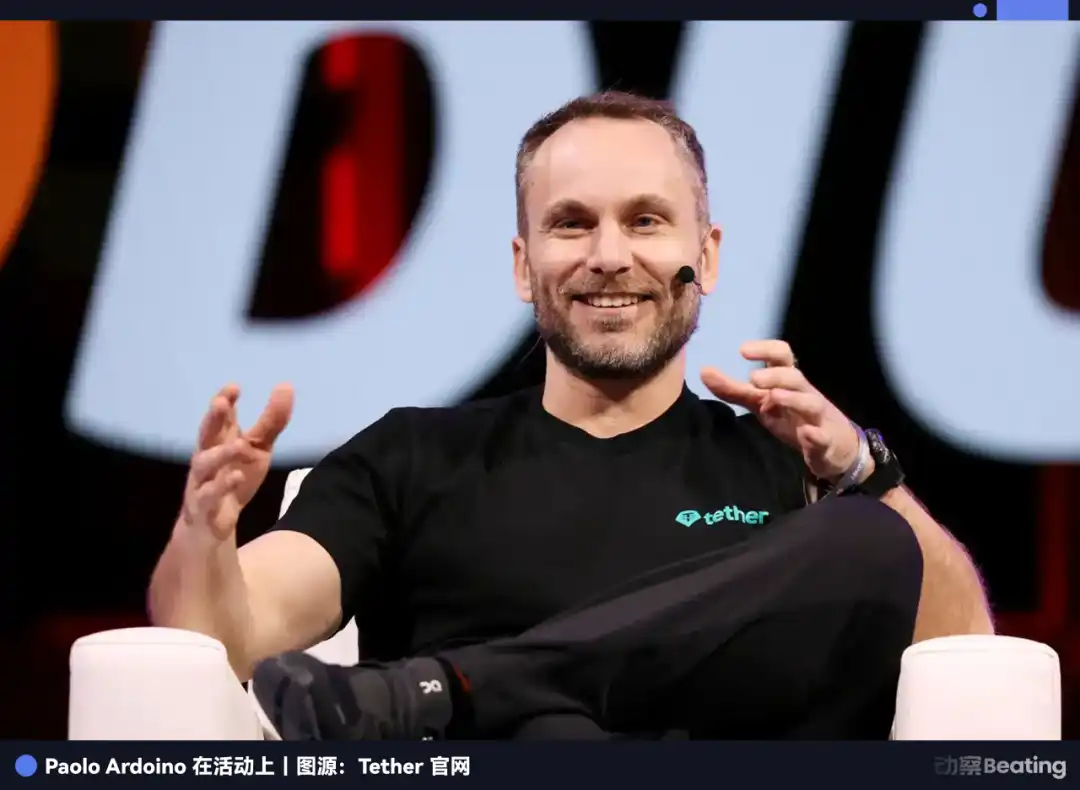
32 years later, the boy under the olive tree has become the Caesar of the cryptocurrency world, overseeing Tether, a super cash printing machine with an annual profit of 13 billion dollars. Now, he returns in glory, trying to buy his childhood dream and give back to that black-and-white faith flowing in his blood.
But reality has taught passion a lesson.
When Paolo enthusiastically knocked on the door of Juventus, he was not greeted with flowers or applause. Instead, what awaited him was a 9-month-long, old-world-style ostracism and humiliation.
The Ostracized 9 Months
The honeymoon period began in an almost unrequited manner.
In February 2025, Tether announced the acquisition of an 8.2% stake in Juventus, becoming the second largest shareholder after the Exor Group. In an official statement, Paolo set aside his businessman's acumen and unusually revealed a touch of tenderness: "For me, Juventus has always been a part of my life."
Paolo thought it was a mutually beneficial deal: I have money, you need money, let's make a deal. However, in Italy, some doors cannot be opened with money alone.
Two months later, Juventus announced a capital increase plan of up to €1.1 billion. At this crucial moment when a blood transfusion was urgently needed, Paolo, as the second largest shareholder, was deliberately "forgotten." No calls, no emails, no explanations. Exor Group couldn't even be bothered to send him a thank-you note.
Paolo typed out a paragraph full of grievances on social media: "We hoped to increase our stake in Juventus through the club's possible capital increase, but this wish was ignored."
Perhaps Paolo had never felt so slighted in his life. A financial titan overseeing an annual profit of $13 billion could only "remind" Juventus through social media: I want to participate in the capital increase, I want to top up, but I'm being ignored.
Some people sympathized with Paolo, believing he was a true Juventus fan; others questioned his motives, thinking he just wanted to use Juventus to whitewash Tether's image.
Whether the outside world sympathizes or questions, in the eyes of the Agnelli family, Paolo is still an "outsider," and their relationship was never about cooperation from the start, but rather "vigilance."
Since emotion couldn't buy respect, then use money instead.
From April to October, Tether increased its stake from 8.2% to 10.7% through the open market. According to Italian law, holding more than 10% gives the right to nominate board members.
On November 7, Turin, Juventus' annual shareholders' meeting. The atmosphere became eerie due to Tether's interference.
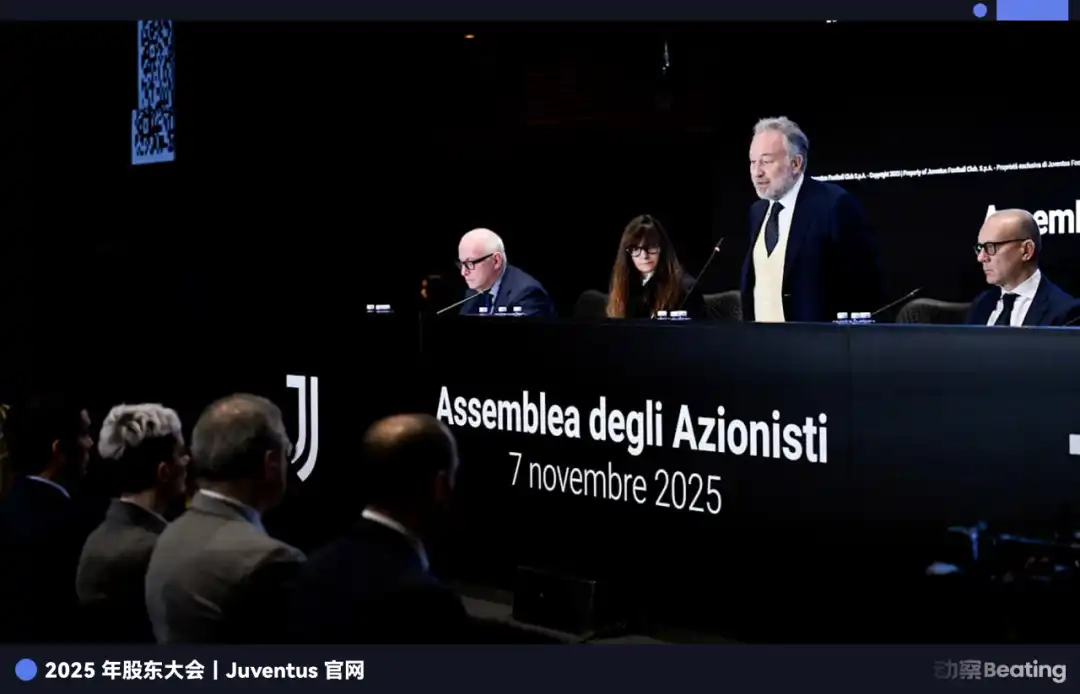
Tether nominated Francesco Garino as a board candidate, a local prominent physician in Turin and a lifelong Juventus fan. Paolo tried to tell everyone: we are not barbarians, we are Turin sons with blood ties.
However, the savvy Exor Group played a trump card and brought out Giorgio Chiellini. The legendary captain, who served Juventus for 17 years and lifted 9 Serie A trophies, was thrust into the spotlight.
This is Exor's strategy, using a club legend to combat capital, using emotion to resist money.
Ultimately, although Tether won a hard-fought seat on the board, in a boardroom where the Agnelli family holds absolute control, a seat means you can listen in, you can make suggestions, but don't even think about touching the steering wheel.
John Elkann, the fifth-generation head of the Agnelli family, summed it up: "We are proud to have been shareholders of Juventus for over a century. We have no intention of selling shares, but we are open to constructive ideas from all stakeholders."
A more blunt translation of this statement would be: This is not just business; this is our family's turf. You can come in for tea, but don't expect to be the master here.
The Arrogance and Prejudice of Old Money
Behind John's words lies the glory and pride of a family that spans 102 years.
On July 24, 1923, 31-year-old Edoardo Agnelli took up the mantle of Juventus chairman. From that day on, the fate of the Agnelli family has been closely tied to Juventus. The family's Fiat automotive empire was Italy's largest private enterprise for most of the 20th century, employing countless workers and sustaining millions of families.
And Juventus is another symbol of this family's power. With 36 Serie A titles, 2 Champions League titles, and 14 Coppa Italia trophies, Juventus is the most successful club in Italian football history and one of the sources of national pride for the Italian people.

However, the Agnelli family's legacy is filled with bloodshed and rifts.
In the year 2000, Edoardo Agnelli, heir to the family, leaped from a viaduct, ending his struggle with depression. Three years later, the family patriarch, Gianni Agnelli, passed away. The baton of power had to be passed to his grandson, John Elkann.
John was born in New York and raised in Paris. He speaks English, French, and Italian, but his Italian carries a noticeable foreign accent. In the eyes of many old-school Italians, he is merely a proxy who gained power through bloodline.
In order to prove himself worthy of the Agnelli family, John spent a full 20 years.
He restructured Fiat, merged with Chrysler, creating the world's fourth largest automotive group Stellantis; he took Ferrari to the stock market, doubling its market value; he acquired The Economist, extending the Agnelli family's influence from Italy to the global stage.
However, the unfortunate part is that cracks within the family are becoming public. In September 2025, John Elkann's mother Margherita submitted a 1998 "will" to the Turin court, claiming that the inheritance left to her by her father Gianni was usurped by John. Mother and son are now in court, which in Italy, a country that values family honor, is a massive scandal.

In this context, selling Juventus is akin to admitting the end of the family's honor, acknowledging that one is not as good as the ancestors.
To hold onto Juventus, John is frantically selling off other family assets.
Just days before Tether issued a takeover bid, the Exor Group was busy unloading its GEDI media group for 140 million euros to the Greek media group Antenna Group. GEDI owns the two major opinion papers, "La Repubblica" and "La Stampa," whose position in Italy is no less than that of Juventus in Italian football.
After the news broke, there was an uproar in Italy. The Italian government even invoked the "golden power" act, requiring Exor to protect employment and editorial independence in the sales process.
Newspapers in the red are liabilities and must be cut; Juventus in the red is a totem and must be kept.
This choice exposes the old aristocracy's predicament. They are no longer able to maintain their former territories and can only strive to retain the one that best represents the family's honor.
Therefore, despite Paolo's takeover bid offering a market premium of up to 20%, John Elkann still sees it as a threat.
In the values of old European money, the quality of wealth has a hierarchy of disdain.
Every penny of the Agnelli family is infused with the smell of motor oil. It is a monument of industry built from steel, rubber, engine roars, and the sweat of millions of workers. This wealth is visible, tangible; it represents order, control, and a century-long social contract.
And Paolo's money comes from cryptocurrency, from an industry that has experienced rapid growth and controversy over the past decade.
The lessons of the past are vivid.
Just a few years ago, the blockchain company DigitalBit signed an €85 million sponsorship deal with the Serie A giants Inter Milan and AS Roma, but due to a funding chain rupture, DigitalBits defaulted on the sponsorship fee, leading to the termination of the contracts by both clubs, leaving a mess behind.
Not to mention the cryptocurrency industry's series of collapses in 2022. At that time, Luna's logo was displayed at the Washington Nationals' ballpark, and FTX's name was still adorning the Miami Heat's home court. In the eyes of the Agnelli family, the cryptocurrency industry was full of speculation and bubbles.
In the eyes of the Agnelli family, Paolo will always be an "outsider." Not because of his background, but because of his money.
A Totem in Need of Salvation
But the question remains: Does Juventus really need money?
Today's Juventus finds itself in deep trouble, all stemming from that day on July 10, 2018, when Juventus announced the signing of the 33-year-old Cristiano Ronaldo. A €100 million transfer fee, a post-tax €30 million annual salary for 4 years.
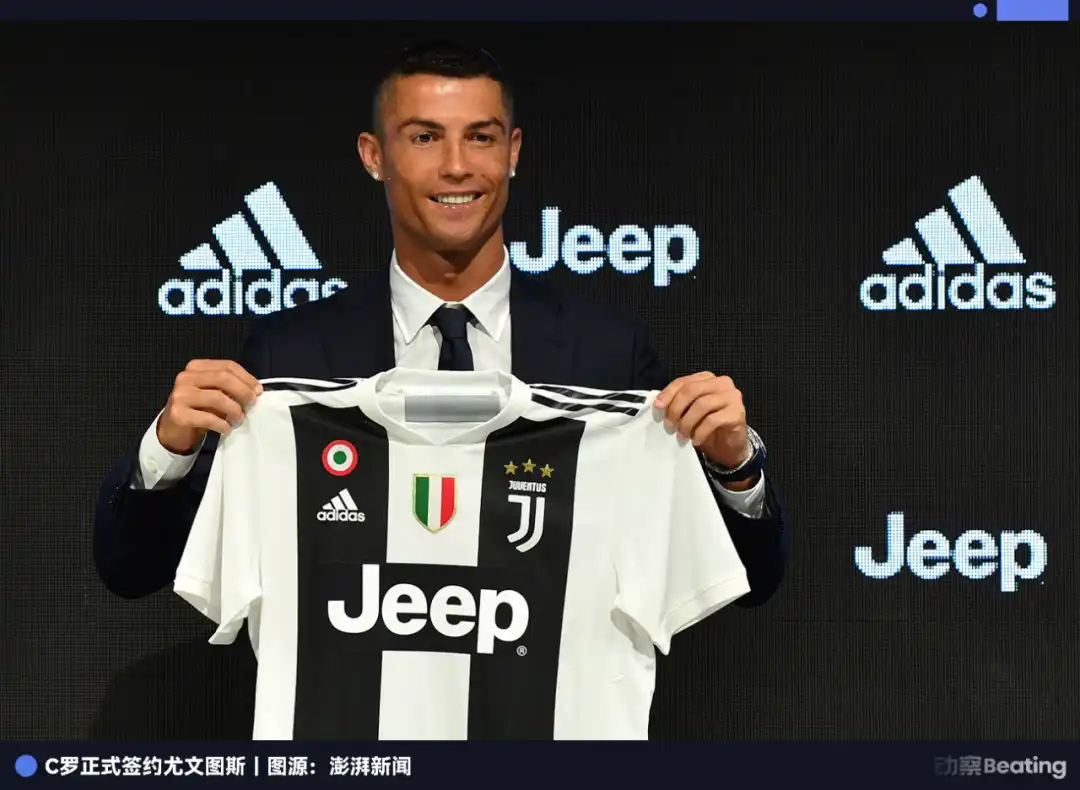
This was the biggest transfer in Serie A history, as well as the highest salary in Serie A history. Andrea Agnelli, the then-president of Juventus, the fourth-generation head of the Agnelli family, excitedly declared at a shareholder meeting: "This is the most important signing in Juventus history. We will win the Champions League with Cristiano Ronaldo."
Turin was buzzing. Fans flocked to the Juventus stores to buy jerseys with Ronaldo's name on them. Within just 24 hours after the signing, the club sold over 520,000 jerseys, setting a record in football history. Everyone believed that Ronaldo would lead Juventus to the top of Europe.
But Juventus failed to win the Champions League. In 2019, they were eliminated by Ajax; in 2020, by Lyon; in 2021, by Porto. In August 2021, Ronaldo suddenly left and joined Manchester United. Juventus not only failed to recoup their investment, but also sank deeper into financial turmoil.
Actuaries later calculated the overall cost, including the transfer fee, salaries, and taxes, of signing Ronaldo, which amounted to a staggering €340 million. During his three years at Juventus, he scored 101 goals, with each goal costing an average of €2.8 million.
For a club of Juventus' scale, the Champions League's significance lies more in its financial impact rather than just being a prestigious bonus. Revenue sharing from broadcasts, matchday income, and bonuses in sponsorship agreements are closely tied to the Champions League. Once a club loses out on the Champions League, its financial statement immediately weakens, forcing the team to use accounting methods to cover up this gap.
Juventus sold Pjanic to the Spanish powerhouse FC Barcelona for €60 million, while simultaneously acquiring Arthur for €72 million from Barcelona. Both transactions were officially claimed to be unrelated, but everyone knew this was a carefully orchestrated swap deal. Juventus actually only needed to pay a €12 million cash difference, but could book tens of millions of euros in "capital gains" on its financial statement.
This kind of accounting practice is not uncommon in the football world, but Juventus took it too far.
An investigation found that over three years, the club artificially inflated profits by €282 million through 42 similar suspicious transactions. After the scandal was exposed, the entire board of directors, including Chairman Andrea Agnelli, resigned.
This was followed by penalties imposed on the team: deduction of league points, exclusion from the Champions League, and long-term bans for executives. This further led to a more dreadful vicious cycle, where the team's performance decline resulted in a sharp drop in revenue, the revenue decline made it impossible to sign new players, the inability to sign new players led to even worse performance.
Starting from a €39.6 million loss in the 2018-19 season, Juventus's financial condition deteriorated continuously. By the 2022-23 season, the loss had reached €123.7 million. From the peak of winning nine consecutive Serie A titles to consecutive huge annual losses, in November 2025, Exor Group had to inject nearly €100 million into Juventus once again.
This was already the third time in two years that Exor Group had provided financial support to Juventus. Exor Group also owns assets such as Ferrari, Stellantis automotive group, and The Economist magazine. Juventus's ongoing losses are eroding the group's overall profit. In the 2024 financial report, Exor Group's net profit decreased by 12%, and analysts pointed out that Juventus had become a liability dragging down the group's performance.
John Elkann found himself in a dilemma, unsure of how to make a decision.
Meanwhile, Paolo, with $13 billion in annual profits, is knocking on the door. He has the money, he has the patience, and he has the love for Juventus.
This should have been a perfect deal if there wasn't a towering mountain called "Hierarchy" standing in the way.
A Dream Under the Olive Tree
Paolo's knocking on the door went unanswered, so he made his own choice.
On December 12, Paolo bypassed all private roundtable meetings and, directly through the Italian Stock Exchange platform, made the public tender offer. Paolo backed John Elkann into a corner, forcing him to answer this question in front of all of Italy: Do you want the money, or do you want the family's honor.
News spread, and Juventus' stock price surged, with the market expressing its desire for the "new money." Both "Milano Sport" and "Turin Sport" newspapers reported on the front page of this event, and the entire Apennine Peninsula awaited the Agnelli family's decision.
The Agnelli family's rejection was both expected and unexpected.
Expected because the Agnelli family's pride does not allow them to bow to new money. Unexpected because considering their current financial situation, rejecting this large sum requires a kind of almost tragic stubbornness.
For Paolo, he hoped to use the money he earned to save his childhood idol. Companies ultimately have nationalities, and although Tether is a globally operating digital nomad enterprise, its CEO is Italian, and its heart is in Italy.
From the Agnelli family's perspective, they are guarding not only a club but also the glory of a 102-year-old family and a symbol of the Italian industrial era.
This is no longer a game of business logic but a clash of two faiths.
In John Elkann's eyes, that bronze gate must remain closed because outside it stands a speculator trying to whitewash his identity. But in Paolo's eyes, that gate should open because outside stands a child with Italian blood who can save this team.
However, the era is not on the side of the old aristocracy.

In the same week that Exor rejected Tether, English Premier League champions Manchester City announced a renewal with the cryptocurrency exchange platform OKX, with the jersey's front sponsorship value exceeding one billion. European powerhouses such as Paris Saint-Germain, Barcelona, AC Milan, and others have already established deep partnerships with cryptocurrency companies. In Asia, the Korean K-League, Japanese J-League, and others are also starting to accept cryptocurrency sponsorships.
The entry of new money into traditional industries controlled by old money is no longer a question of "will it happen" but rather "in what way." Football is just one battlefield; in the art auction field, Sotheby's and Christie's have already begun accepting cryptocurrency payments. In real estate, luxury home transactions in cities like Dubai and Miami can now be completed with Bitcoin. The same conflict is unfolding worldwide.
Paolo's charge, regardless of the outcome, is testing the boundary of this era: when a generation has created vast wealth in a new way, do they deserve to sit at the table of the old world controlled by old money?
At the end of the story, the scene freezes on the olive grove on the outskirts.
32 years ago, a dark-haired boy sat there, accompanied by the sounds of his grandparents' labor, cheering at the black-and-white figure on the television. At that time, he could not have imagined that one day he would stand outside that gate, waiting for an answer.
The tightly closed bronze gate is still cold and majestic at this moment. Behind it is a hundred years of the Agnelli family's glory, as well as the last glow of the old industrial age.
Right now, it has not opened for the new money, but this time, the one knocking on the door will not back down. Because he knows that pushing open this door is only a matter of time.
You may also like

From 0 to $1 Million: Five Steps to Outperform the Market Through Wallet Tracking

Token Cannot Compound, Where Is the Real Investment Opportunity?

February 6th Market Key Intelligence, How Much Did You Miss?

China's Central Bank and Eight Other Departments' Latest Regulatory Focus: Key Attention to RWA Tokenized Asset Risk
Foreword: Today, the People's Bank of China's website published the "Notice of the People's Bank of China, National Development and Reform Commission, Ministry of Industry and Information Technology, Ministry of Public Security, State Administration for Market Regulation, China Banking and Insurance Regulatory Commission, China Securities Regulatory Commission, State Administration of Foreign Exchange on Further Preventing and Dealing with Risks Related to Virtual Currency and Others (Yinfa [2026] No. 42)", the latest regulatory requirements from the eight departments including the central bank, which are basically consistent with the regulatory requirements of recent years. The main focus of the regulation is on speculative activities such as virtual currency trading, exchanges, ICOs, overseas platform services, and this time, regulatory oversight of RWA has been added, explicitly prohibiting RWA tokenization, stablecoins (especially those pegged to the RMB). The following is the full text:
To the people's governments of all provinces, autonomous regions, and municipalities directly under the Central Government, the Xinjiang Production and Construction Corps:
Recently, there have been speculative activities related to virtual currency and Real-World Assets (RWA) tokenization, disrupting the economic and financial order and jeopardizing the property security of the people. In order to further prevent and address the risks related to virtual currency and Real-World Assets tokenization, effectively safeguard national security and social stability, in accordance with the "Law of the People's Republic of China on the People's Bank of China," "Law of the People's Republic of China on Commercial Banks," "Securities Law of the People's Republic of China," "Law of the People's Republic of China on Securities Investment Funds," "Law of the People's Republic of China on Futures and Derivatives," "Cybersecurity Law of the People's Republic of China," "Regulations of the People's Republic of China on the Administration of Renminbi," "Regulations on Prevention and Disposal of Illegal Fundraising," "Regulations of the People's Republic of China on Foreign Exchange Administration," "Telecommunications Regulations of the People's Republic of China," and other provisions, after reaching consensus with the Cyberspace Administration of China, the Supreme People's Court, and the Supreme People's Procuratorate, and with the approval of the State Council, the relevant matters are notified as follows:
(I) Virtual currency does not possess the legal status equivalent to fiat currency. Virtual currencies such as Bitcoin, Ether, Tether, etc., have the main characteristics of being issued by non-monetary authorities, using encryption technology and distributed ledger or similar technology, existing in digital form, etc. They do not have legal tender status, should not and cannot be circulated and used as currency in the market.
The business activities related to virtual currency are classified as illegal financial activities. The exchange of fiat currency and virtual currency within the territory, exchange of virtual currencies, acting as a central counterparty in buying and selling virtual currencies, providing information intermediary and pricing services for virtual currency transactions, token issuance financing, and trading of virtual currency-related financial products, etc., fall under illegal financial activities, such as suspected illegal issuance of token vouchers, unauthorized public issuance of securities, illegal operation of securities and futures business, illegal fundraising, etc., are strictly prohibited across the board and resolutely banned in accordance with the law. Overseas entities and individuals are not allowed to provide virtual currency-related services to domestic entities in any form.
A stablecoin pegged to a fiat currency indirectly fulfills some functions of the fiat currency in circulation. Without the consent of relevant authorities in accordance with the law and regulations, any domestic or foreign entity or individual is not allowed to issue a RMB-pegged stablecoin overseas.
(II)Tokenization of Real-World Assets refers to the use of encryption technology and distributed ledger or similar technologies to transform ownership rights, income rights, etc., of assets into tokens (tokens) or other interests or bond certificates with token (token) characteristics, and carry out issuance and trading activities.
Engaging in the tokenization of real-world assets domestically, as well as providing related intermediary, information technology services, etc., which are suspected of illegal issuance of token vouchers, unauthorized public offering of securities, illegal operation of securities and futures business, illegal fundraising, and other illegal financial activities, shall be prohibited; except for relevant business activities carried out with the approval of the competent authorities in accordance with the law and regulations and relying on specific financial infrastructures. Overseas entities and individuals are not allowed to illegally provide services related to the tokenization of real-world assets to domestic entities in any form.
(III) Inter-agency Coordination. The People's Bank of China, together with the National Development and Reform Commission, the Ministry of Industry and Information Technology, the Ministry of Public Security, the State Administration for Market Regulation, the China Banking and Insurance Regulatory Commission, the China Securities Regulatory Commission, the State Administration of Foreign Exchange, and other departments, will improve the work mechanism, strengthen coordination with the Cyberspace Administration of China, the Supreme People's Court, and the Supreme People's Procuratorate, coordinate efforts, and overall guide regions to carry out risk prevention and disposal of virtual currency-related illegal financial activities.
The China Securities Regulatory Commission, together with the National Development and Reform Commission, the Ministry of Industry and Information Technology, the Ministry of Public Security, the People's Bank of China, the State Administration for Market Regulation, the China Banking and Insurance Regulatory Commission, the State Administration of Foreign Exchange, and other departments, will improve the work mechanism, strengthen coordination with the Cyberspace Administration of China, the Supreme People's Court, and the Supreme People's Procuratorate, coordinate efforts, and overall guide regions to carry out risk prevention and disposal of illegal financial activities related to the tokenization of real-world assets.
(IV) Strengthening Local Implementation. The people's governments at the provincial level are overall responsible for the prevention and disposal of risks related to virtual currencies and the tokenization of real-world assets in their respective administrative regions. The specific leading department is the local financial regulatory department, with participation from branches and dispatched institutions of the State Council's financial regulatory department, telecommunications regulators, public security, market supervision, and other departments, in coordination with cyberspace departments, courts, and procuratorates, to improve the normalization of the work mechanism, effectively connect with the relevant work mechanisms of central departments, form a cooperative and coordinated working pattern between central and local governments, effectively prevent and properly handle risks related to virtual currencies and the tokenization of real-world assets, and maintain economic and financial order and social stability.
(5) Enhanced Risk Monitoring. The People's Bank of China, China Securities Regulatory Commission, National Development and Reform Commission, Ministry of Industry and Information Technology, Ministry of Public Security, State Administration of Foreign Exchange, Cyberspace Administration of China, and other departments continue to improve monitoring techniques and system support, enhance cross-departmental data analysis and sharing, establish sound information sharing and cross-validation mechanisms, promptly grasp the risk situation of activities related to virtual currency and real-world asset tokenization. Local governments at all levels give full play to the role of local monitoring and early warning mechanisms. Local financial regulatory authorities, together with branches and agencies of the State Council's financial regulatory authorities, as well as departments of cyberspace and public security, ensure effective connection between online monitoring, offline investigation, and fund tracking, efficiently and accurately identify activities related to virtual currency and real-world asset tokenization, promptly share risk information, improve early warning information dissemination, verification, and rapid response mechanisms.
(6) Strengthened Oversight of Financial Institutions, Intermediaries, and Technology Service Providers. Financial institutions (including non-bank payment institutions) are prohibited from providing account opening, fund transfer, and clearing services for virtual currency-related business activities, issuing and selling financial products related to virtual currency, including virtual currency and related financial products in the scope of collateral, conducting insurance business related to virtual currency, or including virtual currency in the scope of insurance liability. Financial institutions (including non-bank payment institutions) are prohibited from providing custody, clearing, and settlement services for unauthorized real-world asset tokenization-related business and related financial products. Relevant intermediary institutions and information technology service providers are prohibited from providing intermediary, technical, or other services for unauthorized real-world asset tokenization-related businesses and related financial products.
(7) Enhanced Management of Internet Information Content and Access. Internet enterprises are prohibited from providing online business venues, commercial displays, marketing, advertising, or paid traffic diversion services for virtual currency and real-world asset tokenization-related business activities. Upon discovering clues of illegal activities, they should promptly report to relevant departments and provide technical support and assistance for related investigations and inquiries. Based on the clues transferred by the financial regulatory authorities, the cyberspace administration, telecommunications authorities, and public security departments should promptly close and deal with websites, mobile applications (including mini-programs), and public accounts engaged in virtual currency and real-world asset tokenization-related business activities in accordance with the law.
(8) Strengthened Entity Registration and Advertisement Management. Market supervision departments strengthen entity registration and management, and enterprise and individual business registrations must not contain terms such as "virtual currency," "virtual asset," "cryptocurrency," "crypto asset," "stablecoin," "real-world asset tokenization," or "RWA" in their names or business scopes. Market supervision departments, together with financial regulatory authorities, legally enhance the supervision of advertisements related to virtual currency and real-world asset tokenization, promptly investigating and handling relevant illegal advertisements.
(IX) Continued Rectification of Virtual Currency Mining Activities. The National Development and Reform Commission, together with relevant departments, strictly controls virtual currency mining activities, continuously promotes the rectification of virtual currency mining activities. The people's governments of various provinces take overall responsibility for the rectification of "mining" within their respective administrative regions. In accordance with the requirements of the National Development and Reform Commission and other departments in the "Notice on the Rectification of Virtual Currency Mining Activities" (NDRC Energy-saving Building [2021] No. 1283) and the provisions of the "Guidance Catalog for Industrial Structure Adjustment (2024 Edition)," a comprehensive review, investigation, and closure of existing virtual currency mining projects are conducted, new mining projects are strictly prohibited, and mining machine production enterprises are strictly prohibited from providing mining machine sales and other services within the country.
(X) Severe Crackdown on Related Illegal Financial Activities. Upon discovering clues to illegal financial activities related to virtual currency and the tokenization of real-world assets, local financial regulatory authorities, branches of the State Council's financial regulatory authorities, and other relevant departments promptly investigate, determine, and properly handle the issues in accordance with the law, and seriously hold the relevant entities and individuals legally responsible. Those suspected of crimes are transferred to the judicial authorities for processing according to the law.
(XI) Severe Crackdown on Related Illegal and Criminal Activities. The Ministry of Public Security, the People's Bank of China, the State Administration for Market Regulation, the China Banking and Insurance Regulatory Commission, the China Securities Regulatory Commission, as well as judicial and procuratorial organs, in accordance with their respective responsibilities, rigorously crack down on illegal and criminal activities related to virtual currency, the tokenization of real-world assets, such as fraud, money laundering, illegal business operations, pyramid schemes, illegal fundraising, and other illegal and criminal activities carried out under the guise of virtual currency, the tokenization of real-world assets, etc.
(XII) Strengthen Industry Self-discipline. Relevant industry associations should enhance membership management and policy advocacy, based on their own responsibilities, advocate and urge member units to resist illegal financial activities related to virtual currency and the tokenization of real-world assets. Member units that violate regulatory policies and industry self-discipline rules are to be disciplined in accordance with relevant self-regulatory management regulations. By leveraging various industry infrastructure, conduct risk monitoring related to virtual currency, the tokenization of real-world assets, and promptly transfer issue clues to relevant departments.
(XIII) Without the approval of relevant departments in accordance with the law and regulations, domestic entities and foreign entities controlled by them may not issue virtual currency overseas.
(XIV) Domestic entities engaging directly or indirectly in overseas external debt-based tokenization of real-world assets, or conducting asset securitization activities abroad based on domestic ownership rights, income rights, etc. (hereinafter referred to as domestic equity), should be strictly regulated in accordance with the principles of "same business, same risk, same rules." The National Development and Reform Commission, the China Securities Regulatory Commission, the State Administration of Foreign Exchange, and other relevant departments regulate it according to their respective responsibilities. For other forms of overseas real-world asset tokenization activities based on domestic equity by domestic entities, the China Securities Regulatory Commission, together with relevant departments, supervise according to their division of responsibilities. Without the consent and filing of relevant departments, no unit or individual may engage in the above-mentioned business.
(15) Overseas subsidiaries and branches of domestic financial institutions providing Real World Asset Tokenization-related services overseas shall do so legally and prudently. They shall have professional personnel and systems in place to effectively mitigate business risks, strictly implement customer onboarding, suitability management, anti-money laundering requirements, and incorporate them into the domestic financial institutions' compliance and risk management system. Intermediaries and information technology service providers offering Real World Asset Tokenization services abroad based on domestic equity or conducting Real World Asset Tokenization business in the form of overseas debt for domestic entities directly or indirectly venturing abroad must strictly comply with relevant laws and regulations. They should establish and improve relevant compliance and internal control systems in accordance with relevant normative requirements, strengthen business and risk control, and report the business developments to the relevant regulatory authorities for approval or filing.
(16) Strengthen organizational leadership and overall coordination. All departments and regions should attach great importance to the prevention of risks related to virtual currencies and Real World Asset Tokenization, strengthen organizational leadership, clarify work responsibilities, form a long-term effective working mechanism with centralized coordination, local implementation, and shared responsibilities, maintain high pressure, dynamically monitor risks, effectively prevent and mitigate risks in an orderly and efficient manner, legally protect the property security of the people, and make every effort to maintain economic and financial order and social stability.
(17) Widely carry out publicity and education. All departments, regions, and industry associations should make full use of various media and other communication channels to disseminate information through legal and policy interpretation, analysis of typical cases, and education on investment risks, etc. They should promote the illegality and harm of virtual currencies and Real World Asset Tokenization-related businesses and their manifestations, fully alert to potential risks and hidden dangers, and enhance public awareness and identification capabilities for risk prevention.
(18) Engaging in illegal financial activities related to virtual currencies and Real World Asset Tokenization in violation of this notice, as well as providing services for virtual currencies and Real World Asset Tokenization-related businesses, shall be punished in accordance with relevant regulations. If it constitutes a crime, criminal liability shall be pursued according to the law. For domestic entities and individuals who knowingly or should have known that overseas entities illegally provided virtual currency or Real World Asset Tokenization-related services to domestic entities and still assisted them, relevant responsibilities shall be pursued according to the law. If it constitutes a crime, criminal liability shall be pursued according to the law.
(19) If any unit or individual invests in virtual currencies, Real World Asset Tokens, and related financial products against public order and good customs, the relevant civil legal actions shall be invalid, and any resulting losses shall be borne by them. If there are suspicions of disrupting financial order and jeopardizing financial security, the relevant departments shall deal with them according to the law.
This notice shall enter into force upon the date of its issuance. The People's Bank of China and ten other departments' "Notice on Further Preventing and Dealing with the Risks of Virtual Currency Trading Speculation" (Yinfa [2021] No. 237) is hereby repealed.

Former Partner's Perspective on Multicoin: Kyle's Exit, But the Game He Left Behind Just Getting Started
Why Bitcoin Is Falling Now: The Real Reasons Behind BTC's Crash & WEEX's Smart Profit Playbook
Bitcoin's ongoing crash explained: Discover the 5 hidden triggers behind BTC's plunge & how WEEX's Auto Earn and Trade to Earn strategies help traders profit from crypto market volatility.

Wall Street's Hottest Trades See Exodus

Vitalik Discusses Ethereum Scaling Path, Circle Announces Partnership with Polymarket, What's the Overseas Crypto Community Talking About Today?

Believing in the Capital Markets - The Essence and Core Value of Cryptocurrency

Polymarket's 'Weatherman': Predict Temperature, Win Million-Dollar Payout

$15K+ Profits: The 4 AI Trading Secrets WEEX Hackathon Prelim Winners Used to Dominate Volatile Crypto Markets
How WEEX Hackathon's top AI trading strategies made $15K+ in crypto markets: 4 proven rules for ETH/BTC trading, market structure analysis, and risk management in volatile conditions.

A nearly 20% one-day plunge, how long has it been since you last saw a $60,000 Bitcoin?

Raoul Pal: I've seen every single panic, and they are never the end.

Key Market Information Discrepancy on February 6th - A Must-Read! | Alpha Morning Report

2026 Crypto Industry's First Snowfall
The Harsh Reality Behind the $26 Billion Crypto Liquidation: Liquidity Is Killing the Market
Why Is Gold, US Stocks, Bitcoin All Falling?

Key Market Intelligence for February 5th, how much did you miss out on?
From 0 to $1 Million: Five Steps to Outperform the Market Through Wallet Tracking
Token Cannot Compound, Where Is the Real Investment Opportunity?
February 6th Market Key Intelligence, How Much Did You Miss?
China's Central Bank and Eight Other Departments' Latest Regulatory Focus: Key Attention to RWA Tokenized Asset Risk
Foreword: Today, the People's Bank of China's website published the "Notice of the People's Bank of China, National Development and Reform Commission, Ministry of Industry and Information Technology, Ministry of Public Security, State Administration for Market Regulation, China Banking and Insurance Regulatory Commission, China Securities Regulatory Commission, State Administration of Foreign Exchange on Further Preventing and Dealing with Risks Related to Virtual Currency and Others (Yinfa [2026] No. 42)", the latest regulatory requirements from the eight departments including the central bank, which are basically consistent with the regulatory requirements of recent years. The main focus of the regulation is on speculative activities such as virtual currency trading, exchanges, ICOs, overseas platform services, and this time, regulatory oversight of RWA has been added, explicitly prohibiting RWA tokenization, stablecoins (especially those pegged to the RMB). The following is the full text:
To the people's governments of all provinces, autonomous regions, and municipalities directly under the Central Government, the Xinjiang Production and Construction Corps:
Recently, there have been speculative activities related to virtual currency and Real-World Assets (RWA) tokenization, disrupting the economic and financial order and jeopardizing the property security of the people. In order to further prevent and address the risks related to virtual currency and Real-World Assets tokenization, effectively safeguard national security and social stability, in accordance with the "Law of the People's Republic of China on the People's Bank of China," "Law of the People's Republic of China on Commercial Banks," "Securities Law of the People's Republic of China," "Law of the People's Republic of China on Securities Investment Funds," "Law of the People's Republic of China on Futures and Derivatives," "Cybersecurity Law of the People's Republic of China," "Regulations of the People's Republic of China on the Administration of Renminbi," "Regulations on Prevention and Disposal of Illegal Fundraising," "Regulations of the People's Republic of China on Foreign Exchange Administration," "Telecommunications Regulations of the People's Republic of China," and other provisions, after reaching consensus with the Cyberspace Administration of China, the Supreme People's Court, and the Supreme People's Procuratorate, and with the approval of the State Council, the relevant matters are notified as follows:
(I) Virtual currency does not possess the legal status equivalent to fiat currency. Virtual currencies such as Bitcoin, Ether, Tether, etc., have the main characteristics of being issued by non-monetary authorities, using encryption technology and distributed ledger or similar technology, existing in digital form, etc. They do not have legal tender status, should not and cannot be circulated and used as currency in the market.
The business activities related to virtual currency are classified as illegal financial activities. The exchange of fiat currency and virtual currency within the territory, exchange of virtual currencies, acting as a central counterparty in buying and selling virtual currencies, providing information intermediary and pricing services for virtual currency transactions, token issuance financing, and trading of virtual currency-related financial products, etc., fall under illegal financial activities, such as suspected illegal issuance of token vouchers, unauthorized public issuance of securities, illegal operation of securities and futures business, illegal fundraising, etc., are strictly prohibited across the board and resolutely banned in accordance with the law. Overseas entities and individuals are not allowed to provide virtual currency-related services to domestic entities in any form.
A stablecoin pegged to a fiat currency indirectly fulfills some functions of the fiat currency in circulation. Without the consent of relevant authorities in accordance with the law and regulations, any domestic or foreign entity or individual is not allowed to issue a RMB-pegged stablecoin overseas.
(II)Tokenization of Real-World Assets refers to the use of encryption technology and distributed ledger or similar technologies to transform ownership rights, income rights, etc., of assets into tokens (tokens) or other interests or bond certificates with token (token) characteristics, and carry out issuance and trading activities.
Engaging in the tokenization of real-world assets domestically, as well as providing related intermediary, information technology services, etc., which are suspected of illegal issuance of token vouchers, unauthorized public offering of securities, illegal operation of securities and futures business, illegal fundraising, and other illegal financial activities, shall be prohibited; except for relevant business activities carried out with the approval of the competent authorities in accordance with the law and regulations and relying on specific financial infrastructures. Overseas entities and individuals are not allowed to illegally provide services related to the tokenization of real-world assets to domestic entities in any form.
(III) Inter-agency Coordination. The People's Bank of China, together with the National Development and Reform Commission, the Ministry of Industry and Information Technology, the Ministry of Public Security, the State Administration for Market Regulation, the China Banking and Insurance Regulatory Commission, the China Securities Regulatory Commission, the State Administration of Foreign Exchange, and other departments, will improve the work mechanism, strengthen coordination with the Cyberspace Administration of China, the Supreme People's Court, and the Supreme People's Procuratorate, coordinate efforts, and overall guide regions to carry out risk prevention and disposal of virtual currency-related illegal financial activities.
The China Securities Regulatory Commission, together with the National Development and Reform Commission, the Ministry of Industry and Information Technology, the Ministry of Public Security, the People's Bank of China, the State Administration for Market Regulation, the China Banking and Insurance Regulatory Commission, the State Administration of Foreign Exchange, and other departments, will improve the work mechanism, strengthen coordination with the Cyberspace Administration of China, the Supreme People's Court, and the Supreme People's Procuratorate, coordinate efforts, and overall guide regions to carry out risk prevention and disposal of illegal financial activities related to the tokenization of real-world assets.
(IV) Strengthening Local Implementation. The people's governments at the provincial level are overall responsible for the prevention and disposal of risks related to virtual currencies and the tokenization of real-world assets in their respective administrative regions. The specific leading department is the local financial regulatory department, with participation from branches and dispatched institutions of the State Council's financial regulatory department, telecommunications regulators, public security, market supervision, and other departments, in coordination with cyberspace departments, courts, and procuratorates, to improve the normalization of the work mechanism, effectively connect with the relevant work mechanisms of central departments, form a cooperative and coordinated working pattern between central and local governments, effectively prevent and properly handle risks related to virtual currencies and the tokenization of real-world assets, and maintain economic and financial order and social stability.
(5) Enhanced Risk Monitoring. The People's Bank of China, China Securities Regulatory Commission, National Development and Reform Commission, Ministry of Industry and Information Technology, Ministry of Public Security, State Administration of Foreign Exchange, Cyberspace Administration of China, and other departments continue to improve monitoring techniques and system support, enhance cross-departmental data analysis and sharing, establish sound information sharing and cross-validation mechanisms, promptly grasp the risk situation of activities related to virtual currency and real-world asset tokenization. Local governments at all levels give full play to the role of local monitoring and early warning mechanisms. Local financial regulatory authorities, together with branches and agencies of the State Council's financial regulatory authorities, as well as departments of cyberspace and public security, ensure effective connection between online monitoring, offline investigation, and fund tracking, efficiently and accurately identify activities related to virtual currency and real-world asset tokenization, promptly share risk information, improve early warning information dissemination, verification, and rapid response mechanisms.
(6) Strengthened Oversight of Financial Institutions, Intermediaries, and Technology Service Providers. Financial institutions (including non-bank payment institutions) are prohibited from providing account opening, fund transfer, and clearing services for virtual currency-related business activities, issuing and selling financial products related to virtual currency, including virtual currency and related financial products in the scope of collateral, conducting insurance business related to virtual currency, or including virtual currency in the scope of insurance liability. Financial institutions (including non-bank payment institutions) are prohibited from providing custody, clearing, and settlement services for unauthorized real-world asset tokenization-related business and related financial products. Relevant intermediary institutions and information technology service providers are prohibited from providing intermediary, technical, or other services for unauthorized real-world asset tokenization-related businesses and related financial products.
(7) Enhanced Management of Internet Information Content and Access. Internet enterprises are prohibited from providing online business venues, commercial displays, marketing, advertising, or paid traffic diversion services for virtual currency and real-world asset tokenization-related business activities. Upon discovering clues of illegal activities, they should promptly report to relevant departments and provide technical support and assistance for related investigations and inquiries. Based on the clues transferred by the financial regulatory authorities, the cyberspace administration, telecommunications authorities, and public security departments should promptly close and deal with websites, mobile applications (including mini-programs), and public accounts engaged in virtual currency and real-world asset tokenization-related business activities in accordance with the law.
(8) Strengthened Entity Registration and Advertisement Management. Market supervision departments strengthen entity registration and management, and enterprise and individual business registrations must not contain terms such as "virtual currency," "virtual asset," "cryptocurrency," "crypto asset," "stablecoin," "real-world asset tokenization," or "RWA" in their names or business scopes. Market supervision departments, together with financial regulatory authorities, legally enhance the supervision of advertisements related to virtual currency and real-world asset tokenization, promptly investigating and handling relevant illegal advertisements.
(IX) Continued Rectification of Virtual Currency Mining Activities. The National Development and Reform Commission, together with relevant departments, strictly controls virtual currency mining activities, continuously promotes the rectification of virtual currency mining activities. The people's governments of various provinces take overall responsibility for the rectification of "mining" within their respective administrative regions. In accordance with the requirements of the National Development and Reform Commission and other departments in the "Notice on the Rectification of Virtual Currency Mining Activities" (NDRC Energy-saving Building [2021] No. 1283) and the provisions of the "Guidance Catalog for Industrial Structure Adjustment (2024 Edition)," a comprehensive review, investigation, and closure of existing virtual currency mining projects are conducted, new mining projects are strictly prohibited, and mining machine production enterprises are strictly prohibited from providing mining machine sales and other services within the country.
(X) Severe Crackdown on Related Illegal Financial Activities. Upon discovering clues to illegal financial activities related to virtual currency and the tokenization of real-world assets, local financial regulatory authorities, branches of the State Council's financial regulatory authorities, and other relevant departments promptly investigate, determine, and properly handle the issues in accordance with the law, and seriously hold the relevant entities and individuals legally responsible. Those suspected of crimes are transferred to the judicial authorities for processing according to the law.
(XI) Severe Crackdown on Related Illegal and Criminal Activities. The Ministry of Public Security, the People's Bank of China, the State Administration for Market Regulation, the China Banking and Insurance Regulatory Commission, the China Securities Regulatory Commission, as well as judicial and procuratorial organs, in accordance with their respective responsibilities, rigorously crack down on illegal and criminal activities related to virtual currency, the tokenization of real-world assets, such as fraud, money laundering, illegal business operations, pyramid schemes, illegal fundraising, and other illegal and criminal activities carried out under the guise of virtual currency, the tokenization of real-world assets, etc.
(XII) Strengthen Industry Self-discipline. Relevant industry associations should enhance membership management and policy advocacy, based on their own responsibilities, advocate and urge member units to resist illegal financial activities related to virtual currency and the tokenization of real-world assets. Member units that violate regulatory policies and industry self-discipline rules are to be disciplined in accordance with relevant self-regulatory management regulations. By leveraging various industry infrastructure, conduct risk monitoring related to virtual currency, the tokenization of real-world assets, and promptly transfer issue clues to relevant departments.
(XIII) Without the approval of relevant departments in accordance with the law and regulations, domestic entities and foreign entities controlled by them may not issue virtual currency overseas.
(XIV) Domestic entities engaging directly or indirectly in overseas external debt-based tokenization of real-world assets, or conducting asset securitization activities abroad based on domestic ownership rights, income rights, etc. (hereinafter referred to as domestic equity), should be strictly regulated in accordance with the principles of "same business, same risk, same rules." The National Development and Reform Commission, the China Securities Regulatory Commission, the State Administration of Foreign Exchange, and other relevant departments regulate it according to their respective responsibilities. For other forms of overseas real-world asset tokenization activities based on domestic equity by domestic entities, the China Securities Regulatory Commission, together with relevant departments, supervise according to their division of responsibilities. Without the consent and filing of relevant departments, no unit or individual may engage in the above-mentioned business.
(15) Overseas subsidiaries and branches of domestic financial institutions providing Real World Asset Tokenization-related services overseas shall do so legally and prudently. They shall have professional personnel and systems in place to effectively mitigate business risks, strictly implement customer onboarding, suitability management, anti-money laundering requirements, and incorporate them into the domestic financial institutions' compliance and risk management system. Intermediaries and information technology service providers offering Real World Asset Tokenization services abroad based on domestic equity or conducting Real World Asset Tokenization business in the form of overseas debt for domestic entities directly or indirectly venturing abroad must strictly comply with relevant laws and regulations. They should establish and improve relevant compliance and internal control systems in accordance with relevant normative requirements, strengthen business and risk control, and report the business developments to the relevant regulatory authorities for approval or filing.
(16) Strengthen organizational leadership and overall coordination. All departments and regions should attach great importance to the prevention of risks related to virtual currencies and Real World Asset Tokenization, strengthen organizational leadership, clarify work responsibilities, form a long-term effective working mechanism with centralized coordination, local implementation, and shared responsibilities, maintain high pressure, dynamically monitor risks, effectively prevent and mitigate risks in an orderly and efficient manner, legally protect the property security of the people, and make every effort to maintain economic and financial order and social stability.
(17) Widely carry out publicity and education. All departments, regions, and industry associations should make full use of various media and other communication channels to disseminate information through legal and policy interpretation, analysis of typical cases, and education on investment risks, etc. They should promote the illegality and harm of virtual currencies and Real World Asset Tokenization-related businesses and their manifestations, fully alert to potential risks and hidden dangers, and enhance public awareness and identification capabilities for risk prevention.
(18) Engaging in illegal financial activities related to virtual currencies and Real World Asset Tokenization in violation of this notice, as well as providing services for virtual currencies and Real World Asset Tokenization-related businesses, shall be punished in accordance with relevant regulations. If it constitutes a crime, criminal liability shall be pursued according to the law. For domestic entities and individuals who knowingly or should have known that overseas entities illegally provided virtual currency or Real World Asset Tokenization-related services to domestic entities and still assisted them, relevant responsibilities shall be pursued according to the law. If it constitutes a crime, criminal liability shall be pursued according to the law.
(19) If any unit or individual invests in virtual currencies, Real World Asset Tokens, and related financial products against public order and good customs, the relevant civil legal actions shall be invalid, and any resulting losses shall be borne by them. If there are suspicions of disrupting financial order and jeopardizing financial security, the relevant departments shall deal with them according to the law.
This notice shall enter into force upon the date of its issuance. The People's Bank of China and ten other departments' "Notice on Further Preventing and Dealing with the Risks of Virtual Currency Trading Speculation" (Yinfa [2021] No. 237) is hereby repealed.
Former Partner's Perspective on Multicoin: Kyle's Exit, But the Game He Left Behind Just Getting Started
Why Bitcoin Is Falling Now: The Real Reasons Behind BTC's Crash & WEEX's Smart Profit Playbook
Bitcoin's ongoing crash explained: Discover the 5 hidden triggers behind BTC's plunge & how WEEX's Auto Earn and Trade to Earn strategies help traders profit from crypto market volatility.


 App
App